
Union County Property Records
Union County property records are maintained at the Register of Deeds office in Monroe, North Carolina. This fast-growing county sits just southeast of Charlotte and has seen steady residential development over the past two decades. Property records here cover deeds, deeds of trust, liens, plat maps, and other land instruments. The Register of Deeds indexes each document by grantor, grantee, and recording date. Residents and researchers can access these records in person at the Monroe courthouse or through online tools provided by the county.
Union County Quick Facts
Union County Register of Deeds
The Register of Deeds office in Union County handles the recording and storage of all land documents filed in the county. This office is located in Monroe at the Union County Government Center. Staff members record deeds, deeds of trust, plat maps, liens, and other instruments that affect real property. The office also processes vital records including birth and death certificates and marriage licenses.
Union County was formed in 1842 from parts of Anson and Mecklenburg Counties. The name reflects the desire to unite portions of these two older counties. Since its founding, the county has kept detailed property records that trace land ownership through nearly two centuries. Today those records are indexed and searchable. You can look up documents by the names of buyers and sellers, by recording date, or by book and page number. The staff at the Register of Deeds office can help guide you through the search process if you visit in person.
The NC Association of Register of Deeds lists contact details for the Union County office along with every other county in the state.
Property Records in a Growing County
Union County is one of the fastest-growing counties in North Carolina. Its location near Charlotte has driven strong residential and commercial development. Towns like Indian Trail, Weddington, Stallings, and Waxhaw have expanded rapidly. This growth means a high volume of property transactions are recorded each year. New subdivisions generate plat maps, lot deeds, and restrictive covenants that all flow through the Register of Deeds office.
Buyers in Union County should check the recorded plat for their lot. Plats show boundaries, easements, and setback lines. They are filed with the Register of Deeds and referenced on the deed itself. Understanding the plat helps avoid disputes with neighbors over property lines. Title companies pull these plats during every closing in Union County.
Union County Tax Property Records
The Union County Tax Office assesses all real property and collects taxes based on assessed values. Tax records show the current value, tax rate, and payment history for each parcel. These records are public.
North Carolina requires counties to revalue real property at regular intervals under N.C.G.S. Chapter 105. Union County follows this schedule. During a revaluation, the tax office reviews market data and adjusts assessed values to reflect current conditions. Property owners who disagree with their new value can file an appeal. The tax office provides forms and deadlines for this process. Tax records are a useful tool for tracking how property values in Union County have changed over time, and they complement the deed records held at the Register of Deeds.
Unpaid taxes result in a lien on the property. These liens are public record and can affect a future sale or refinance.
Types of Deeds in Union County
Several deed types appear in Union County property records. Each serves a different purpose in transferring ownership or securing a loan.
General warranty deeds offer the strongest buyer protection. The seller guarantees clear title through the entire chain of ownership. Special warranty deeds cover only the period the seller owned the property. Quitclaim deeds transfer whatever interest the grantor holds without any warranty at all. These are common in family transfers and estate settlements. North Carolina uses deeds of trust rather than traditional mortgages. A deed of trust names a trustee who holds the power of sale if the borrower defaults on the loan. This structure is standard across Union County and the rest of the state.
- General warranty deeds for full title protection
- Special warranty deeds for limited coverage
- Quitclaim deeds with no title guarantee
- Deeds of trust securing real estate loans
All recorded instruments must meet the standards of N.C.G.S. Chapter 47. This includes proper notarization and a return address on the first page. The excise tax rate is one dollar per five hundred dollars of the sale price.
Union County Title Search Process
A title search in Union County traces the ownership of a parcel from the current owner back through prior deeds. The purpose is to confirm clear title before a sale or loan closes. Title searchers use the grantor and grantee indexes at the Register of Deeds to build this chain of ownership. They also check for liens, judgments, easements, and other encumbrances that could affect the property.
North Carolina's Marketable Title Act simplifies the search process. A chain of title going back at least 30 years is generally sufficient to establish marketable title. Older claims that were not preserved in the records may no longer apply. This law protects buyers and lenders who rely on the recorded history. Most real estate transactions in Union County require both a title search and title insurance before closing.
North Carolina Property Resources
State agencies provide tools and records that support property research in Union County and throughout North Carolina.
The North Carolina General Assembly publishes the statutes governing property recording across the state. You can review these resources below.
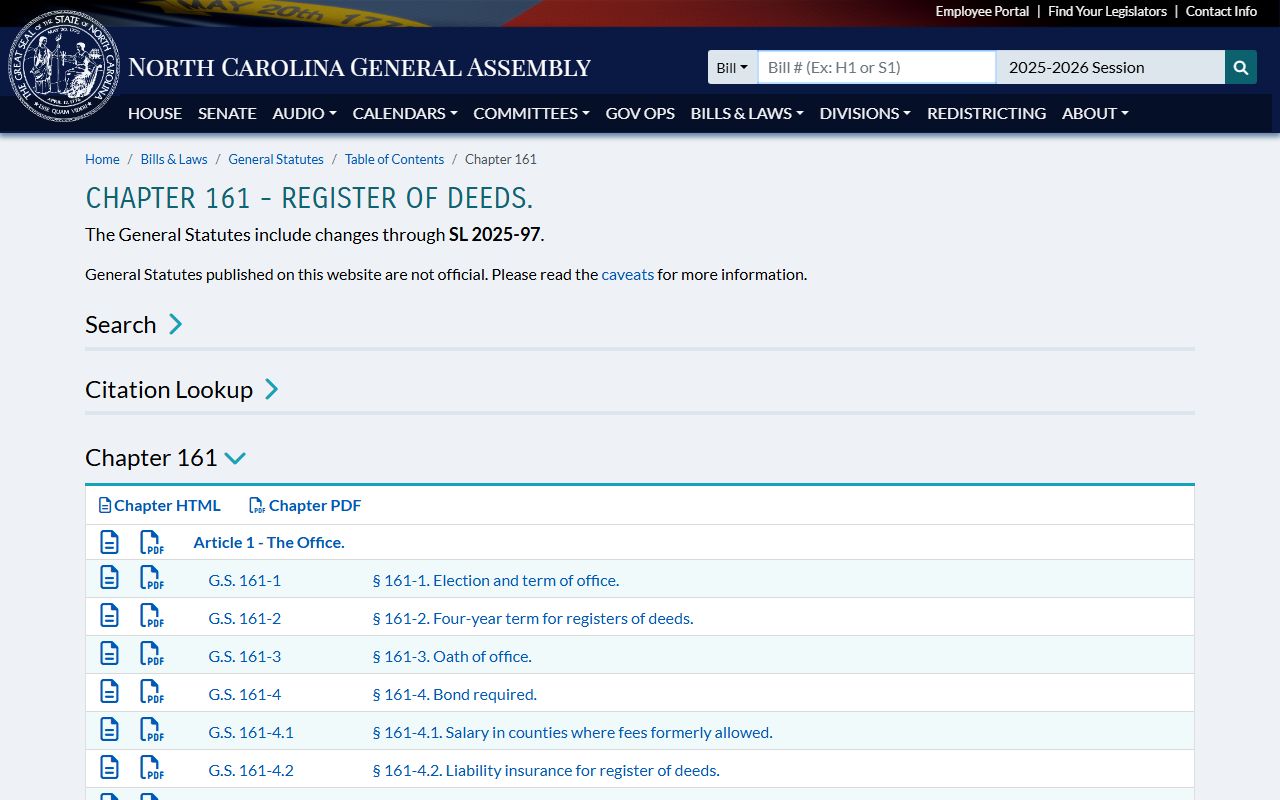
Review N.C.G.S. Chapter 161 for the laws that govern Register of Deeds offices statewide.
The North Carolina State Archives holds early land grants and colonial-era property records. For properties with deep history, these records can fill gaps in the chain of title. The Secretary of State maintains business filings including UCC liens that may affect real property owned by corporations or limited liability companies.
Nearby Counties
These counties border Union County. Make sure your property falls within Union County before searching records here.