
Mecklenburg County Property Records Search
Mecklenburg County property records are managed by the Register of Deeds in Charlotte, North Carolina. As the most populous county in the state, Mecklenburg handles a high volume of property transactions every year. The Register of Deeds records deeds, deeds of trust, plat maps, liens, and other land instruments. The county also runs the POLIS system, which provides online access to property and parcel data. Whether you need a current deed or want to trace ownership back to 1762, Mecklenburg County has the records and tools to support your search.
Mecklenburg County Quick Facts
Mecklenburg County Register of Deeds
The Mecklenburg County Register of Deeds office records all land documents filed in the county. The office is located at 720 East 4th Street, Charlotte, NC 28202. Hours are Monday through Friday, 8:00 AM to 5:00 PM, with document recording accepted until 4:30 PM. The phone number is 704-336-2443.
Mecklenburg County was formed in 1762 from Anson County. Property records date back to the county's founding. The office handles a large volume of recordings each year given that Charlotte is the largest city in North Carolina. Staff record deeds, deeds of trust, liens, plat maps, powers of attorney, and other instruments. They also provide passport services and handle vital records including birth, death, and marriage certificates. The office indexes every document by grantor, grantee, and recording date for quick retrieval.
The NC Association of Register of Deeds directory is shown below.
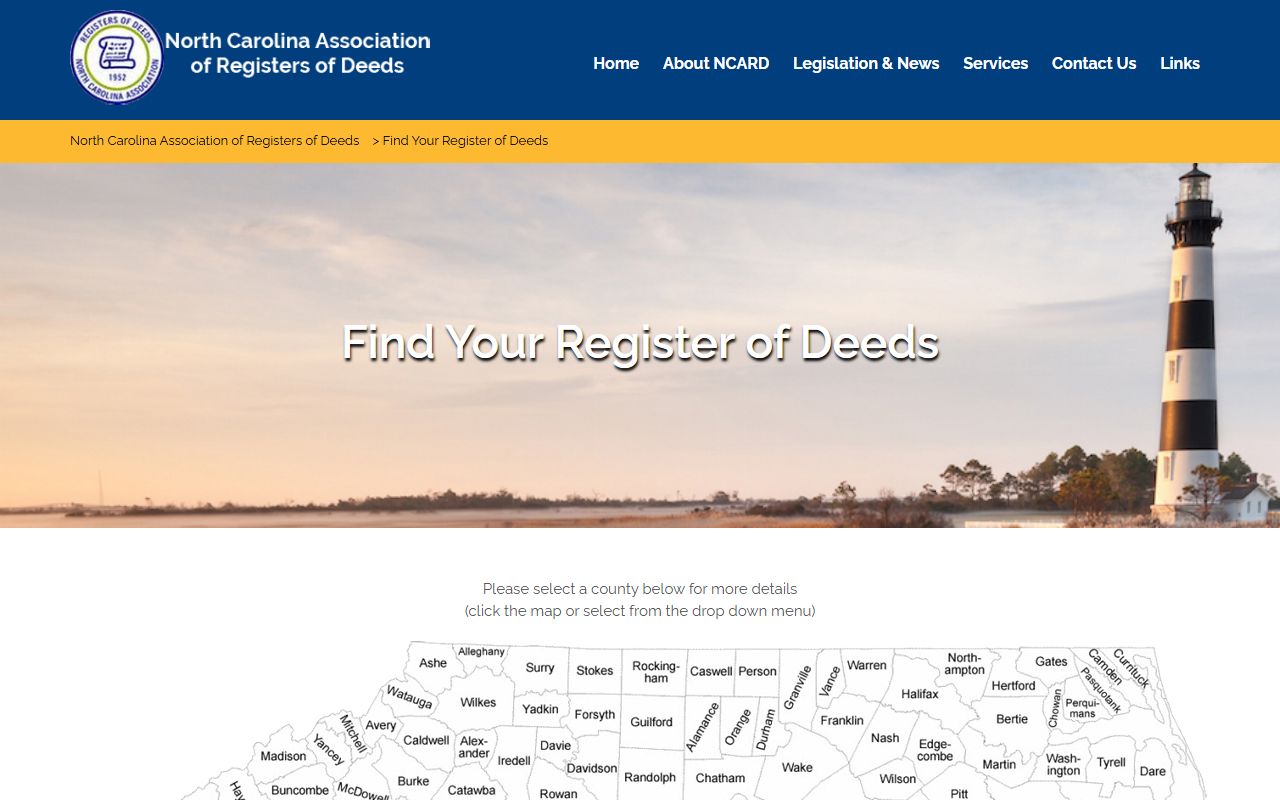
The NC Association of Register of Deeds lists the Mecklenburg County office along with every other county in the state.
Mecklenburg County POLIS Property Records
Mecklenburg County operates the POLIS system for online property information. POLIS stands for Polaris Land Information System. It gives users access to parcel data, ownership records, and property details from a web browser.
Through POLIS, you can search by owner name, address, or parcel number. The system shows current ownership, assessed values, tax information, and other property details. It includes mapping features that display parcel boundaries and aerial photos. Real estate agents, title companies, and residents all use POLIS to research property in Mecklenburg County. The system covers Charlotte and all other municipalities in the county, including Huntersville, Cornelius, Davidson, Matthews, Mint Hill, and Pineville.
For recorded documents like deeds and liens, the Register of Deeds office provides its own search tool. Together, POLIS and the Register of Deeds portal give a full picture of any property in Mecklenburg County.
Mecklenburg County Tax Records
The Mecklenburg County Tax Administration and Treasury offices handle property assessments and tax collection. Tax records are public and show the assessed value, tax rate, and payment status for each parcel. You can search by owner name, property address, or parcel ID.
North Carolina counties must revalue all real property at least once every eight years under N.C.G.S. Chapter 105. Mecklenburg County follows this schedule with revaluations every eight years. Given the rapid growth in Charlotte and surrounding towns, assessed values can shift notably between cycles. Property owners receive a notice after each revaluation and may appeal through the county if they believe the new value is too high. Tax records in Mecklenburg County also reveal unpaid taxes, which become liens on the property and appear in title searches.
Types of Mecklenburg County Property Records
Mecklenburg County records contain a wide range of property documents. The high volume of real estate activity in the Charlotte metro area means the office records thousands of instruments each month.
General warranty deeds offer full title protection. The seller guarantees clear title through the entire chain of ownership. Special warranty deeds cover only the seller's period. Quitclaim deeds pass interest without warranty. Deeds of trust are the standard lending instrument in North Carolina and appear in large numbers in Mecklenburg County records. When a loan is paid off, a cancellation is filed. Plat maps show subdivision layouts and lot boundaries. They must be recorded before lots in new developments can be sold.
- General warranty deeds for full title protection
- Special warranty deeds for limited coverage
- Quitclaim deeds for no-warranty transfers
- Deeds of trust securing mortgage loans
- Plat maps for subdivisions and lot boundaries
- Liens including mechanic's, tax, and judgment liens
All instruments filed must meet N.C.G.S. Chapter 47 requirements for signatures, notarization, and formatting. The excise tax of one dollar per five hundred dollars of sale price applies to every transfer recorded in Mecklenburg County.
Mecklenburg County Title Search
Title searches in Mecklenburg County trace ownership from the current deed back through prior transfers. The searcher builds the chain of title using the grantor and grantee indexes. The search also looks for liens, judgments, easements, and other encumbrances that affect the property.
The Marketable Title Act allows searchers to focus on the last 30 years of recorded history. Older claims not re-recorded may be extinguished under this law. Given that Mecklenburg County records go back to 1762, this simplification is valuable. Most real estate closings in the Charlotte area require a title search and title insurance before the sale can go through.
The North Carolina Secretary of State maintains UCC filings and business records that may affect property owned by corporations, LLCs, or partnerships in Mecklenburg County. These filings can appear during a title search and need to be resolved before closing.
Historical Property Records
Mecklenburg County was formed from Anson County in 1762. That means property records here span more than 260 years. Early documents include land grants from the colonial era and deeds from the county's first settlers. Many of these records are preserved in bound volumes at the Register of Deeds office.
The North Carolina State Archives in Raleigh holds additional copies of early Mecklenburg County records. These include old grant books, court minutes, and estate files that touch on property ownership. Charlotte's rapid growth over the past century means that property once considered rural farmland is now part of the urban and suburban landscape. Tracing these transitions through the recorded deeds reveals the history of the county's development from agricultural land to one of the largest metro areas in the Southeast.
The NC General Statutes page shown below outlines the laws that govern property recording in Mecklenburg County.
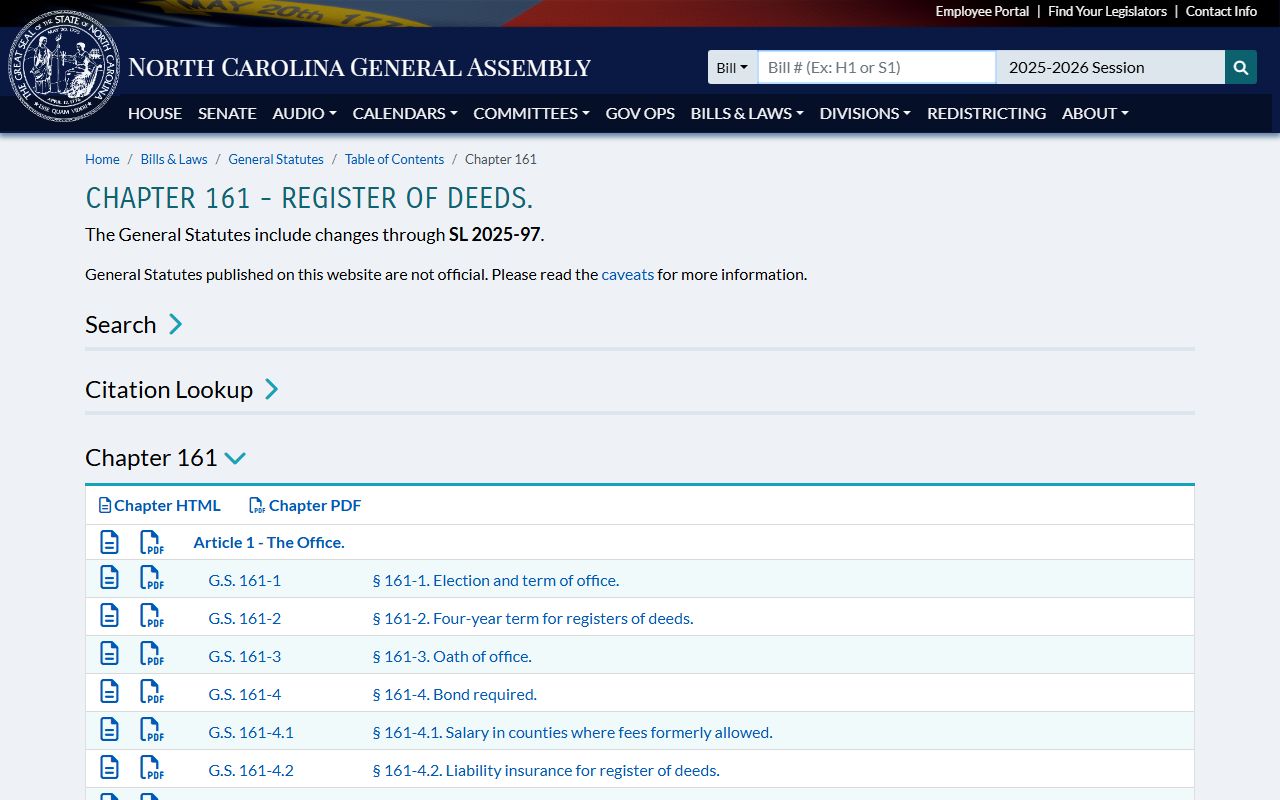
These statutes under N.C.G.S. Chapter 47 set the recording standards for all documents filed in Mecklenburg County.
Nearby Counties
These counties border Mecklenburg County. Verify the property location before searching to ensure you are looking in the correct county.