
Cabarrus County Property Records
Cabarrus County property records include deeds, plat maps, liens, and other land documents stored by the Register of Deeds in Concord. The county was formed in 1792 from Mecklenburg County and has kept land records since that time. Residents can search these records online or visit the office in person. The county also provides GIS mapping tools that show parcel boundaries, assessed values, and aerial imagery. Whether you are buying a home, checking a lien, or tracing a title, Cabarrus County makes its property records available to the public.
Cabarrus County Quick Facts
Cabarrus County Register of Deeds
The Cabarrus County Register of Deeds handles all recorded land documents. The office is in Concord and serves the entire county. Staff record new documents, maintain indexes, and issue certified copies for a fee.
You can search the office records by grantor, grantee, document type, or recording date. The Register of Deeds also handles vital records and notary services. When filing a new deed, the document must meet the standards of N.C.G.S. Chapter 47. This means proper notarization, a full legal description, and payment of excise tax where it applies. The excise tax rate in North Carolina is $1 per $500 of the sale price.
The Cabarrus County Register of Deeds website gives you direct access to search tools and recording information.
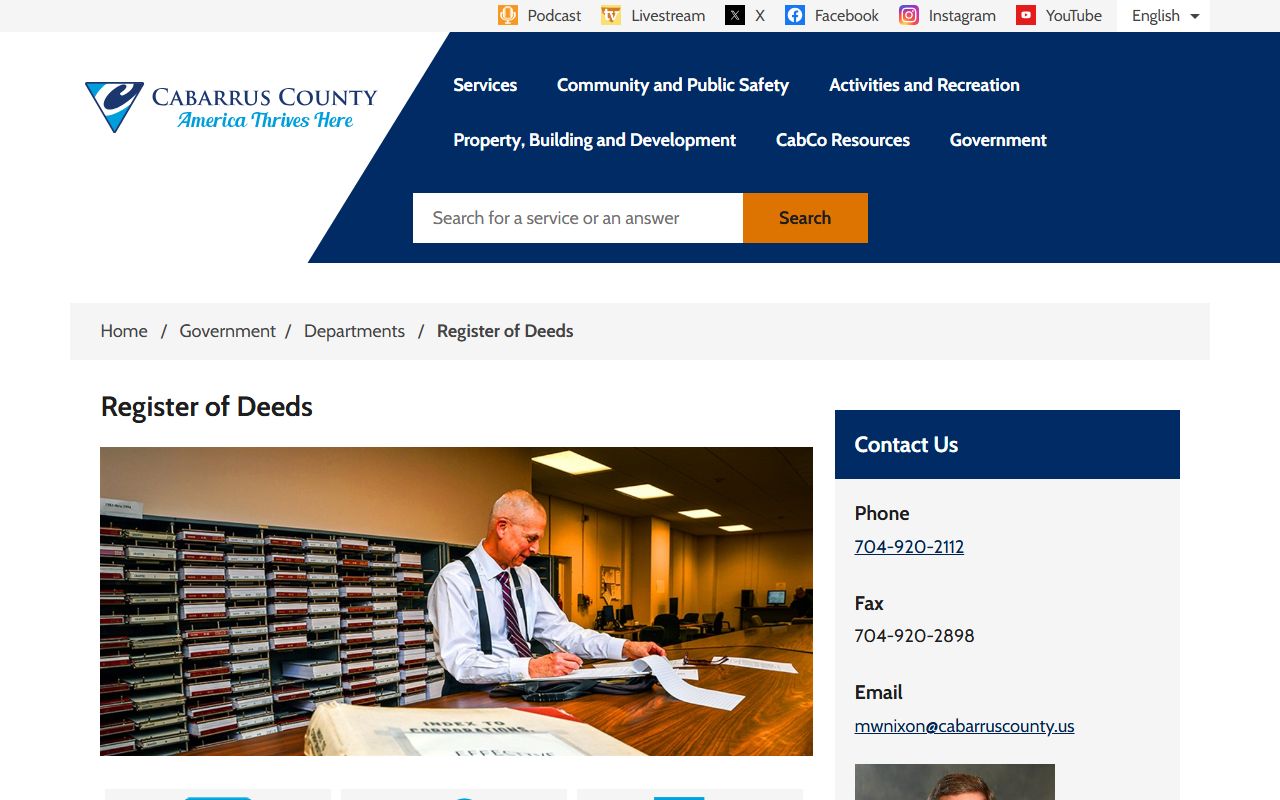
From this page you can look up recorded documents, find office hours, and learn about fees for copies.
Cabarrus County GIS Maps and Data
Cabarrus County runs a strong GIS program with several tools for property research. The GIS Maps and Data page gives access to Map Cabarrus, the Open Data portal, and other mapping tools.
Map Cabarrus is an interactive map that shows parcel lines, owner names, assessed values, and zoning. You can search by address or click on any parcel to see its details. The Open Data portal lets you download GIS data for your own analysis. The county also offers Fire Insurance ratings by location and an Election Polling Place Locator through the GIS system. Cabarrus Rewind provides historical aerial imagery so you can see how an area has changed over time. These tools are free to use and do not require an account.
The GIS portal is a great way to start your research on any Cabarrus County parcel.
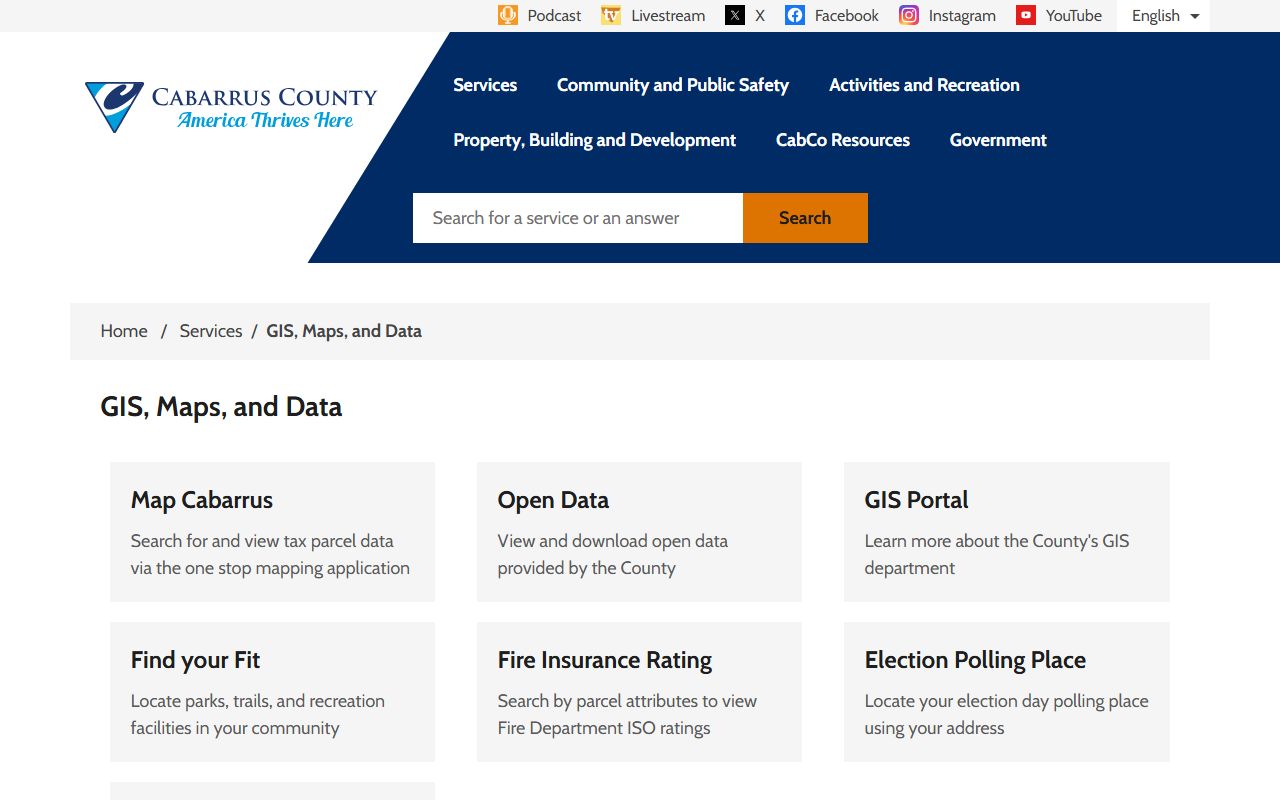
Interactive maps let you view lot lines, aerial photos, and assessed values for all parcels in the county.
Note: GIS maps are for reference only and should not replace a professional survey when boundary lines are in dispute.
Cabarrus County Tax Property Records
The Cabarrus County Tax Office maintains assessed values and tax payment records. These records are public. You can search by owner name, address, or parcel number.
Under N.C.G.S. Chapter 105, all counties in North Carolina must reappraise property at set intervals. Cabarrus County follows this rule to keep tax values in line with current market conditions. Each parcel gets an assessed value based on recent sales, property features, and location. If you think your assessment is too high, you can appeal to the Board of Equalization and Review during the open appeal period. Tax records also show any delinquent amounts owed. A tax lien can attach to the property if taxes go unpaid, and the county may sell the lien at auction.
Types of Deeds in Cabarrus County
Several deed types are common in Cabarrus County property records. The type of deed affects the level of warranty the buyer receives from the seller.
A general warranty deed provides the broadest protection. The seller warrants that the title is clear and that no one else has a claim. A special warranty deed limits the warranty to the time the seller owned the property. Quitclaim deeds transfer whatever interest the grantor holds, with no warranty at all. These show up often in family transfers or when clearing title issues. Deeds of trust are also common. They secure a mortgage loan against the property and get recorded alongside the deed.
- General warranty deeds for full buyer protection
- Special warranty deeds limited to the seller's ownership
- Quitclaim deeds for transfers without warranty
- Deeds of trust securing loans against real property
- Plat maps filed with subdivision approvals
- Easement agreements for utility or access rights
All these documents must be recorded with the Cabarrus County Register of Deeds to be effective against third parties. Recording puts the public on notice of the transfer or lien.
North Carolina Recording Laws
State statutes control how property records are created and maintained in Cabarrus County. Several chapters of the North Carolina General Statutes apply directly to land records and deed recording.
Chapter 161 defines the duties of the Register of Deeds. Chapter 47B authorizes electronic recording of real property documents. Chapter 43 covers the Torrens land registration system. The Secretary of State handles UCC filings that may show up during a title search. The State Archives preserves historical records from all 100 counties, including early Cabarrus County documents.
These laws ensure that property records in Cabarrus County follow a uniform process that protects both buyers and sellers in real estate deals. The race-notice recording system in North Carolina means that the first buyer to record a deed generally wins if there is a dispute. This makes prompt recording critical after any transfer.
Title searches in Cabarrus County typically go back 30 years or more. The examiner checks every deed, lien, and judgment in the chain of title. Any gap or problem must be resolved before a sale can close. Title insurance protects the buyer if an issue surfaces later that the search did not catch. Given the county's rapid growth, new subdivisions are adding plats and covenants to the record at a steady pace.
Note: Electronic recording under Chapter 47B is growing in use, but not all document types are eligible for e-filing in every county.
Nearby Counties
These counties border Cabarrus County. If you are searching for a property near a county line, confirm which county the parcel is in before requesting records.