
Gaston County Property Records Search
Gaston County property records are filed with the Register of Deeds in Gastonia, North Carolina. The county was formed in 1846 from Lincoln County. Its real estate records cover deeds, plats, deeds of trust, and liens going back to the mid-1800s. Gaston County sits west of Charlotte and is part of the Charlotte metro area. Property owners, buyers, and researchers can access these records to check ownership, trace title history, and review encumbrances on any parcel in the county.
Gaston County Quick Facts
Gaston County Register of Deeds
The Gaston County Register of Deeds office is at 325 N. Marietta St, Gastonia, NC 28052. You can call 704-862-7680. Staff at this office record and store deeds, deeds of trust, plat maps, liens, and other real estate documents. They also manage vital records for the county.
Gaston County was formed from Lincoln County in 1846. The county seat is Gastonia. Over the past century, the county has grown from a textile center into a diverse suburban community. Its location next to Mecklenburg County and Charlotte has driven strong real estate activity. A large number of documents get recorded at the Register of Deeds office each year as a result.
The NC Association of Register of Deeds lists all county offices in North Carolina. You can use this resource to find updated contact details for the Gaston County office. The directory is a good first step if you want to confirm hours, phone numbers, or mailing addresses before you make the trip.
Below is the statewide directory that lists every Register of Deeds office.
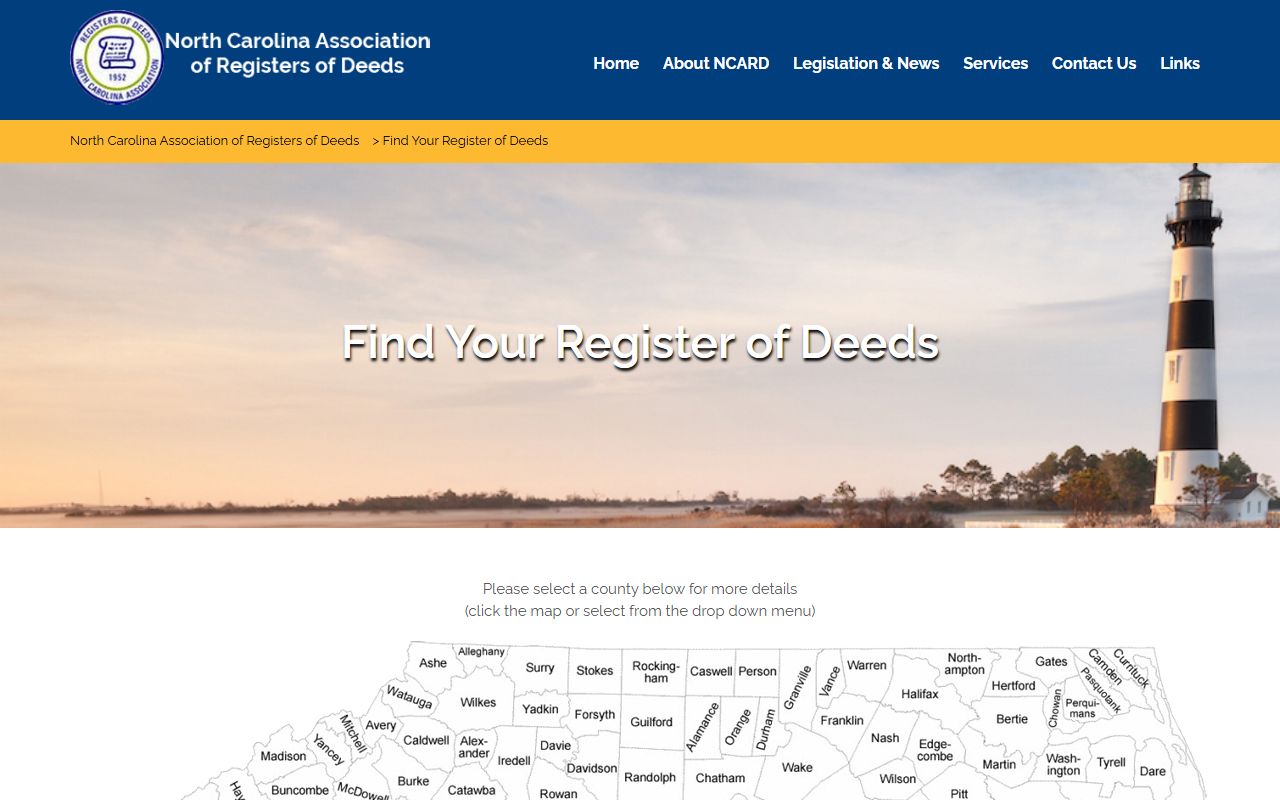
Use this directory to reach the Gaston County office or any other Register of Deeds in the state.
Searching Gaston County Land Records
To search Gaston County property records, visit the Register of Deeds office at 325 N. Marietta St in Gastonia. Bring the owner's name, a parcel number, or the property address. Staff can help you search the grantor and grantee indexes.
The grantor index lists everyone who has sold or transferred property in the county. The grantee index lists those who received it. Using both indexes together, you can build a chain of title for any parcel. This chain shows each transfer from the current owner back through all prior owners. Title professionals rely on this process to confirm that a seller has the right to transfer their land.
Gaston County's growth means many parcels have been subdivided and resold over the years. Newer developments often have short, clean chains of title. Older parcels in the rural parts of the county may have longer histories that require more research. Some older deeds use metes and bounds descriptions tied to natural landmarks.
Note: If you need records from nearby Mecklenburg County, you will need to contact that county's Register of Deeds separately.
Types of Gaston County Deeds
Gaston County property records hold several types of deeds. General warranty deeds are the standard for most home sales. The seller guarantees clear title for the property's entire history. Special warranty deeds cover only the seller's period of ownership. Quitclaim deeds transfer whatever interest the grantor holds with no warranty.
Deeds of trust are filed in Gaston County whenever a buyer takes out a loan to purchase real estate. North Carolina uses deeds of trust rather than mortgages. Under N.C.G.S. Chapter 45, the deed of trust names a trustee who holds the power of sale. When the loan is paid off, a cancellation is recorded. This clears the lien from the property records.
Liens also show up often in Gaston County records. Tax liens attach when property taxes go unpaid. Mechanic's liens can be filed by contractors who did work on a property but were not paid. Judgment liens arise from court orders. All of these attach to the property and remain on record until they are resolved or released.
Recording Documents in Gaston County
To record a document in Gaston County, it must meet the requirements of N.C.G.S. Chapter 47. The document must be signed by the grantor, notarized, and include a return address on the first page. The grantor's name must match the prior recorded deed for that parcel.
Gaston County charges the state excise tax on real estate transfers. The rate is one dollar per five hundred dollars of the sale price under N.C.G.S. Chapter 105. Recording fees apply and follow the schedule in N.C.G.S. Chapter 161. These fees cover the cost of indexing and storing the document.
The North Carolina recording statutes are shown below.
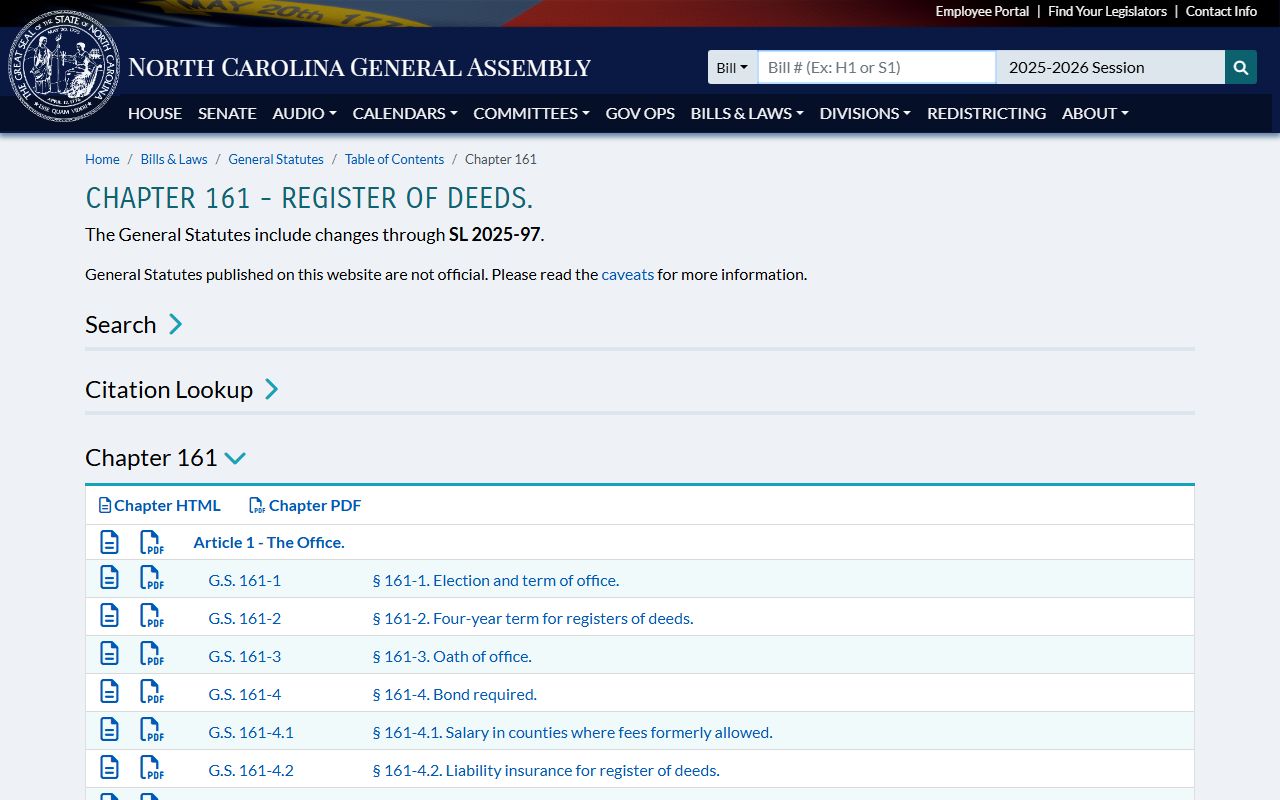
These rules govern all documents filed at the Gaston County Register of Deeds.
Gaston County Tax and Assessment Records
The Gaston County Tax Office assesses all real property and maintains tax records. These records include the assessed value, tax rate, and payment history for every parcel. You can search by owner name, address, or parcel number.
North Carolina counties must reappraise property on a regular cycle under N.C.G.S. Chapter 105. During a reappraisal, county staff review sales data and inspect properties to set new values. Owners who feel their value is too high can file an appeal with the board of equalization and review.
Buyers often check tax records before a purchase to estimate their future tax bill. Lenders review tax status to confirm no outstanding liens exist. Real estate agents and appraisers also use tax data when setting or evaluating listing prices in Gaston County.
Title Research in Gaston County
Title searches in Gaston County trace the chain of ownership for a property. This process starts with the current owner and works backward through each deed. A thorough search covers deeds, deeds of trust, liens, judgments, easements, and tax records. The goal is to confirm clear title before a sale or loan closing.
The Marketable Title Act under North Carolina law sets a 30-year standard. Claims older than 30 years that have not been re-recorded may be extinguished. This law protects buyers and lenders who rely on the recorded chain.
For parcels with a very long history, the North Carolina State Archives hold early land grants and records. The Secretary of State maintains business filings and UCC liens that may affect property in Gaston County. These resources can fill gaps when the county records alone are not enough.
The State Archives portal is shown below.
The archives hold some of the oldest land records in North Carolina.