
Lenoir County Property Records Search
Lenoir County property records are managed by the Register of Deeds in Kinston, North Carolina. The county was formed in 1791 and sits in the eastern part of the state along the Neuse River. Property records here include deeds, deeds of trust, plat maps, liens, and other documents tied to real estate. The Register of Deeds office indexes and stores these records for public access. Buyers, sellers, and researchers can search them at the county office or through state resources that cover Lenoir County.
Lenoir County Quick Facts
Lenoir County Register of Deeds
The Register of Deeds in Lenoir County records all land instruments filed in the county. The office is located at the courthouse in Kinston. Staff record deeds, deeds of trust, liens, plat maps, powers of attorney, and other documents that affect real property. They index each filing by grantor, grantee, and date so that records can be found quickly.
Lenoir County was formed from Dobbs County in 1791. It is named after General William Lenoir, who served in the American Revolution. Property records here stretch back to the county's founding. Some of the oldest documents record land grants from the state of North Carolina. These early records have been preserved in bound volumes at the courthouse and through the North Carolina State Archives in Raleigh.
The North Carolina Association of Register of Deeds directory is a good starting point for locating contact details.
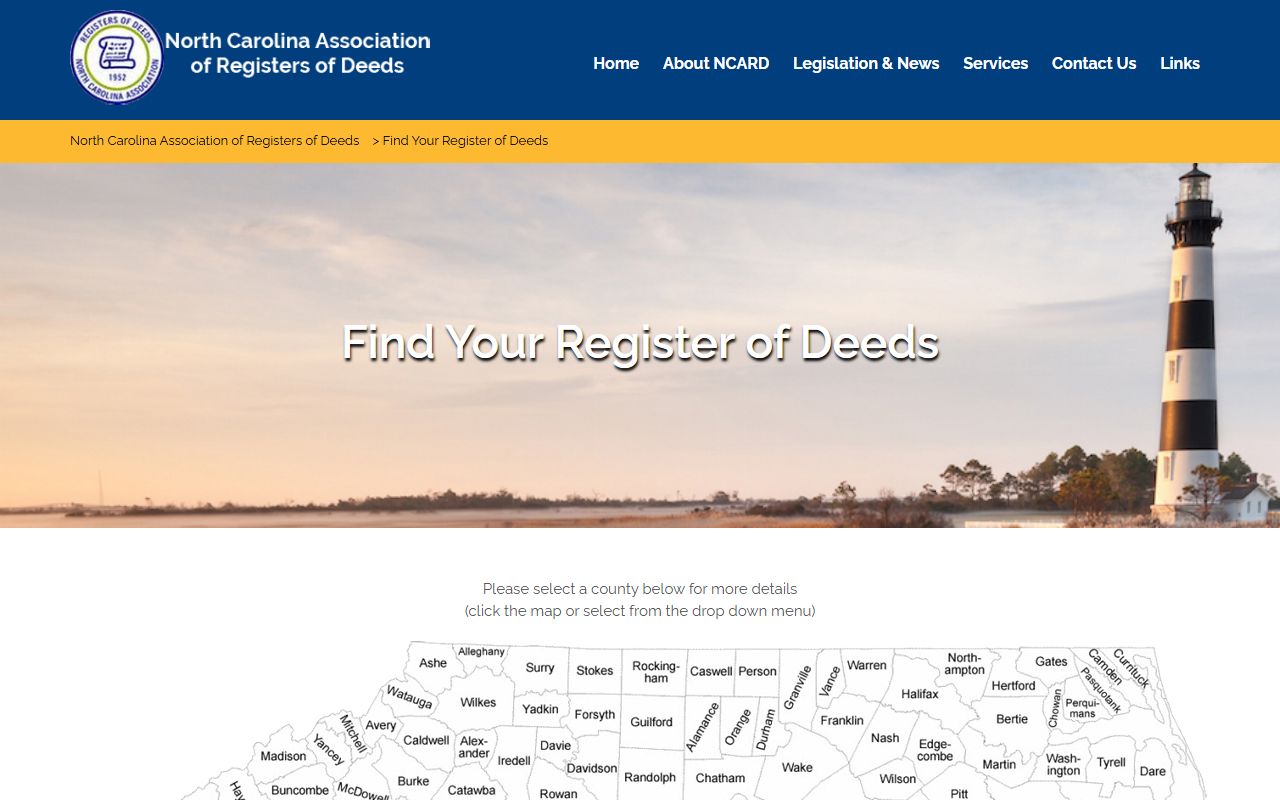
The NC Association of Register of Deeds lists the Lenoir County office along with every other county in the state.
Searching Lenoir County Records
Finding property records in Lenoir County involves using the grantor and grantee indexes. The grantor index lists those who sold or transferred property. The grantee index lists buyers and recipients. Searching both indexes builds a complete ownership history for any parcel in the county.
You can search at the Register of Deeds office in Kinston during regular business hours. Bring any details you have about the property, such as the owner's name, address, or parcel number. Staff can help locate specific documents. Certified copies are available for a fee. The first page costs five dollars, and each additional page is two dollars, as set by N.C.G.S. Chapter 161.
For records that may not be available locally, the State Archives in Raleigh holds copies of early Lenoir County records including land grants and old court files.
Lenoir County Tax Property Records
The Lenoir County Tax Office assesses all real property and collects property taxes. Tax records are public and show the assessed value, tax rate, and payment status for each parcel. You can search by owner name, address, or parcel ID.
Under N.C.G.S. Chapter 105, all North Carolina counties must revalue real property at least once every eight years. Lenoir County follows this schedule. Revaluations adjust assessed values to match market conditions. After a revaluation, property owners receive a notice and may appeal the new value if they believe it is too high. Tax records also reveal any unpaid taxes, which can become liens on the property. Buyers often check these records before closing on a purchase in Lenoir County to avoid inheriting a tax debt.
Types of Lenoir County Deeds
Several deed types appear in Lenoir County property records. General warranty deeds give buyers the strongest protection because the seller guarantees clear title all the way back. Special warranty deeds only cover the time the seller held the property. Quitclaim deeds transfer interest with no warranty at all.
North Carolina uses deeds of trust rather than traditional mortgages. In a deed of trust, a trustee holds the power to sell the property if the borrower defaults. When the debt is paid, a cancellation is recorded. Liens of various types also appear in Lenoir County records. Mechanic's liens protect contractors who performed work on a property. Tax liens attach when property taxes go unpaid. Judgment liens result from court orders and remain on record until satisfied.
- General warranty deeds for full title protection
- Special warranty deeds for limited coverage
- Quitclaim deeds for no-warranty transfers
- Deeds of trust for secured lending
- Plats showing lot boundaries and easements
All deeds filed in Lenoir County must meet the standards of N.C.G.S. Chapter 47. This includes proper signatures, notarization, and a return address on the first page.
Lenoir County Title Research
A title search in Lenoir County traces ownership from the current owner back through prior transfers. The searcher uses the county indexes to build the chain of title. Each link in the chain is a recorded deed that names both the buyer and the seller. The search also checks for liens, judgments, and easements.
The Marketable Title Act simplifies these searches. A chain of title going back at least 30 years is generally enough under North Carolina law. Older claims that were not re-recorded may no longer be valid. This helps clear the way for clean title transfers in Lenoir County. Most real estate transactions require a title search and title insurance before the closing can proceed.
The North Carolina Secretary of State maintains business filings and UCC records that may affect property owned by corporations or LLCs in Lenoir County. These records can appear during a title search and need to be addressed before closing.
Recording Documents in Lenoir County
Documents recorded in Lenoir County must meet state standards. The instrument needs proper signatures, notarization, and a return address on the first page. The grantor's name must match the name as it appears on the prior deed in the chain.
The excise tax on real estate transfers is one dollar per five hundred dollars of the sale price. This tax and the recording fee are both due at the time of filing. The Register of Deeds collects these before the document is recorded and indexed. Once filed, the document becomes part of the public record in Lenoir County and can be found through the county indexes.
Nearby Counties
These counties border Lenoir County. Verify your property's location before searching records to make sure you are in the correct county.