
Greene County Property Records
Greene County property records are maintained by the Register of Deeds in Snow Hill, North Carolina. The county was formed in 1799 from Glasgow County. Its land records span more than two centuries and include deeds, plats, deeds of trust, and liens. Greene County is a small, rural county in the eastern part of the state. Residents, buyers, and title searchers can access these records to confirm ownership, trace deed history, and check for encumbrances on land. The county provides online access to some records through its official website.
Greene County Quick Facts
Greene County Register of Deeds
The Greene County Register of Deeds office is in Snow Hill, the county seat. Staff at this office record and index deeds, deeds of trust, plat maps, liens, and other real estate instruments. They also handle vital records including birth, death, and marriage certificates.
Greene County was formed in 1799. It was originally called Glasgow County when created in 1791, then renamed Greene County in 1799 after General Nathanael Greene. The county sits in the coastal plain of eastern North Carolina. Agriculture has always been central to the local economy. Tobacco, cotton, and other crops shaped the landscape and the patterns of land ownership over the past two centuries.
The Greene County Register of Deeds website is shown below.
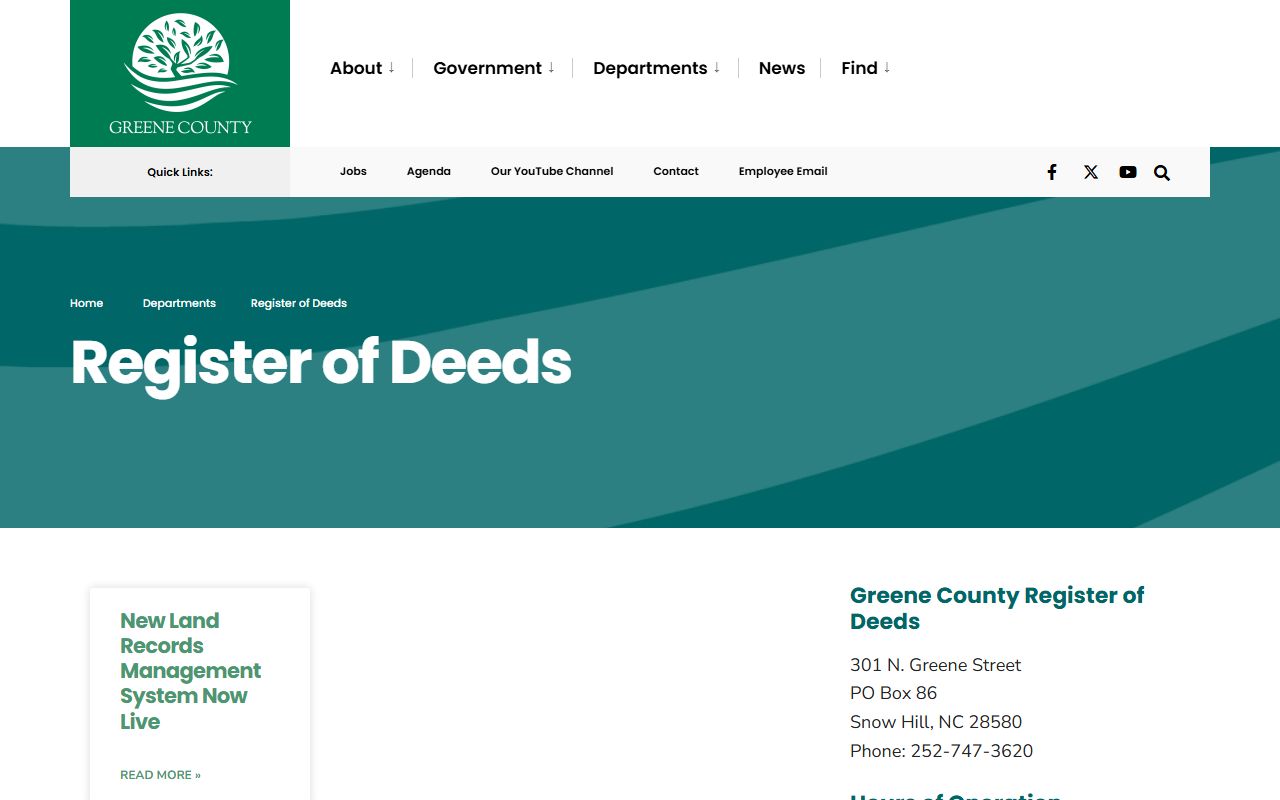
This is the main page for the Greene County Register of Deeds office.
Greene County Tax Office
The Greene County Tax Office handles property assessments and tax collections for all real estate in the county. Tax records show the assessed value, the tax rate, and any amounts owed on each parcel. You can contact this office to ask about valuations, payment plans, or appeal procedures.
North Carolina requires regular reappraisals under N.C.G.S. Chapter 105. Greene County follows this rule. During a reappraisal, county staff review sales data and inspect properties to set fair market values. Owners who disagree with their assessed value can file an appeal with the county board of equalization and review.
The Greene County Tax Office page is shown below.
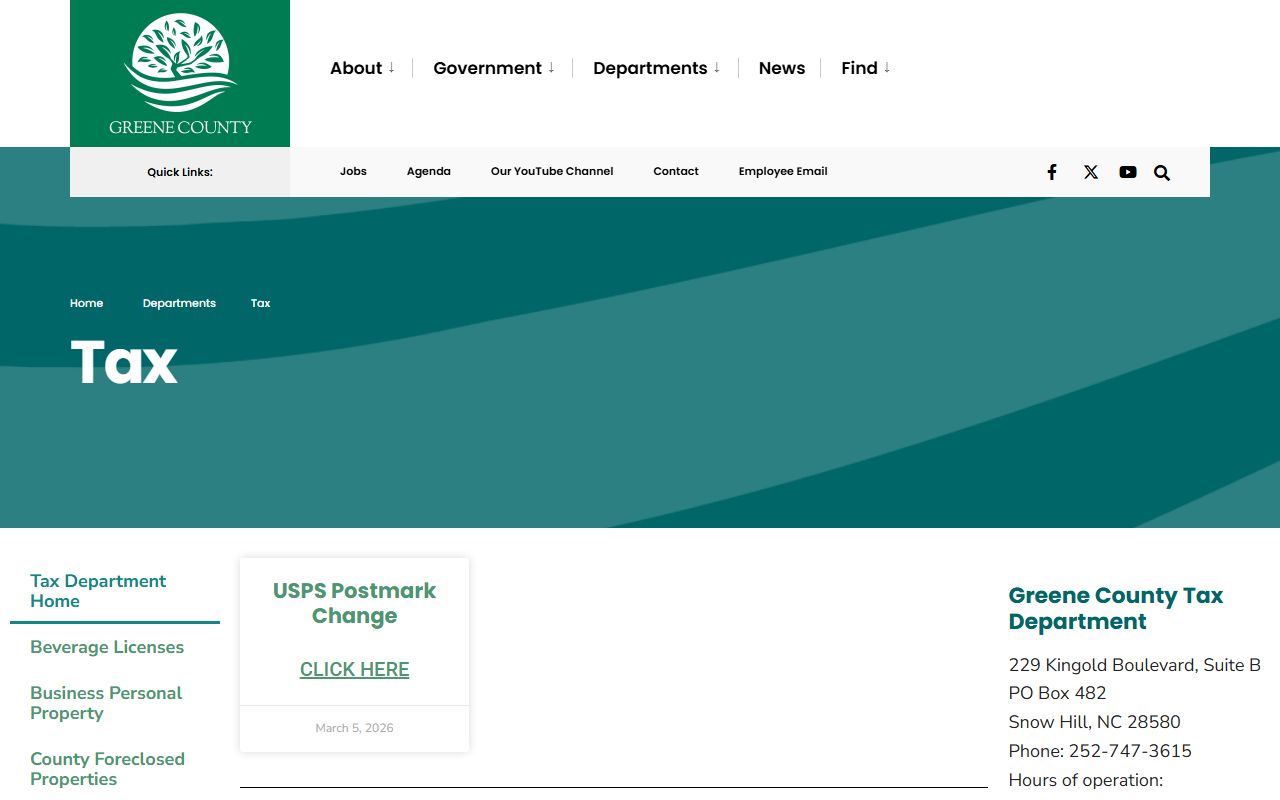
This page provides details on tax administration in Greene County.
Note: Tax records and deed records are maintained by different offices in Greene County, but both relate to the same parcels of land.
Searching Greene County Land Records
You can search Greene County property records through the county website or by visiting the Register of Deeds office in Snow Hill. For in-person visits, bring any details you have about the property. An owner name, address, or parcel number will help staff find the right records.
The office maintains grantor and grantee indexes. The grantor index lists everyone who sold or transferred property. The grantee index lists those who received it. By using both indexes, you can trace a chain of title from the current owner back through all prior owners. This process confirms clear ownership and reveals any breaks in the chain.
Greene County is one of the smaller counties in North Carolina. Its rural nature means many parcels are large farm tracts. Some have been in the same family for generations. The deed books reflect this stability, with fewer transfers per parcel than you would see in a more urban county. Older records may be handwritten and use legal descriptions tied to natural features.
Types of Greene County Deeds
Several deed types appear in Greene County property records. General warranty deeds provide the strongest protection for buyers. The seller guarantees clear title through the property's full history. Special warranty deeds limit the guarantee to the seller's time of ownership. Quitclaim deeds transfer whatever interest the grantor has with no warranty at all.
Deeds of trust secure real estate loans in North Carolina. Under N.C.G.S. Chapter 45, a deed of trust involves three parties: the borrower, the lender, and a trustee. The trustee holds the power to sell if the borrower defaults. Once the loan is paid, a cancellation is filed in Greene County property records to clear the lien.
Liens are common as well. They include:
- Tax liens from unpaid property taxes
- Mechanic's liens from unpaid contractors
- Judgment liens from court orders
Each type attaches to the property and stays on record until it is satisfied or released. Plat maps, easements, and restrictive covenants also appear in the Greene County deed books.
Recording Documents in Greene County
To record a deed or other instrument in Greene County, the document must meet the requirements of N.C.G.S. Chapter 47. It must be signed by the grantor, notarized, and include a return address on the first page. The grantor's name must match the prior recorded deed for that property.
Greene County collects the state excise tax on real estate transfers. The rate is one dollar per five hundred dollars of the sale price as set by N.C.G.S. Chapter 105. Recording fees also apply and follow the schedule in N.C.G.S. Chapter 161.
The North Carolina General Statutes that govern recording are shown below.
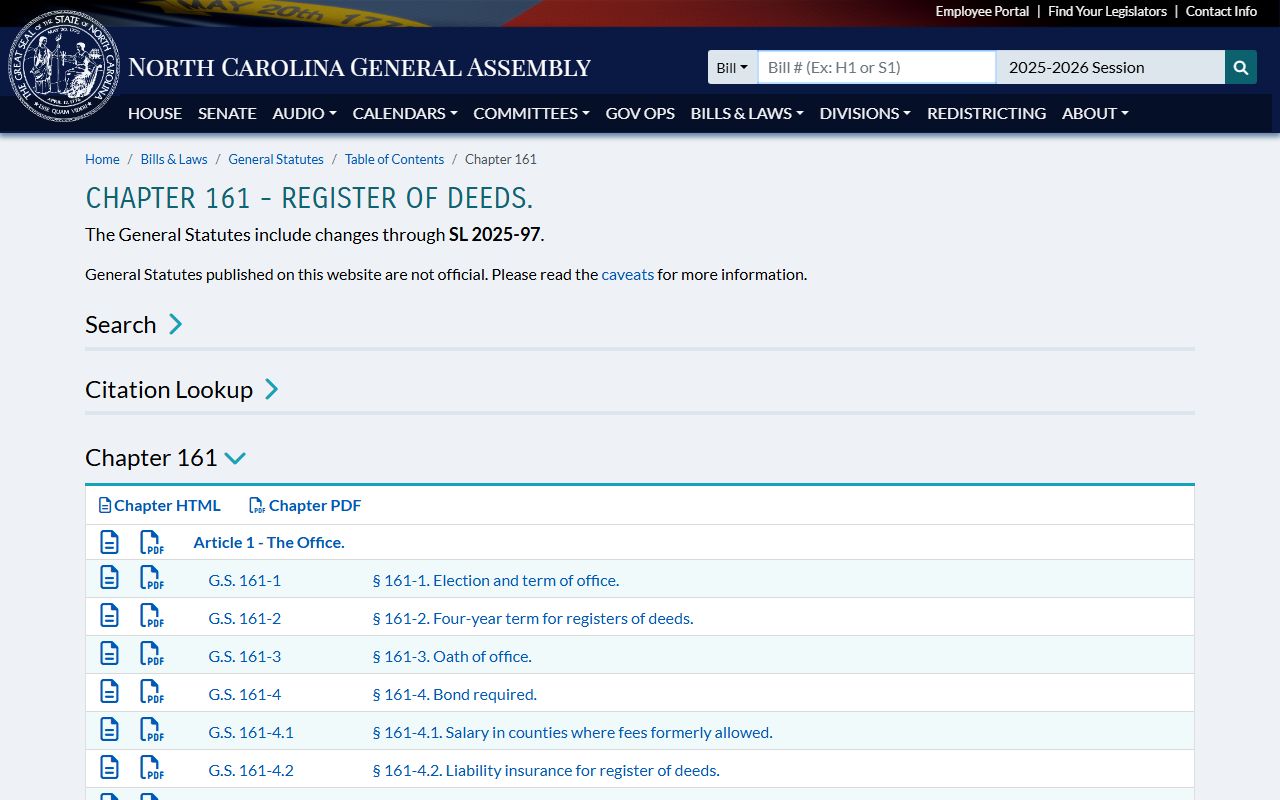
These rules apply to all documents filed in Greene County and throughout North Carolina.
Greene County Title Research
Title research in Greene County traces the chain of ownership from the current owner backward through each prior transfer. The process reveals liens, easements, judgments, and other items that affect the property. A clean chain of title is required before a buyer can get title insurance or close on a purchase.
North Carolina's Marketable Title Act sets a 30-year standard for title searches. Claims older than 30 years that have not been renewed in the record may be extinguished. This protects buyers and lenders who rely on the recorded chain in Greene County.
For very old records, the North Carolina State Archives in Raleigh hold early land grants and colonial documents. The Secretary of State maintains UCC filings and business records that may affect property ownership. The NC Association of Register of Deeds can also help you locate the right office if your search spans multiple counties.
The Secretary of State portal is shown below.
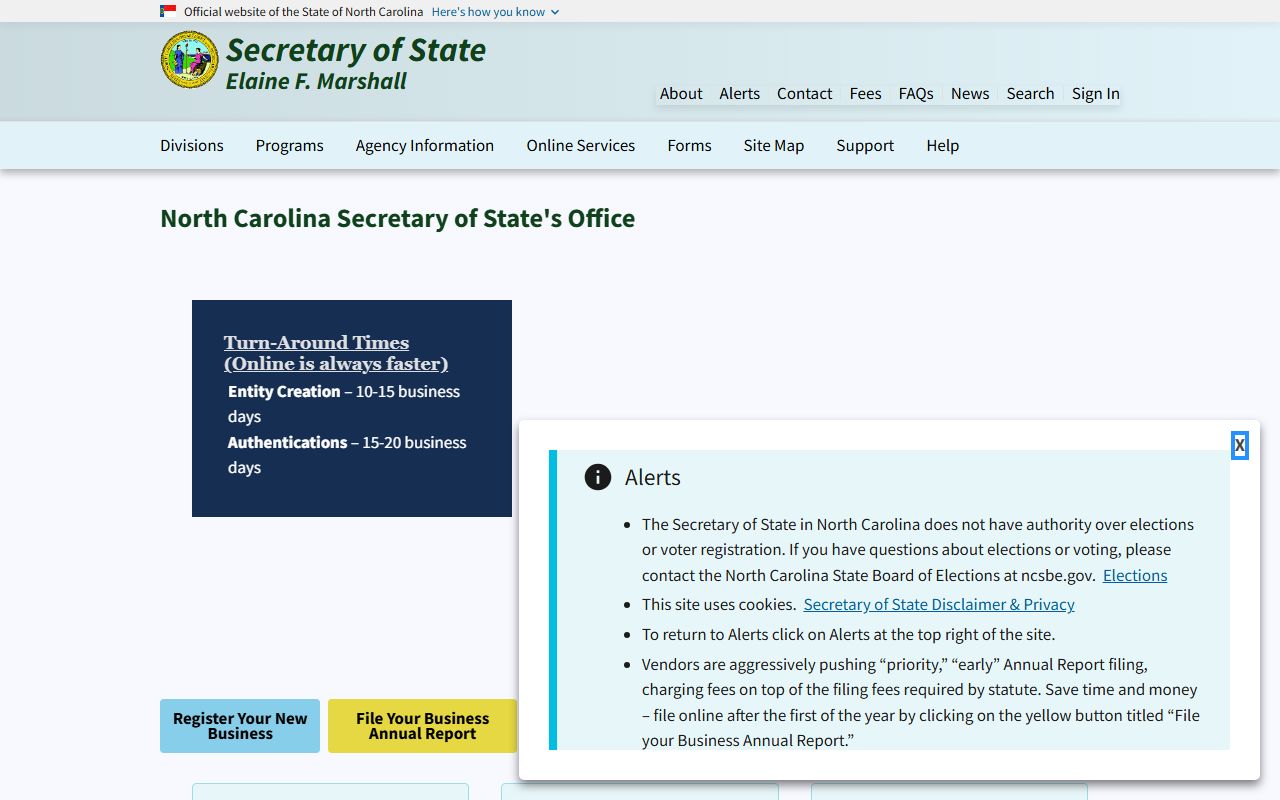
The Secretary of State maintains business filings and UCC records that may affect property in Greene County.