
Craven County Property Records
Craven County property records are held at the Register of Deeds office in New Bern, North Carolina. New Bern served as the colonial capital of North Carolina, giving Craven County one of the longest recorded land histories in the state. The Register of Deeds maintains deeds, liens, plats, and other instruments tied to real estate. Public access is available at the county office. Whether you need to verify current ownership or trace a property's history back through the centuries, Craven County property records are the starting point.
Craven County Quick Facts
Craven County Register of Deeds
The Craven County Register of Deeds is the central office for all recorded property documents in the county. Deeds, deeds of trust, liens, plats, maps, and other instruments are filed, indexed, and stored here. Staff members process new recordings daily and maintain the public indexes that allow anyone to search for a specific document.
Craven County was formed in 1712 as one of the original precincts of the Province of North Carolina. That makes it one of the oldest counties in the state. New Bern, founded in 1710, served as the colonial capital. The royal governor's residence, Tryon Palace, stood here. Because of this deep history, Craven County holds property records that stretch back hundreds of years. Many of these early records are tied to colonial land grants issued by the Crown or the Lords Proprietors.
The North Carolina Association of Register of Deeds maintains a directory with contact information for the Craven County office. Use this directory to confirm office hours and the mailing address before requesting records.
The statewide directory of Register of Deeds offices is shown below.
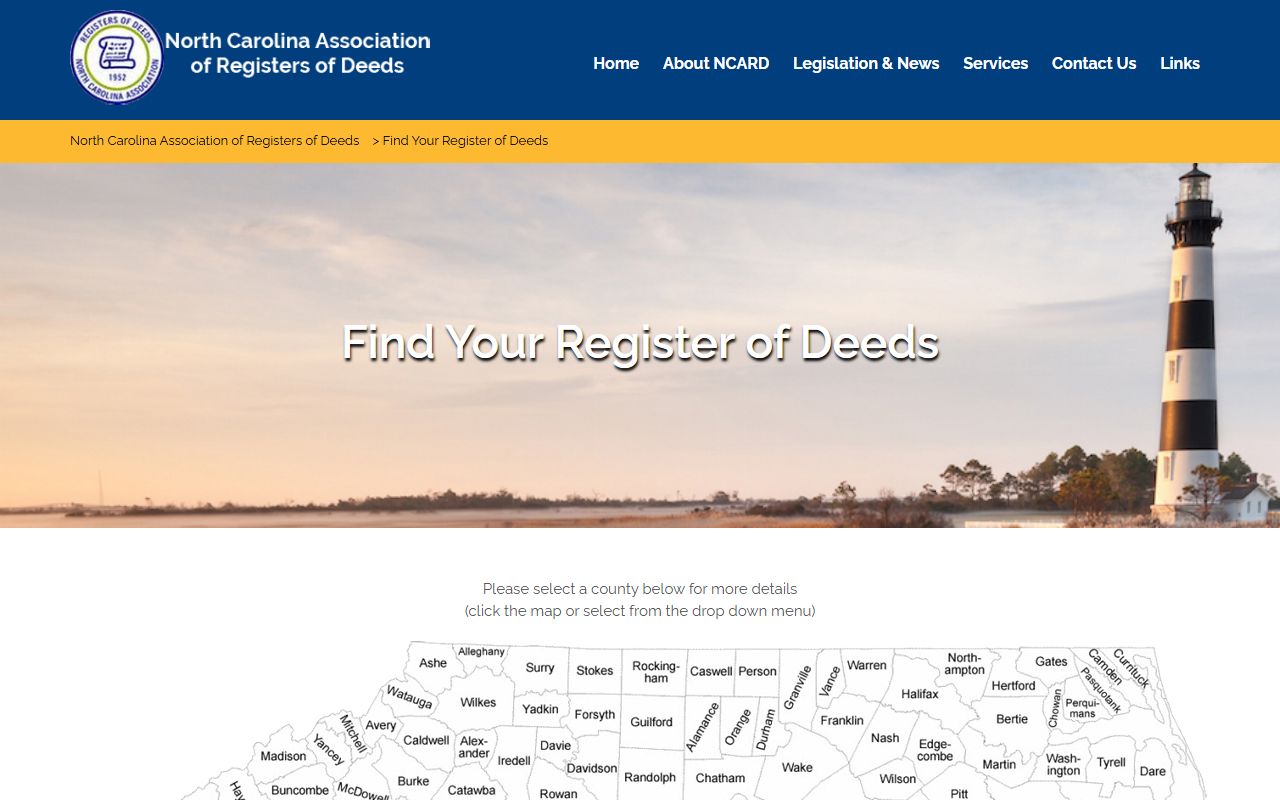
This directory helps you locate the Craven County Register of Deeds and other county offices across the state.
Finding Craven County Property Records
Searching for property records in Craven County can be done at the Register of Deeds office in New Bern. The office maintains grantor and grantee indexes that list every recorded document by party name. The grantor index covers those who transferred property. The grantee index covers those who received it. Together, these indexes let you build a complete ownership history for any parcel.
You can also search by book and page number if you have a reference from a prior deed. This is the fastest way to pull up a specific document. For broader searches, staff can help you navigate the index system. They deal with these records every day and can point you in the right direction. Craven County's large volume of records means the indexes are extensive, but the system is well organized.
North Carolina law under N.C.G.S. Chapter 161 requires every county to maintain accurate and complete indexes of recorded documents. Craven County complies with this requirement and keeps its indexes up to date.
Types of Craven County Land Records
Craven County property records encompass many document types. Warranty deeds are the most common instrument for real estate sales. They transfer ownership and include a guarantee of clear title. Quitclaim deeds pass along the grantor's interest without any warranty. They are often used for transfers within families or to clear up title questions.
Deeds of trust are recorded whenever a lender finances a purchase in Craven County. North Carolina is a deed of trust state. Under N.C.G.S. Chapter 45, the borrower conveys the property to a trustee who holds it as security for the loan. When the debt is fully paid, the lender files a cancellation with the Register of Deeds. If the borrower fails to pay, the trustee can sell the property under the power of sale clause without going through the courts.
Liens also form part of Craven County records. Tax liens arise from unpaid property taxes. Mechanic's liens protect contractors and suppliers. Judgment liens come from court orders. Plats and subdivision maps show the division of land into lots. These are recorded so that future deeds can reference them for legal descriptions.
Note: Craven County plats must be approved by the appropriate planning authority before the Register of Deeds will accept them for recording.
Recording Requirements for Craven County
All documents recorded in Craven County must meet the standards set by N.C.G.S. Chapter 47. The document must be signed by the grantor and acknowledged before a notary public. The grantor's name must be spelled as it appears in the prior recorded deed. A return address is required on the first page. Documents that do not comply will be returned for correction.
Recording fees are charged by the Register of Deeds for each document filed. These fees support the office's work of indexing, storing, and maintaining the records. The North Carolina excise tax on property transfers is also due at the time of recording. Under N.C.G.S. Chapter 105, this tax is one dollar per five hundred dollars of the sale price. The Register of Deeds collects both the fee and the tax before the document enters the record.
The image below shows North Carolina statutes that govern document recording in Craven County.
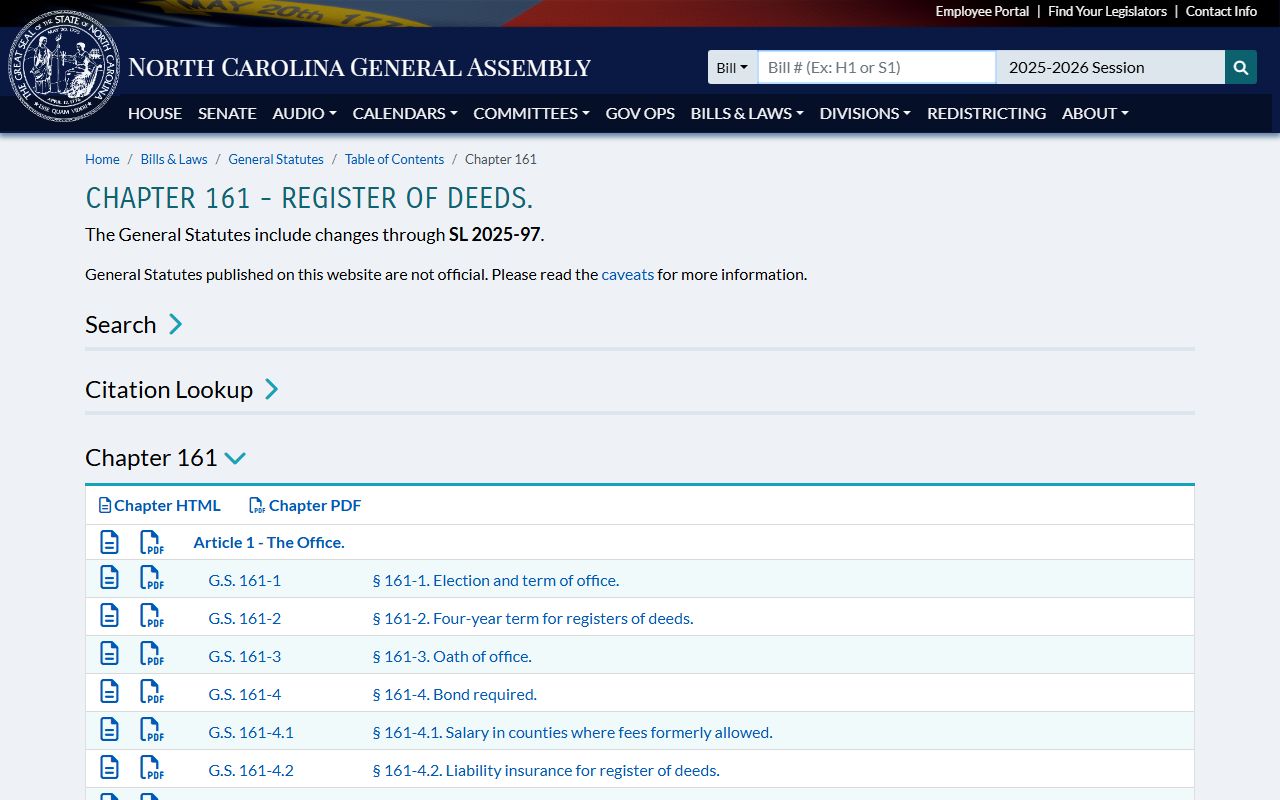
These statutes apply to every document recorded at the Craven County Register of Deeds office.
Craven County Title Research
Title research in Craven County traces ownership from the current deed back through prior transfers. Each link in the chain is verified. The search covers deeds, deeds of trust, liens, judgments, easements, and covenants. A thorough title search confirms that the property can be transferred without legal issues.
The Marketable Title Act limits the depth of a title search. A chain going back at least 30 years is generally sufficient in North Carolina. Claims older than 30 years that were not renewed are usually cut off. This simplifies the process for buyers and lenders in Craven County.
Given Craven County's long history, some properties have chains of title that extend back to the colonial period. These older links may involve land grants from the Lords Proprietors or the Crown. The North Carolina State Archives holds many of these early records. Researchers studying land ownership in New Bern and the surrounding area often turn to the archives for documents that predate the county's modern record-keeping system.
Historic Land Records in Craven County
Craven County's history as the colonial capital region makes it a focal point for early North Carolina land research. New Bern was the seat of government during the colonial era. Property transactions from that period reflect the growth of the colony and the allocation of land to settlers, officials, and investors. These records are part of the broader history of North Carolina.
The North Carolina State Archives preserves colonial land grants, early plats, and other historical documents from Craven County. Some of these have been digitized. Others require an in-person visit to the archives in Raleigh. For modern records, the Register of Deeds in New Bern is the primary source.
The State Archives is an essential resource for historical land research in Craven County.
The North Carolina Secretary of State maintains business filings that can help identify corporate or LLC owners of property in Craven County. This is useful when a deed lists a business entity rather than an individual.
Note: Some colonial-era Craven County records use legal descriptions based on landmarks that no longer exist, making modern interpretation challenging.