
Catawba County Property Records
Catawba County property records are filed with the Register of Deeds in Newton, North Carolina. The county sits in the western Piedmont region and includes cities like Hickory, Conover, and Claremont. Property records here include deeds, deeds of trust, plat maps, and liens that affect land ownership. Whether you are buying a home near Lake Hickory or researching farmland titles, these records provide the information you need. The Register of Deeds office serves as the central point for all recorded land documents in Catawba County.
Catawba County Quick Facts
Catawba County Register of Deeds
The Register of Deeds in Catawba County handles all recorded land documents. The office is in Newton, the county seat. Staff record new instruments, keep indexes up to date, and issue copies of recorded documents.
Catawba County was formed in 1842 from Lincoln County. Records date from that year forward. The office processes deeds, deeds of trust, plat maps, powers of attorney, liens, and other recorded documents. You can search by grantor name, grantee name, book and page number, or document type. The NC Association of Registers of Deeds lists the current contact information for the Catawba County office. Call ahead to confirm office hours and whether you need an appointment for complex research.
The statewide directory provides contact details for all 100 county offices.
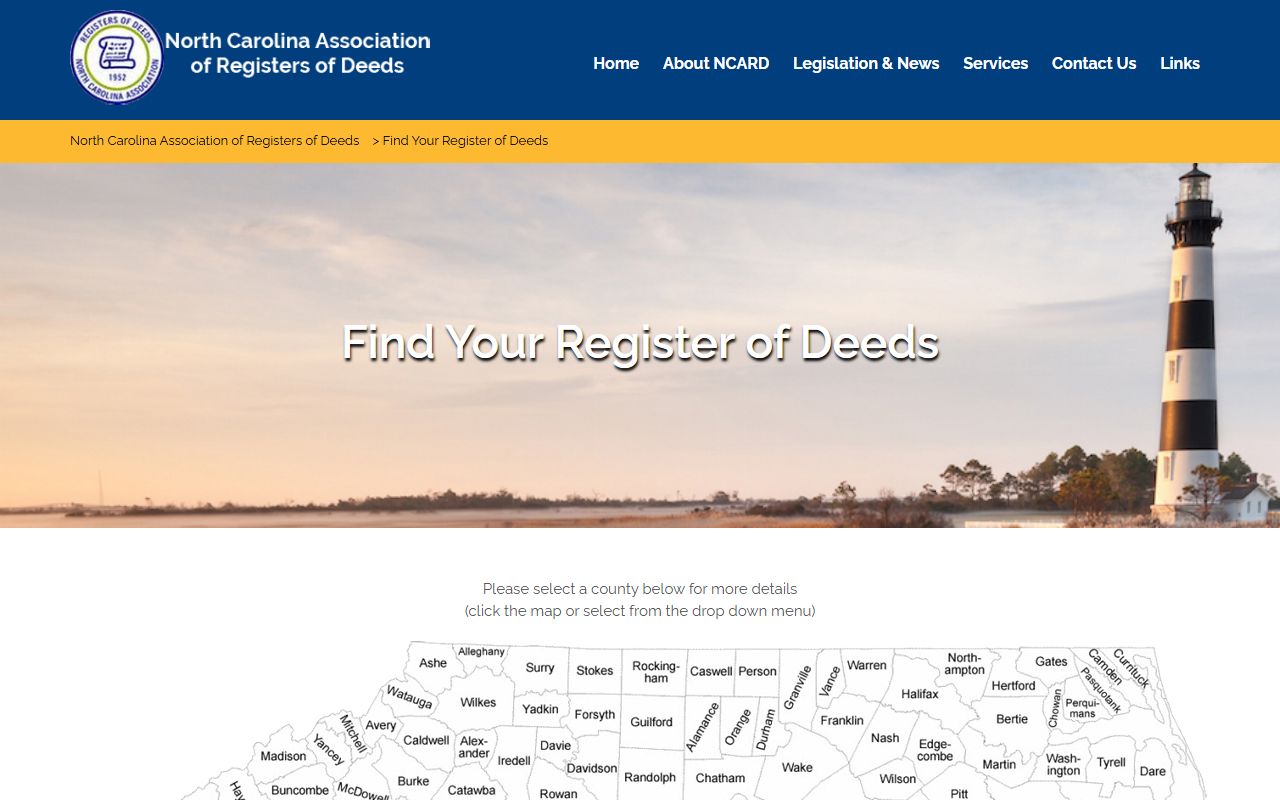
Use this directory to get phone numbers, addresses, and links to online tools before visiting.
How to Search Catawba County Records
You can search Catawba County property records in person at the Register of Deeds office. The staff can help you navigate the indexes and find the documents you need.
Start with what you know. An owner name, property address, or parcel number narrows the search quickly. If you have a book and page reference from a title abstract or prior search, the staff can pull the exact document right away. Without that, they will search the grantor and grantee indexes. These indexes list every recorded document under each name and are organized by time period. Older records may be in separate index books. For properties near the lake or in newer subdivisions, check the plat maps as well. Plats show lot lines, easements, and road dedications that are part of the property record.
Certified copies follow the state fee schedule. The first page is $5 and each added page is $2. These fees are set by N.C.G.S. Chapter 161. Plain copies cost less and work fine for research purposes.
Note: If you need records from before 1842, check Lincoln County records or the State Archives, since Catawba County did not exist before that year.
Catawba County Tax Property Records
The Catawba County Tax Office maintains assessed values and payment records for all real property. These records are public and searchable.
Each parcel gets an assessed value based on its market value. The county follows the reappraisal schedule required by N.C.G.S. Chapter 105. Tax records show the assessed value, the applicable tax rate, and whether taxes are current or past due. Catawba County includes both urban areas like Hickory and rural farmland, so values vary widely. Owners who disagree with their assessment can appeal to the Board of Equalization and Review during the designated appeal period. Tax liens attach to properties with unpaid taxes and must be cleared before a clean sale can occur.
The NC General Statutes website provides the full text of property tax law.
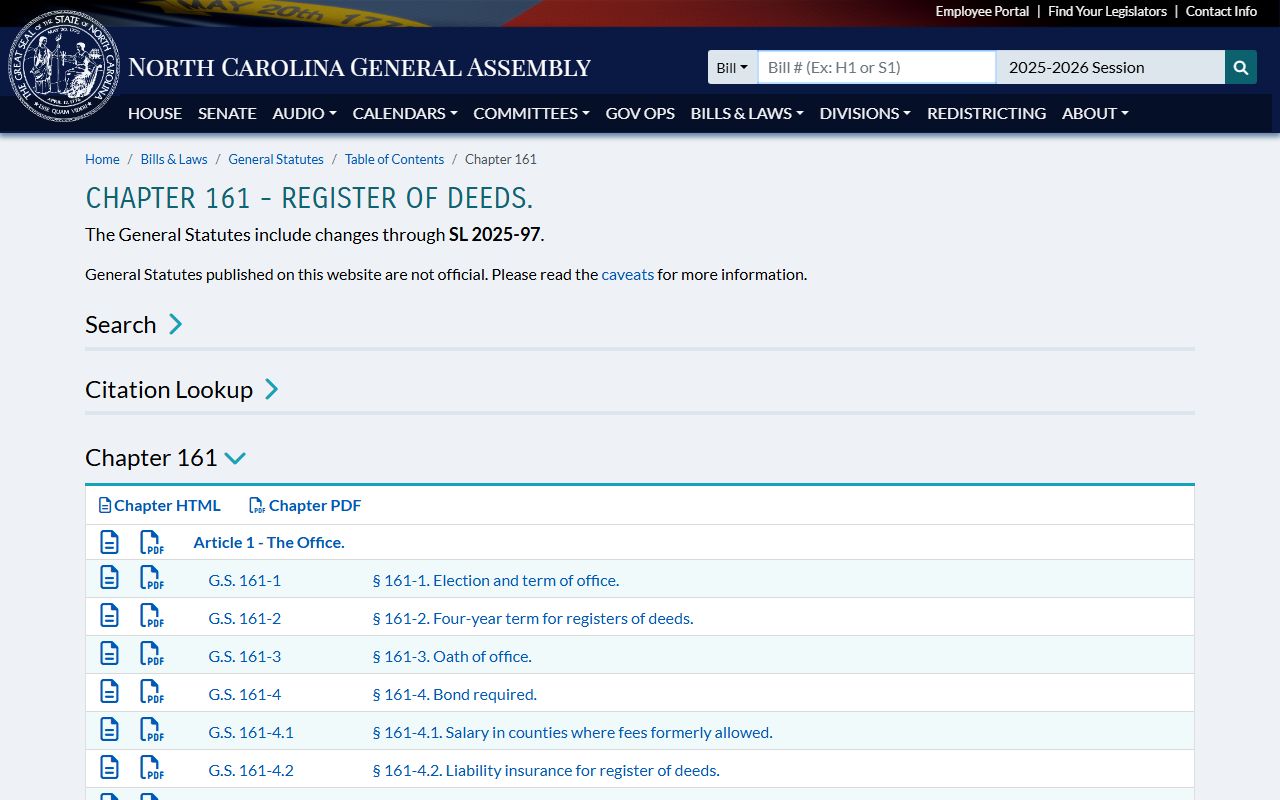
Property owners should review these statutes to understand their rights during reappraisal.
Recording Documents in Catawba
All documents recorded in Catawba County must meet the requirements of N.C.G.S. Chapter 47. This includes deeds, deeds of trust, and other instruments that affect real property.
A deed needs the names of all parties, a legal description of the property, the grantor's notarized signature, and the consideration. The excise tax of $1 per $500 applies to most transfers. Exempt transfers do not owe the tax but must still be presented for recording. The Register of Deeds stamps each document with a book and page number. This number is how the document is found in future searches. Recording puts third parties on notice that the transfer happened. Without recording, a buyer risks losing the property to a later purchaser who records first.
- Proper notarization required on all deeds
- Legal description must match the property
- Excise tax collected at recording
- Return address must appear on page one
- Document must meet format standards
Catawba County Historical Records
Catawba County has over 180 years of recorded land history. The area was settled by German and Scots-Irish immigrants in the 1700s, but the county itself was not formed until 1842.
Early records from the pre-county period are found in Lincoln County records and at the North Carolina State Archives. The archives hold court minutes, estate files, and land grant records from across the state. For Catawba County specifically, these older records can help trace ownership back to the original land grants. The Secretary of State maintains business filings that may relate to property ownership, such as UCC liens. Chapter 47B of the General Statutes also allows electronic recording in counties that have adopted it. Check with the Catawba County office for availability.
Lien Records in Catawba County
Liens are an important part of property records in Catawba County. A lien is a legal claim against a property that must be satisfied before the title can transfer cleanly.
Common liens include mortgage liens from deeds of trust, tax liens for unpaid property taxes, mechanic's liens from unpaid construction work, and judgment liens from court cases. All of these are recorded with the Register of Deeds or filed with the clerk of court. When a title search turns up a lien, the seller must clear it before closing. The Torrens system under Chapter 43 provides an alternative path for resolving title issues on registered land, though few parcels in Catawba County use this system.
Nearby Counties
These counties share a border with Catawba County. If a property sits near a county line, verify which county it belongs to before filing any documents.