
Caldwell County Property Records
Caldwell County property records are maintained by the Register of Deeds in Lenoir, North Carolina. The county sits along the eastern edge of the Blue Ridge Mountains and has a mix of rural land, small towns, and growing communities. These records cover deeds, deeds of trust, plat maps, liens, and other documents that affect real property. Searching these records helps buyers confirm clear title and helps owners track the history of their land. You can visit the office in person or use state-level tools to access information about property in Caldwell County.
Caldwell County Quick Facts
Caldwell County Register of Deeds
The Register of Deeds in Caldwell County records and indexes all land documents. The office is in Lenoir. Staff help the public search for recorded documents and can issue certified copies for a fee.
The office records deeds, deeds of trust, plat maps, liens, powers of attorney, and other instruments that affect real property. Each document gets a book and page number when it is recorded. This number is how you find the document later. The office also maintains grantor and grantee indexes that let you search by name. Caldwell County was formed in 1841 from Burke and Wilkes Counties, so records in the county date from that year forward. For older records that predate the county's formation, check Burke or Wilkes County records or the North Carolina State Archives.
The NC Association of Registers of Deeds lists contact details for the Caldwell County office.
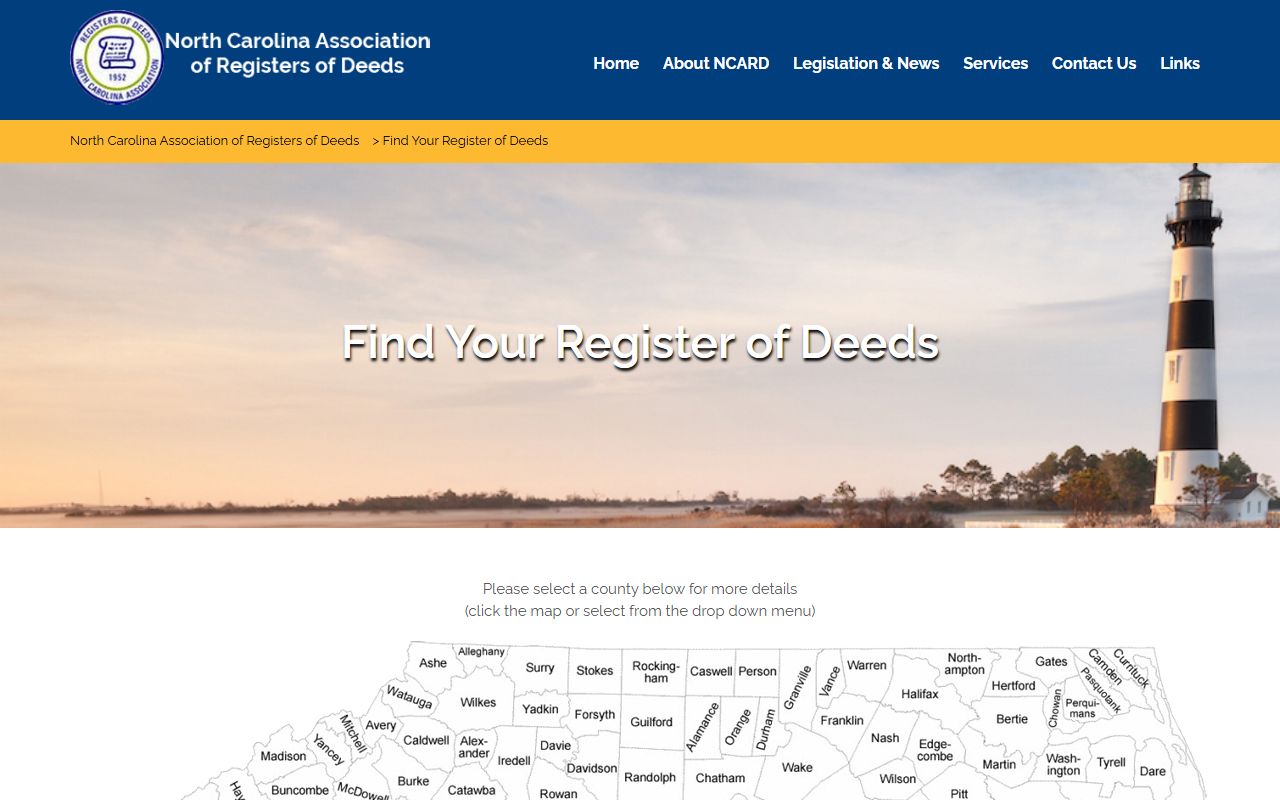
Use this directory to find phone numbers, hours, and the office address before your visit.
Recording Deeds in Caldwell County
To record a deed in Caldwell County, you must present the document to the Register of Deeds. The deed must meet the standards set by N.C.G.S. Chapter 47. This means proper notarization, clear identification of the parties, and a legal description of the property.
The excise tax applies to most deed transfers. The rate is $1 for every $500 of the sale price. Some transfers are exempt. Gifts between family members, transfers by court order, and transfers to government agencies do not owe excise tax. The Register of Deeds collects the tax at the time of recording. You also pay a recording fee based on the number of pages. In North Carolina, fees are set by N.C.G.S. Chapter 161.
Once recorded, the document becomes part of the public record. Anyone can search for it and request a copy. Recording is what puts third parties on notice of the transfer. An unrecorded deed is still valid between the parties, but it does not protect against claims by others who did not know about the transfer.
Caldwell County Tax Records
Tax records are another key part of the property record system in Caldwell County. The Tax Office assesses all real property and maintains records of assessed values and tax payments.
Every parcel in Caldwell County has an assessed value. This value is based on the market value of the property as determined during the most recent reappraisal. North Carolina law under N.C.G.S. Chapter 105 requires counties to reappraise property at regular intervals. The assessed value times the tax rate gives you the amount owed each year. You can search tax records by owner name, address, or parcel ID. Tax records also show whether taxes are current or past due. Unpaid taxes lead to a tax lien, which can eventually result in a tax sale if not resolved.
The general statutes cover all aspects of property taxation in the state.
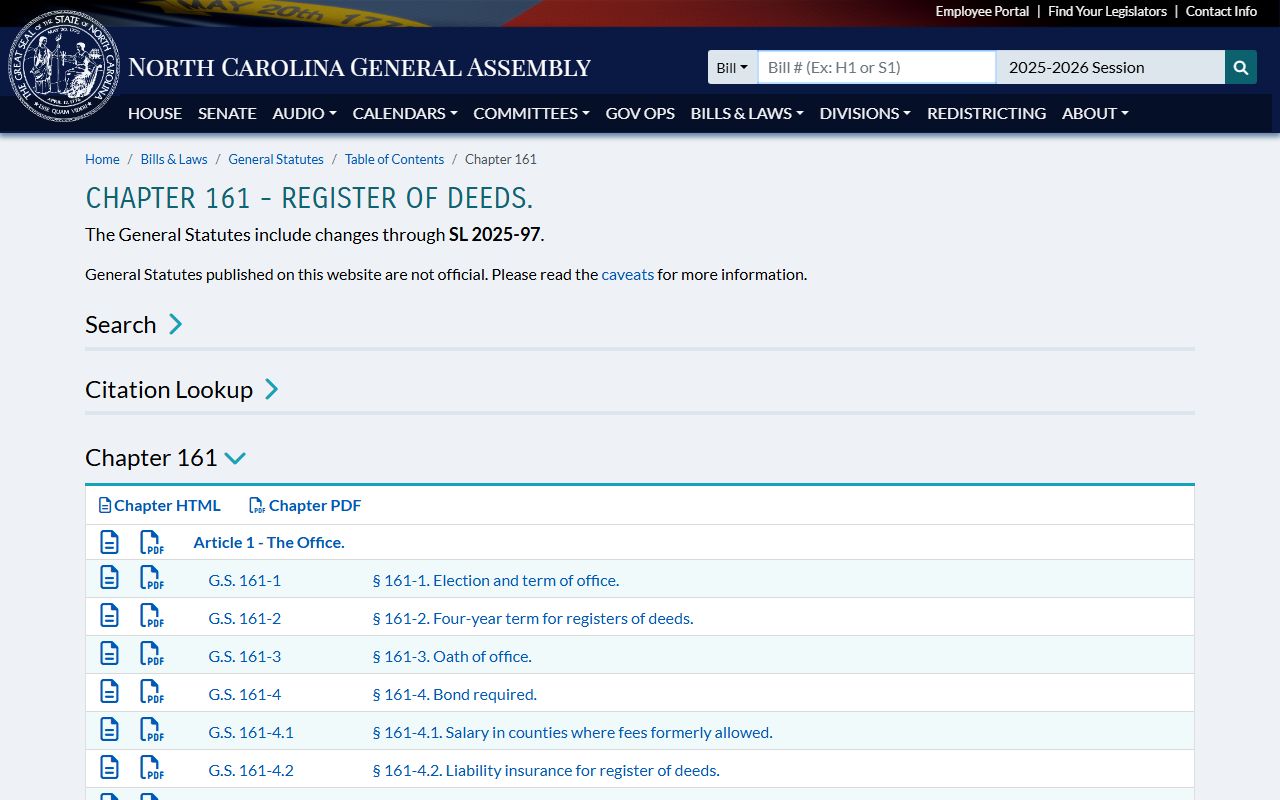
These statutes define how assessments work, when reappraisals happen, and how to appeal your value.
Note: Property owners in Caldwell County may qualify for tax relief programs such as the homestead exclusion for elderly or disabled residents.
Title Searches in Caldwell County
A title search examines the chain of ownership for a piece of land. In Caldwell County, this means checking the deed records at the Register of Deeds office going back at least 30 years.
The purpose of a title search is to confirm that the seller has clean title. Clean title means no outstanding liens, no competing claims, and no gaps in the chain of ownership. Title companies and real estate attorneys perform these searches as part of most real estate closings. They look at deeds, deeds of trust, judgments, tax liens, and other recorded documents. Any issue that comes up can delay the closing until it is cleared. Common problems include old mortgages that were paid off but never cancelled of record, misspelled names, and breaks in the chain.
- Check deeds for proper transfer language
- Verify that old mortgages have been cancelled
- Look for judgment liens against prior owners
- Confirm tax payments are current
- Review plat maps for boundary issues
North Carolina Property Laws
Several chapters of the North Carolina General Statutes govern property records in Caldwell County and statewide.
Chapter 43 covers the Torrens system of land registration. Chapter 47B addresses electronic recording of real property documents. The Secretary of State maintains records of UCC filings that may affect property. Understanding these laws helps you know what to expect when you file or search for documents in Caldwell County.
North Carolina uses a race-notice recording system. This means that a buyer who records first and had no knowledge of a prior unrecorded transfer takes priority. Prompt recording protects your interest. The Register of Deeds in Caldwell County time-stamps each document at the moment it is accepted, and that timestamp establishes priority over later recordings. Title insurance is common in Caldwell County real estate closings. It protects the buyer if a problem surfaces after the sale that the title search did not find.
The State Archives hold early land grant records for western North Carolina counties.
Researchers can search the archives catalog online before visiting the facility in Raleigh.
Nearby Counties
These counties share a border with Caldwell County. If your property is near a county line, confirm which county it falls in before recording any documents.