
Northampton County Land Property Records
Northampton County property records are stored at the Register of Deeds office in Jackson. This rural county sits along the Virginia border in northeastern North Carolina. Formed in 1741, Northampton County has nearly three centuries of recorded land documents. The office maintains deeds, liens, plat maps, and other instruments that cover all real property in the county. Property owners, buyers, and researchers use these records to verify ownership, trace boundaries, and check for claims on land.
Northampton County Quick Facts
Northampton County Register of Deeds
The Register of Deeds records and preserves all land documents in Northampton County. The office is in the courthouse in Jackson. Staff record new deeds, process liens, and file plat maps. They also handle vital records and military discharge recordings.
Every document must meet the standards of N.C.G.S. Chapter 47 before recording. This means proper notarization and correct formatting. Once recorded, the document gets a book and page number. That reference is permanent. The NC Association of Registers of Deeds has a directory with current contact details for the Northampton County office.
Northampton County is a quiet county. Recording volume is lower here than in urban areas. The staff can often provide more personal attention to visitors searching records at the courthouse. Bring your ID and whatever details you have about the property or owner. A name and date range will help narrow results quickly.
Searching Northampton Property Records
You can search Northampton County property records at the courthouse in Jackson. The office keeps grantor and grantee indexes that list every recorded transfer. Staff can search by owner name, book and page, or parcel number.
Online search tools may be limited in Northampton County. Rural counties often have smaller budgets for digital systems. Call the office to check what online tools are available. For records that predate computer systems, the original deed books at the courthouse are the primary source. These books go back to 1741 and are organized by recording date.
Title searches in Northampton County follow the standard 30-year period. A title professional reviews every deed, lien, and easement in the chain. Rural properties sometimes have older easements for utility lines, drainage ditches, or farm roads. These show up in the deed records and affect how the land can be used. Always review the full chain when buying property in Northampton County.
Northampton County Tax Records
The Northampton County Tax Office maintains assessed values for all parcels. Tax records are public. They show the current value, tax rate, and payment status for each property.
North Carolina law under N.C.G.S. Chapter 105 requires regular reappraisals. Northampton County follows this schedule. Property values in rural areas tend to be more stable than in urban markets, but the reappraisal process still adjusts values to match current conditions. The tax office can answer questions about assessments, payment plans, and the appeal process.
Agricultural land in Northampton County may qualify for present use value taxation. This program provides lower tax rates for active farmland. The status appears in the tax records and stays with the property as long as it meets the qualifying criteria.
Rural Property Records
Northampton County is largely rural. Farmland and forest cover most of the landscape. Property records reflect this character with many large-tract deeds and agricultural parcels.
The Roanoke River runs through the county. Land near the river may have flood zone designations and wetland restrictions that appear in the property and planning records. Timber land is common in Northampton County, and some deeds separate timber rights from the surface rights. This means someone other than the landowner may hold the right to harvest trees. Buyers should check for reserved timber rights in the deed chain when purchasing wooded land in Northampton County.
Hunting leases are popular in this area. While lease agreements are not always recorded with the Register of Deeds, some long-term hunting easements are. These can affect how a buyer uses the land after purchase. Ask about any existing agreements when researching property in Northampton County.
Historical Records in Northampton
Northampton County was formed in 1741 from Bertie County. Records from that time forward are part of the county collection. Early documents are written by hand and describe land using natural features as boundary markers.
The North Carolina State Archives in Raleigh holds copies of early Northampton County records. These include old deed books, court minutes, estate files, and tax lists. Researchers tracing family history or old land grants will find valuable materials at the archives. Northampton County was a center of plantation agriculture before the Civil War, and property records from that era document large land holdings and their subsequent division.
The North Carolina General Statutes outline the duties of every Register of Deeds.
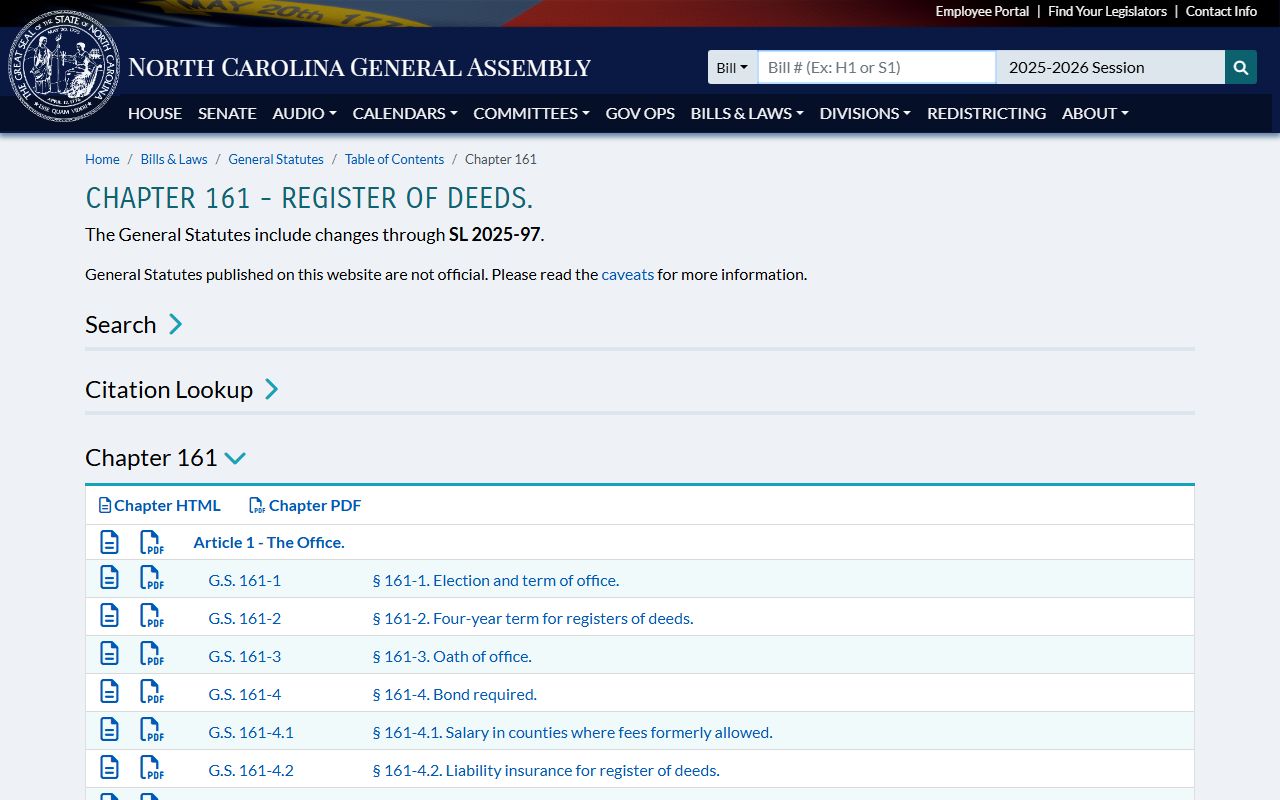
Under N.C.G.S. Chapter 161, the Register of Deeds is responsible for maintaining all recorded documents and providing public access to those records.
North Carolina Property Laws
State law governs property records in Northampton County. Chapter 47 covers recording requirements for deeds and other instruments. Chapter 47B addresses electronic recording.
The excise tax is $1 per $500 of the sale price. The North Carolina Secretary of State handles UCC filings that can affect property titles. A thorough title search in Northampton County reviews both county and state records to confirm the title is clear. The Uniform Real Property Electronic Recording Act under Chapter 47B allows for electronic filing where the county supports it.
Nearby Counties
These counties border Northampton County. Confirm the county your property is in before starting a records search.