
Halifax County Real Property Records
Halifax County property records are stored at the Register of Deeds office in the town of Halifax, North Carolina. The county was formed in 1758 from Edgecombe County, making it one of the oldest in the state. Records here cover deeds, deeds of trust, liens, plat maps, and other documents tied to land ownership. Halifax County sits in the northeastern part of North Carolina along the Roanoke River. Residents and researchers can access property records in person at the county office or through state-level online resources.
Halifax County Quick Facts
Halifax County Register of Deeds
The Halifax County Register of Deeds is the official custodian of all land records in the county. This office records and indexes deeds, deeds of trust, plat maps, liens, and other instruments that affect real property. The office also handles vital records such as birth and death certificates and marriage licenses.
Halifax County has a long history. It played a role in the American Revolution and was home to the Halifax Resolves of 1776. Property records in the county stretch back more than 260 years. Early documents were handwritten in bound volumes. Many of these old records are still on file at the Register of Deeds office. Staff can help you locate specific documents by owner name, parcel number, or book and page reference. Bring any details you have about the property when you visit.
The North Carolina Association of Register of Deeds maintains a directory of all county offices. You can use this directory to find contact details and hours for the Halifax County office before your visit.
Searching Halifax County Property Records
Finding property records in Halifax County starts with the Register of Deeds office. You can visit in person during business hours to search the grantor and grantee indexes. These indexes list every recorded transfer of land in the county. The grantor index shows sellers. The grantee index shows buyers. By working through both, you can build a full chain of title for any parcel.
State-level resources also help with Halifax County research. The North Carolina General Statutes govern how records are kept and accessed. N.C.G.S. Chapter 161 sets out the duties and fees for Register of Deeds offices across the state. Copy fees and recording fees are standard across all counties in North Carolina.
You can view state-level resources for locating property records below.
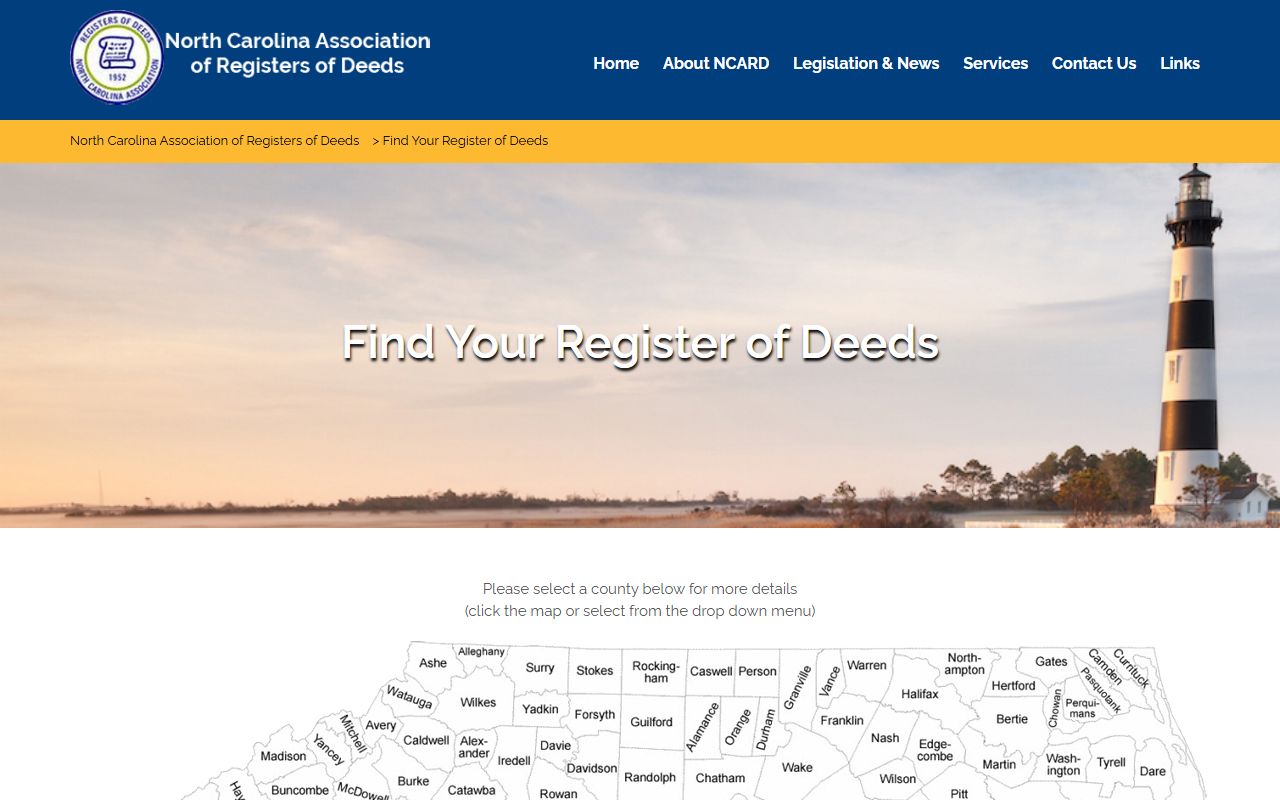
This statewide directory helps you find the Register of Deeds office in Halifax County and every other county in North Carolina.
Halifax County Deed Types
Several types of deeds are recorded in Halifax County. Warranty deeds are the most common. They guarantee clear title from the seller to the buyer. Special warranty deeds limit that guarantee to the seller's period of ownership. Quitclaim deeds transfer whatever interest the grantor has without any warranty at all.
Deeds of trust are also very common. North Carolina is a deed of trust state. This means home loans are secured by a deed of trust rather than a mortgage. The deed of trust involves three parties: borrower, lender, and trustee. When the loan is paid off, the lender files a cancellation with the Halifax County Register of Deeds. This removes the lien from the property record.
Liens from taxes, court judgments, and contractor work also appear in Halifax County records. Each lien type has its own rules under North Carolina law. Tax liens take priority over most other claims. Mechanic's liens must be filed within a set time after the work is done. All of these documents become part of the public record once filed with the Register of Deeds.
Recording Documents in Halifax County
To record a deed or other instrument in Halifax County, you must meet the requirements of N.C.G.S. Chapter 47. Documents must be signed by the grantor and notarized. The grantor's name must appear exactly as it does on the prior recorded deed. A return address is required on the first page.
Halifax County collects an excise tax on real estate sales. The state rate is one dollar per five hundred dollars of the sale price, as set by N.C.G.S. Chapter 105. Recording fees cover the cost of indexing and preserving the document. Both the tax and fees are collected at the time of recording.
Electronic recording is available in North Carolina under N.C.G.S. Chapter 47B. Title companies and attorneys may submit documents to Halifax County through approved electronic platforms. This speeds up the recording process and reduces the need for in-person visits.
Historical Property Records in Halifax
Halifax County was established in 1758. That gives it nearly 270 years of recorded land history. The earliest records include land grants from the colonial period. These documents trace back to original grants issued by the British Crown and later by the state of North Carolina.
The North Carolina State Archives in Raleigh holds copies of many early Halifax County records. These include old grant books, court minutes, and estate files. Researchers tracing land ownership to the colonial era will find the archives a valuable resource. The North Carolina Secretary of State website is also useful for checking business filings that may affect property titles in Halifax County.
Title searches in Halifax County typically go back 30 years. North Carolina's Marketable Title Act treats a 30-year chain as sufficient for most closings. Older claims not preserved in the record may be extinguished. This protects current owners and lenders who rely on the recorded chain of title. For older research, the State Archives and the Register of Deeds office are the best starting points.
Halifax County Tax Records
The Halifax County tax office assesses all real property in the county. Tax records show assessed values, tax rates, and amounts owed for each parcel. These records are updated each year and reflect the most recent reappraisal cycle. North Carolina requires counties to reappraise all property on a regular schedule under N.C.G.S. Chapter 105.
Tax records are useful for many purposes. Buyers use them to estimate annual costs. Owners check them when appealing an assessment. Title searchers look for unpaid taxes that could create a lien. In Halifax County, you can access tax records through the county tax office. Bring the parcel number or property address for the fastest results.