
Madison County Land Property Records
Madison County property records are kept at the Register of Deeds office in Marshall, North Carolina. This mountain county borders Tennessee to the north and features rugged terrain along the French Broad River. Property records here include deeds, deeds of trust, plat maps, liens, and other land documents. The Register of Deeds office records and indexes all instruments related to real property. Residents and title professionals use these records to trace ownership, confirm boundaries, and check for liens or encumbrances on parcels throughout Madison County.
Madison County Quick Facts
Madison County Register of Deeds
The Register of Deeds in Madison County handles all recorded property documents. The office is in Marshall at the county courthouse. Staff record deeds, deeds of trust, liens, plat maps, and other instruments. They also manage vital records including birth and death certificates for the county.
Madison County was formed in 1851 from Buncombe and Yancey Counties. Property records date back to that year. Earlier records for land that became Madison County can be found in the Buncombe or Yancey County offices, depending on where the parcel was located at the time. The county sits along the French Broad River and includes communities like Mars Hill, Hot Springs, and Marshall. Each of these areas has its own distinct property history tied to the land records at the courthouse.
The Register of Deeds indexes every document by grantor, grantee, and recording date. Certified copies are available. Visit the office during business hours or call ahead to confirm what you need to bring.
Searching Madison County Property Records
Finding property records in Madison County means working with the grantor and grantee indexes. The grantor index lists those who transferred property. The grantee index lists those who received it. Together, these indexes trace the ownership of any parcel in the county.
You can search at the office in Marshall or use statewide resources to find Madison County records. The NC Association of Register of Deeds maintains a directory with contact information for every county office. For older records, the North Carolina State Archives in Raleigh holds copies of early land grants and court files from Madison County's parent counties.
The NC General Statutes governing registers of deeds are shown below.
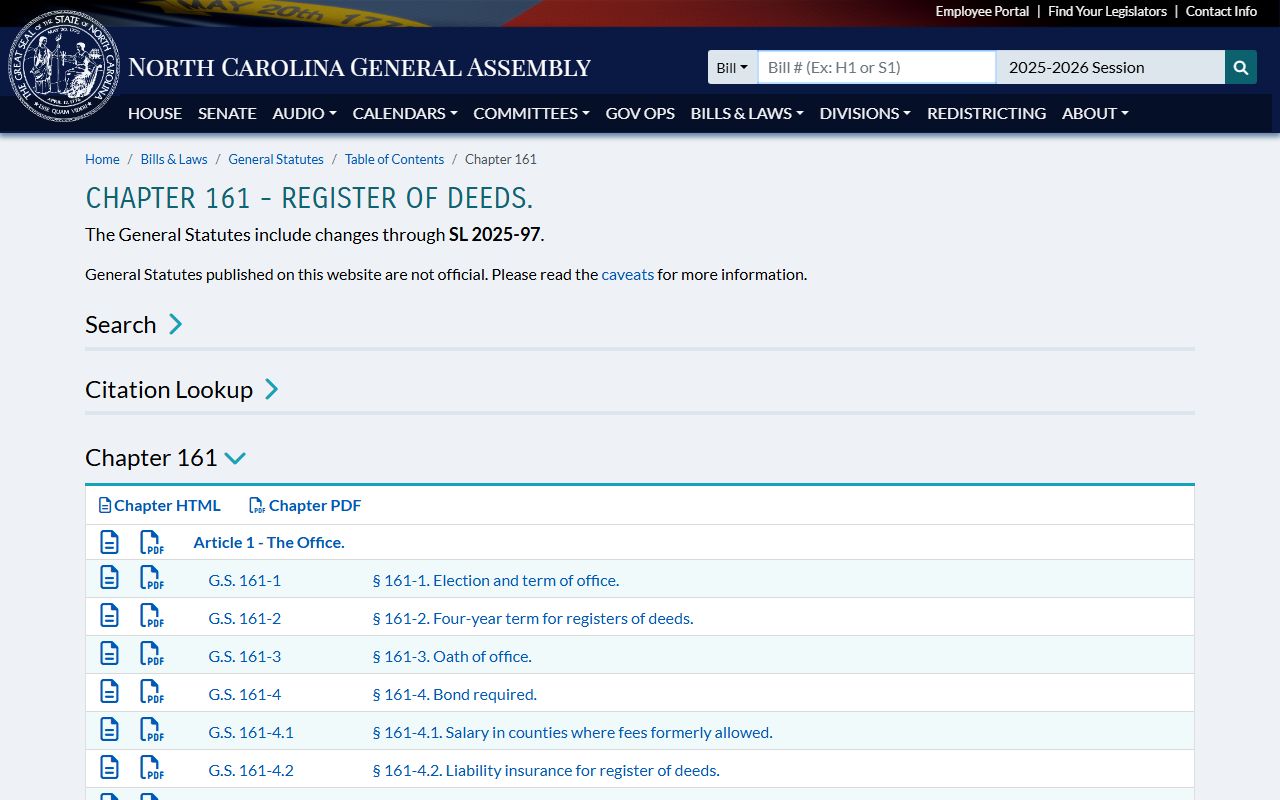
These statutes under N.C.G.S. Chapter 161 set the rules for how property records are managed across the state.
Madison County Tax Records
The Madison County Tax Office assesses all real property and collects property taxes. Tax records show assessed values, tax rates, and payment histories for each parcel. These records are public.
Mountain property values in Madison County vary widely. A parcel with views of the Blue Ridge Mountains or river frontage on the French Broad may carry a much higher assessment than a similar-sized lot in a hollow. Under N.C.G.S. Chapter 105, North Carolina counties must revalue all property at least every eight years. Madison County follows this schedule. Property owners who disagree with their assessment can file an appeal with the county. Tax records are useful for buyers who want to know the annual cost of owning a specific parcel before making an offer.
Unpaid property taxes result in a lien on the property. These liens appear in the public record.
Types of Madison County Deeds
Several deed types appear in Madison County property records. Each one serves a different role in transferring ownership or placing a claim on the land.
General warranty deeds offer the most protection for buyers. The seller guarantees clear title all the way back through the chain. Special warranty deeds cover only the seller's period of ownership. Quitclaim deeds transfer interest without any warranty and are common in family transfers and estate settlements. Deeds of trust secure loans. North Carolina uses this instrument instead of traditional mortgages. When the loan is paid off, a cancellation is filed with the Register of Deeds in Madison County.
- General warranty deeds for full buyer protection
- Special warranty deeds covering the seller's time
- Quitclaim deeds for family and estate transfers
- Deeds of trust for secured lending
- Plat maps showing lot lines and easements
All documents must meet the recording standards of N.C.G.S. Chapter 47. This includes proper notarization and a return address on the first page.
Mountain Land Records
Madison County's mountain terrain shapes its property records in ways not seen in the flatlands. Legal descriptions reference ridges, creek beds, and old survey markers. Some older deeds call out trees or rock formations as boundary points. These natural markers may have changed over the years, which is why modern surveys are important for confirming boundaries.
Access easements are common in the mountains. Many parcels in Madison County sit at the end of shared roads or drives that cross other owners' land. The deed records at the Register of Deeds show whether an easement exists for road access, utilities, or water rights. Buyers should review these details before purchasing mountain property. Without a recorded easement, getting to the property could become a legal issue. The North Carolina Secretary of State maintains business filings that may also affect property owned by LLCs or corporations in the county.
North Carolina Property Law
State law governs property records in Madison County and every other county in North Carolina. Chapter 47 covers the requirements for recorded instruments. Chapter 47B addresses electronic recording. The Marketable Title Act simplifies title searches by focusing on a 30-year chain of ownership.
The excise tax on property transfers in Madison County is one dollar per five hundred dollars of the sale price. This tax is collected at the time of recording. Recording fees also apply and cover the cost of indexing and storing each document in the county system. These rules are the same across all 100 North Carolina counties.
Nearby Counties
These counties border Madison County in the western North Carolina mountains. Make sure your property falls within Madison County before searching here.