
Haywood County Property Records
Haywood County property records are filed with the Register of Deeds in Waynesville, North Carolina. Located in the western mountains of the state, Haywood County was formed in 1808 from Buncombe County. Property records here include deeds, deeds of trust, plat maps, liens, and other land documents. The county's mountain terrain means many parcels involve steep slopes, timber rights, and watershed areas. Whether you need a deed copy or want to trace ownership history, the Register of Deeds office is the starting point for all recorded land documents in Haywood County.
Haywood County Quick Facts
Haywood County Register of Deeds
The Haywood County Register of Deeds office records and preserves all land documents filed in the county. This includes deeds, deeds of trust, liens, plat maps, powers of attorney, and other instruments that affect real property. The office also handles vital records. It is located in the Haywood County courthouse complex in Waynesville.
Staff at the office can assist you with searching the grantor and grantee indexes. These indexes list every property transfer recorded in the county. You can search by owner name, book and page number, or instrument number. Haywood County's records date back to 1808. Early documents were written by hand on parchment. Many of these old records are still on file and can be viewed at the office.
For hours and contact details, the NC Association of Register of Deeds provides a statewide directory that includes the Haywood County office. You can also review state recording guidelines on the North Carolina General Statutes website.
Searching Haywood County Property Records
Property record searches in Haywood County typically start at the Register of Deeds office. You can visit during business hours and use the index books to look up any recorded document. The staff will guide you if it is your first time searching records. They can pull document images and make copies for a small fee.
State-level resources are also available. The N.C.G.S. Chapter 161 governs the duties of Register of Deeds offices across North Carolina, including fees for copies and recordings. This chapter sets the standard that all counties must follow.
Below is a state resource that helps locate Register of Deeds offices in North Carolina.
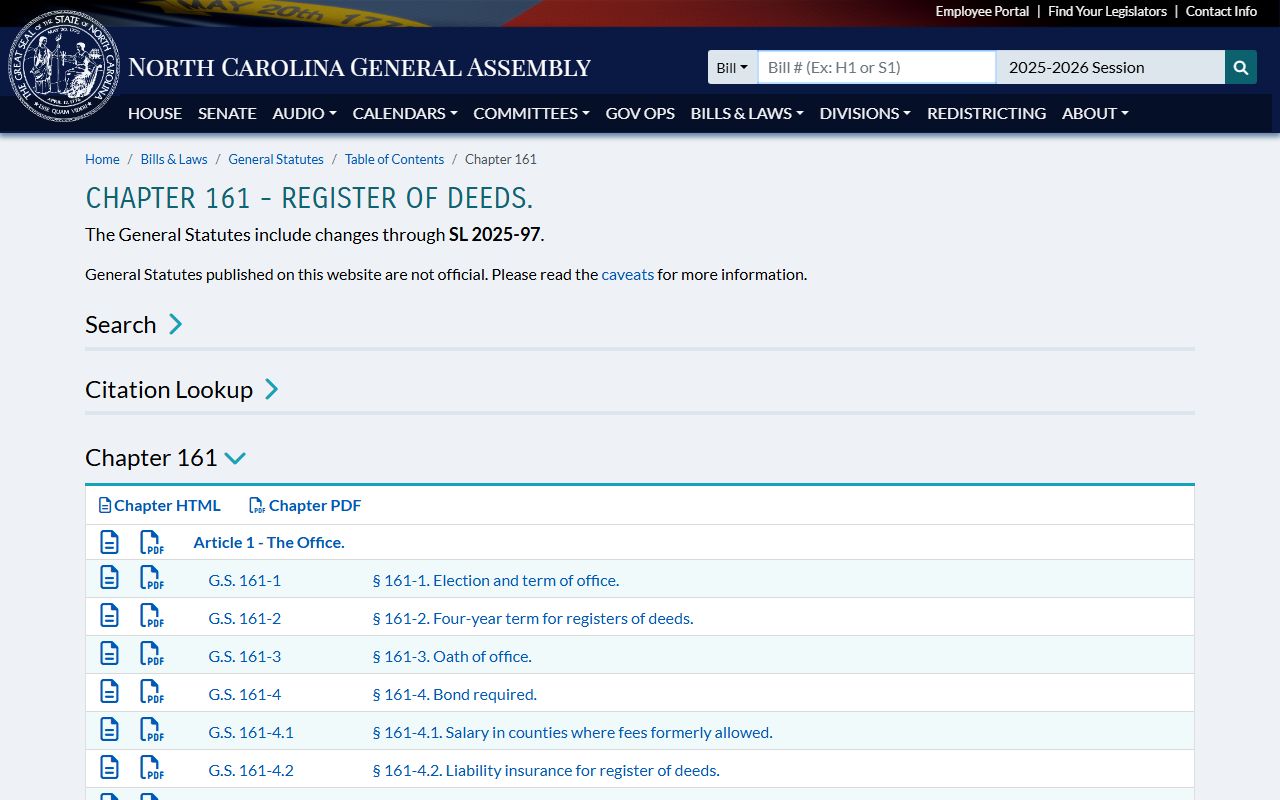
These statutes govern how property documents are recorded and stored in Haywood County and all other North Carolina counties.
Mountain properties in Haywood County sometimes involve special considerations. Parcels near the Blue Ridge Parkway or Great Smoky Mountains National Park may have federal easements or restrictions. Check for these when researching property in the western part of the county.
Haywood County Deed Types
Property records in Haywood County contain a variety of deed types. General warranty deeds provide the strongest protection for the buyer. The seller guarantees clear title going back to the original grant. Special warranty deeds limit the guarantee to the seller's time of ownership. Quitclaim deeds offer no warranty and simply transfer whatever interest the grantor holds.
Deeds of trust secure home loans. They are used in place of mortgages throughout North Carolina. A deed of trust names three parties: the borrower, the lender, and a trustee. The trustee holds title until the loan is paid. When the debt is satisfied, the lender records a cancellation with the Haywood County Register of Deeds.
Timber deeds and mineral rights deeds also appear in Haywood County records. The mountain landscape has a long history of timber harvesting and mineral extraction. These deeds can separate the surface rights from the subsurface or timber rights on the same parcel. Buyers should check for these separations when purchasing mountain property in Haywood County.
Recording Property Documents in Haywood
Filing a document in Haywood County requires meeting state standards under N.C.G.S. Chapter 47. All deeds must be signed and notarized. The grantor's name must match the prior recorded deed. A return address must appear on the first page. Documents should be originals unless a statute allows otherwise.
The excise tax on real estate transfers applies in Haywood County at the standard state rate of one dollar per five hundred dollars of sale price. N.C.G.S. Chapter 105 controls this tax. The Register of Deeds collects it at recording. Standard recording fees are also due at that time. These fees cover the cost of indexing and preserving the document in the county's records.
Title Research in Haywood County
Title searches in Haywood County trace the chain of ownership from the current owner back through each prior transfer. Most searches cover at least 30 years. North Carolina's Marketable Title Act generally treats a 30-year chain as sufficient. This protects buyers and lenders from very old claims that were never re-recorded.
A full title search in Haywood County also checks for liens, easements, restrictive covenants, and tax balances. Mountain properties may have additional considerations such as timber rights, mineral rights, or conservation easements. These do not always show up in a standard deed search. Professional searchers look at both the deed records and the plat maps to get a complete picture.
The North Carolina State Archives holds records that predate Haywood County's formation in 1808. Early land grants and court records can fill in gaps for researchers tracing ownership back to the earliest settlements. The NC Secretary of State website is another resource for checking business filings that may affect property ownership.
Haywood County Tax Records
The Haywood County tax office maintains assessed values and tax records for all real property in the county. Tax records show the current assessed value, the tax rate, and any balance owed. The county reappraises property on a regular cycle as required by state law.
Unpaid property taxes create a lien that takes priority over most other claims. Checking for tax liens is a standard part of any title search. In Haywood County, mountain properties can vary widely in value depending on elevation, access, and views. The tax records reflect these differences in their assessed values. You can access tax information through the county tax office in Waynesville.