
Camden County Property Records
Camden County property records are stored at the Register of Deeds office in Camden, a small town in northeastern North Carolina. This rural county borders the Albemarle Sound and the Virginia state line. The Register of Deeds records deeds, plat maps, liens, and other land documents for all property in the county. Camden is one of the smallest counties in the state by population, but its land records stretch back to the late 1700s. You can visit the office in person or use state resources to begin your search for property records in Camden County.
Camden County Quick Facts
Camden County Register of Deeds
The Register of Deeds in Camden County handles all recorded land documents. The office sits in the town of Camden, the county seat. Because Camden County is small, the office may have limited hours compared to larger counties. Call ahead before visiting to confirm the schedule.
The office records deeds, deeds of trust, plat maps, liens, and other instruments that affect real property. Each document receives a book and page number at recording. Staff maintain indexes that allow searches by grantor name, grantee name, or recording date. Camden County was formed in 1777 from Pasquotank County. Some early records may be incomplete due to age and the conditions under which they were stored. The NC Association of Registers of Deeds provides contact information for the Camden County office.
The statewide directory helps you reach any Register of Deeds office in North Carolina.
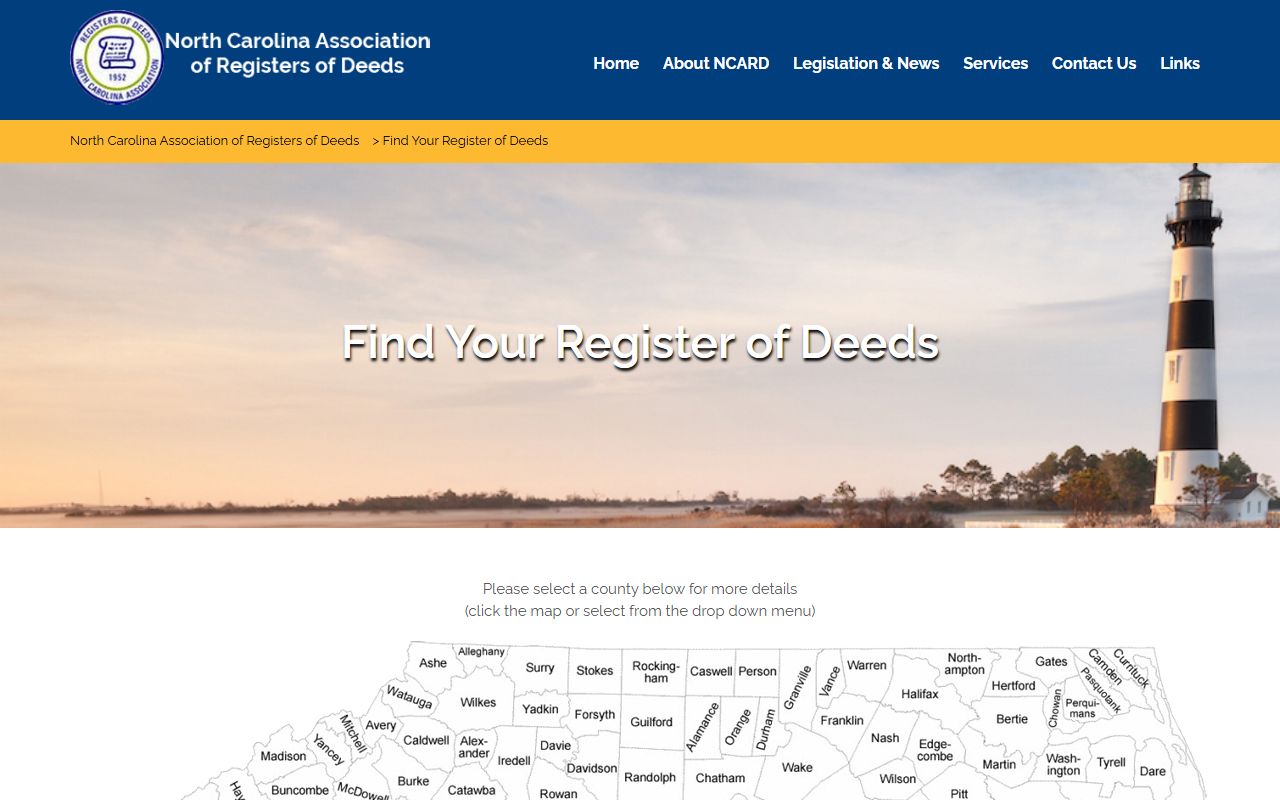
Listings include phone numbers, office addresses, and links to online resources when available.
Searching Camden Property Records
An in-person visit to the Register of Deeds is the most reliable way to search Camden County property records. The staff can pull documents and make copies while you wait.
Bring whatever details you have about the property. An address, owner name, or parcel number speeds up the search. If you know the book and page number from a prior search or a title reference, the staff can go right to the document. Without that, they will search the grantor and grantee indexes by name. These indexes list every document recorded under each name, going back to the county's earliest records. For property near the Virginia border, make sure the parcel is actually in Camden County and not across the state line, as boundary areas can cause confusion.
Certified copies of recorded documents follow the state fee schedule. The first page costs $5 and each added page costs $2. These fees are set by N.C.G.S. Chapter 161. Plain copies cost less. The staff can tell you the exact fees when you visit.
Camden County Deed Requirements
All deeds recorded in Camden County must meet the standards of N.C.G.S. Chapter 47. This chapter spells out the format, content, and notarization rules for recorded documents.
A valid deed must include the names of the grantor and grantee, a legal description of the property, the consideration or value, and the signature of the grantor. A notary public must acknowledge the signature. The excise tax of $1 per $500 applies to most transfers. Exempt transfers include gifts, court-ordered transfers, and conveyances to government bodies. The Register of Deeds checks each document for these requirements before accepting it for recording. If a document does not meet the rules, the office will reject it and explain what needs to be fixed.
- Grantor and grantee names spelled correctly
- Complete legal description of the parcel
- Notarized grantor signature
- Excise tax paid or exemption noted
- Return address on the first page
Note: Documents that do not meet these requirements will be returned without recording.
Tax Records for Camden County
The Camden County Tax Office assesses all real property in the county. Tax records show assessed values, tax rates, and payment status for each parcel.
Property reappraisals in Camden County follow the schedule set by N.C.G.S. Chapter 105. During reappraisal, every parcel gets a new assessed value based on current market data. Owners who disagree with their new value can appeal through the Board of Equalization and Review. Tax records are public and can be searched by owner name or address. They are useful for buyers who want to know the tax burden on a property before closing a deal. Past-due taxes create a lien that must be cleared before the property can transfer with clean title.
Historical Land Records in Camden
Camden County has land records going back more than two centuries. The county was carved from Pasquotank County in 1777. Early records include colonial-era land grants and transfers from that period.
The North Carolina State Archives in Raleigh preserves early Camden County records. These include court minutes, estate files, and land grant books that can help trace ownership to the original grant. Researchers working on historical properties or genealogy projects often use the archives alongside the county records. The Secretary of State website is another resource for historical business records that may touch on property ownership in Camden County.
Because Camden is a small county, some early records may have gaps. Water damage, fire, and the simple passage of time have affected records across many of North Carolina's oldest counties. When a gap exists, the State Archives or neighboring county records may help fill it.
North Carolina Land Registration
N.C.G.S. Chapter 43 covers the Torrens system of land registration in North Carolina. This system provides a court-certified title for registered land. It is not common, but some parcels in the state still use it. Chapter 47B allows electronic recording of real property documents in counties that have adopted the technology. Check with the Camden County Register of Deeds to see if e-recording is available.
Nearby Counties
These counties are near Camden County. Property along the county border may require a check of records in both counties depending on the exact location of the parcel.