
Gates County Property Records Search
Gates County property records are held at the Register of Deeds office in Gatesville, North Carolina. Formed in 1779 from parts of Hertford, Chowan, and Perquimans counties, Gates County is one of the smallest and most rural in the state. Its land records include deeds, plats, liens, and deeds of trust dating back to the late 1700s. Residents, buyers, and researchers can access these records to verify ownership, trace title history, and check for liens on real property in Gates County.
Gates County Quick Facts
Gates County Register of Deeds
The Gates County Register of Deeds office sits in Gatesville. This small northeastern North Carolina town serves as the county seat. Staff at the office record and store deeds, deeds of trust, plat maps, liens, and other real estate instruments. They also handle vital records for the county.
Gates County was formed in 1779. It borders Virginia to the north and sits in the northeastern corner of the state. The county has always been rural. Its population is small compared to most North Carolina counties. That means the volume of recorded documents is lower, but the records still go back well over two centuries.
The NC Association of Register of Deeds directory lists contact details for every county office. Use it to reach the Gates County office by phone or mail. This is a helpful step before you drive to Gatesville, especially since the office serves a small population and hours may vary.
The state directory that lists all Register of Deeds offices is shown below.
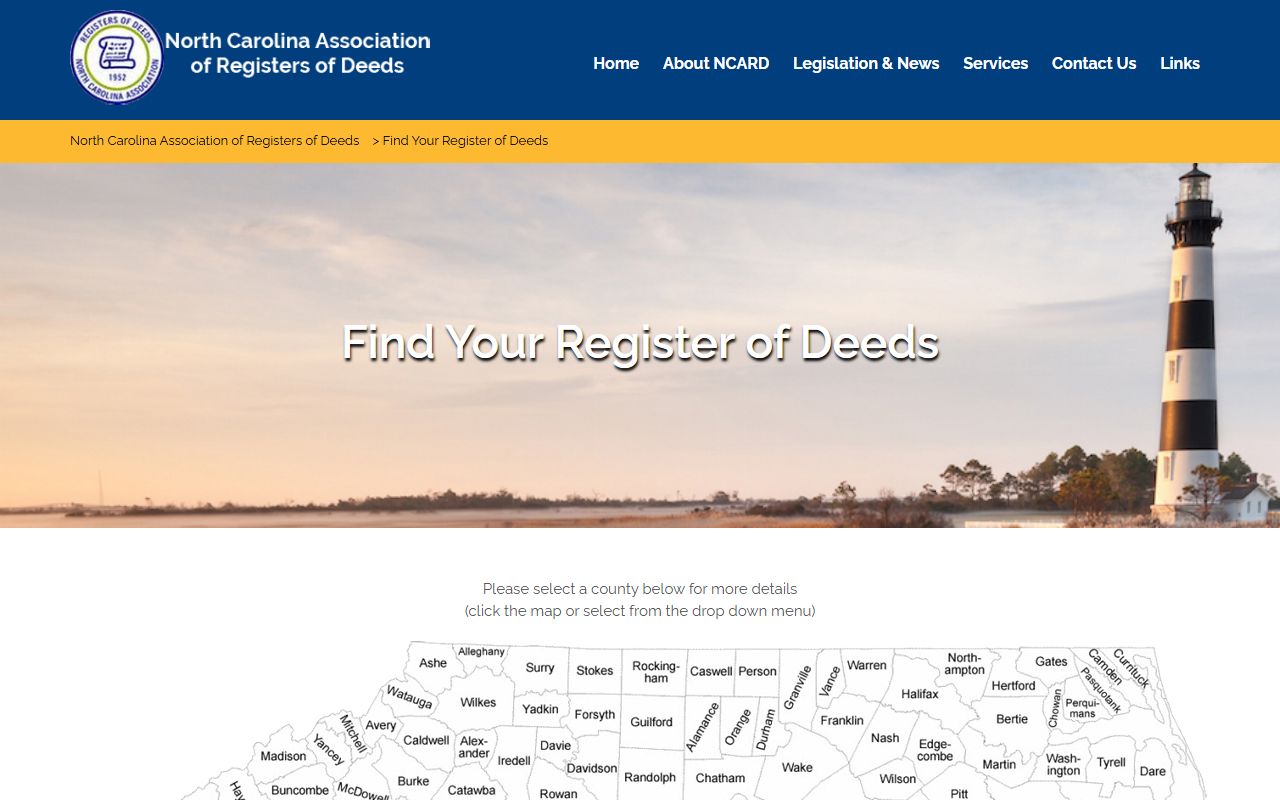
This statewide resource connects you with every Register of Deeds office in North Carolina.
Note: Gates County is one of the least populated counties in the state. Plan to visit during normal business hours and call ahead to confirm the office is open.
Searching Gates County Deed Records
To search Gates County property records, visit the Register of Deeds office in Gatesville. Bring whatever details you have about the property. An owner name, address, or parcel number will speed the search. Staff maintain grantor and grantee indexes that list every real estate transfer in the county.
The grantor index shows who sold or transferred land. The grantee index shows who received it. Together these indexes let you build a chain of title. A chain of title traces each transfer from the present owner back through all past owners. This is essential for any sale or loan closing.
Gates County's rural character means that many parcels are large farm or timber tracts. Some have stayed in the same family for many generations. The older deed books in Gates County contain handwritten entries that may be harder to read but still have full legal effect. If you need help reading older documents, the office staff or a local title professional can assist.
Types of Deeds in Gates County
Gates County property records contain several types of deeds. Warranty deeds are the most common for sales. A general warranty deed offers the strongest protection. The seller promises clear title going all the way back. A special warranty deed covers only the seller's time of ownership.
Quitclaim deeds are used to transfer interest without a warranty. Family members often use them. They are also common when clearing up minor title issues or in estate settlements. Deeds of trust secure home loans in North Carolina. N.C.G.S. Chapter 45 governs these instruments. A trustee holds the power to sell the property if the borrower stops making payments. When the loan is fully paid, a cancellation gets recorded to clear the lien.
Plat maps are another key document type. They show lot boundaries, road frontage, and subdivision layouts. Gates County requires that subdivision plats be recorded before lots can be sold. Easements and restrictive covenants may also appear in the records. These documents affect how land can be used even after ownership changes.
Recording Property Documents in Gates County
To record a deed or other instrument in Gates County, the document must satisfy the requirements of N.C.G.S. Chapter 47. It must be signed by the grantor, properly notarized, and include a return address on the first page. The grantor's name must match the name on the prior recorded deed.
Gates County collects excise tax on real estate sales at the state rate. That rate is one dollar per five hundred dollars of sale price, as set by N.C.G.S. Chapter 105. Recording fees also apply. The fees follow the schedule in N.C.G.S. Chapter 161.
The North Carolina statutes that govern recording are shown below.
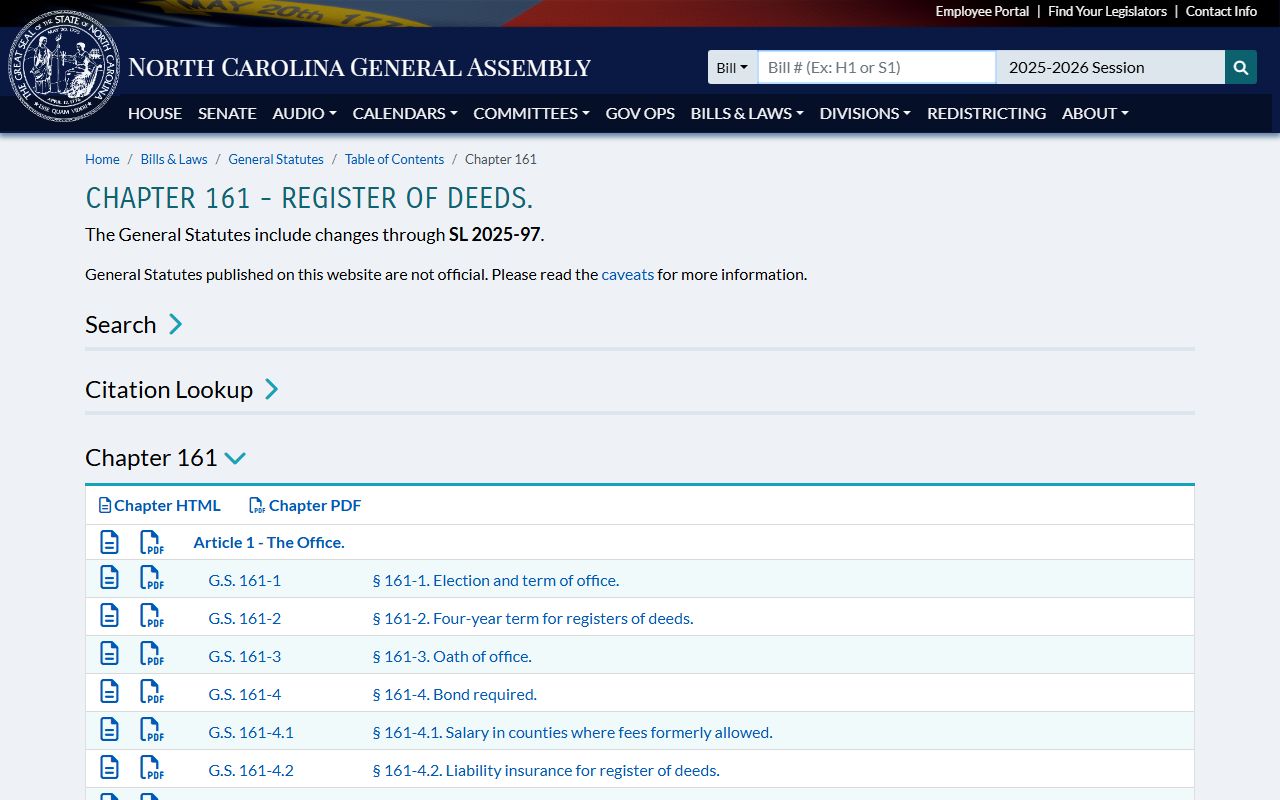
These statutes apply to every document recorded in Gates County.
Gates County Tax Records
The Gates County Tax Office maintains assessed values and tax records for all real property. These records show the value the county has placed on each parcel, along with the tax rate and payment status. You can search by owner name, address, or parcel number.
Under N.C.G.S. Chapter 105, North Carolina counties must reappraise property on a regular schedule. During reappraisal, county staff examine recent sales and property conditions to set new values. Property owners who disagree with their assessment can appeal to the board of equalization and review.
Tax records provide useful information for many purposes. Buyers check them to estimate their annual tax cost. Lenders verify that taxes are current before closing a loan. Title searchers review tax status as part of their report on a property in Gates County.
Title Research and Historical Records
A title search in Gates County traces ownership from the current owner back through each prior transfer. The search reveals liens, easements, and other items that affect the property. A clean chain of title is needed for a sale or loan to close.
North Carolina's Marketable Title Act sets a 30-year standard. Claims older than 30 years that have not been re-recorded may be cut off. This protects those who rely on the recorded chain. For very old records in Gates County, the State Archives in Raleigh may hold documents that predate the county's formation.
Gates County's long history means that some land records date to the colonial era. Researchers tracing family land or genealogy often find useful details in the oldest deed books. The Secretary of State also keeps UCC filings and business records that may touch on property ownership.
Note: Gates County shares a border with Virginia. Properties near the state line may involve records from both states.