
Fayetteville Property Records
Fayetteville property records are filed at the Cumberland County Register of Deeds. Fayetteville is the county seat and the largest city in Cumberland County. The city sits near Fort Liberty, one of the largest military bases in the country. This gives Fayetteville a unique real estate market with a mix of long-term residents and military families. Cumberland County was formed in 1754, and property records go back to that time. The Register of Deeds handles all deed recordings and lien filings for Fayetteville.
Fayetteville Quick Facts
Fayetteville Property Records Office
The Cumberland County Register of Deeds records all property documents for Fayetteville. This includes deeds, deeds of trust, liens, plats, and other land instruments. The office serves the entire county from one location in Fayetteville. Staff help visitors search records and obtain copies during business hours.
| Office | Cumberland County Register of Deeds |
|---|---|
| Phone | (910) 678-7775 |
| Hours | Monday through Friday, 8:00 AM to 5:00 PM |
Cumberland County also offers eRecording. Electronic recording lets title companies and real estate attorneys submit documents online. This speeds up the recording process for closings in Fayetteville. Walk-in visitors can still record documents at the counter during office hours. The office processes both electronic and in-person submissions each business day.
How to Search Fayetteville Property Records
Cumberland County provides online access to recorded property documents. You can search by grantor, grantee, book and page, or recording date. The online system shows document images you can view from home. It covers years of recorded documents for Fayetteville and all of Cumberland County.
The county also offers a GIS mapping tool. You can click any parcel in Fayetteville to see its owner, tax value, lot size, and zoning. The map includes layers for flood zones, municipal boundaries, and zoning districts. This is useful for looking up a property when you know its location but not the owner's name. Both the document search and the GIS tool are free to use.
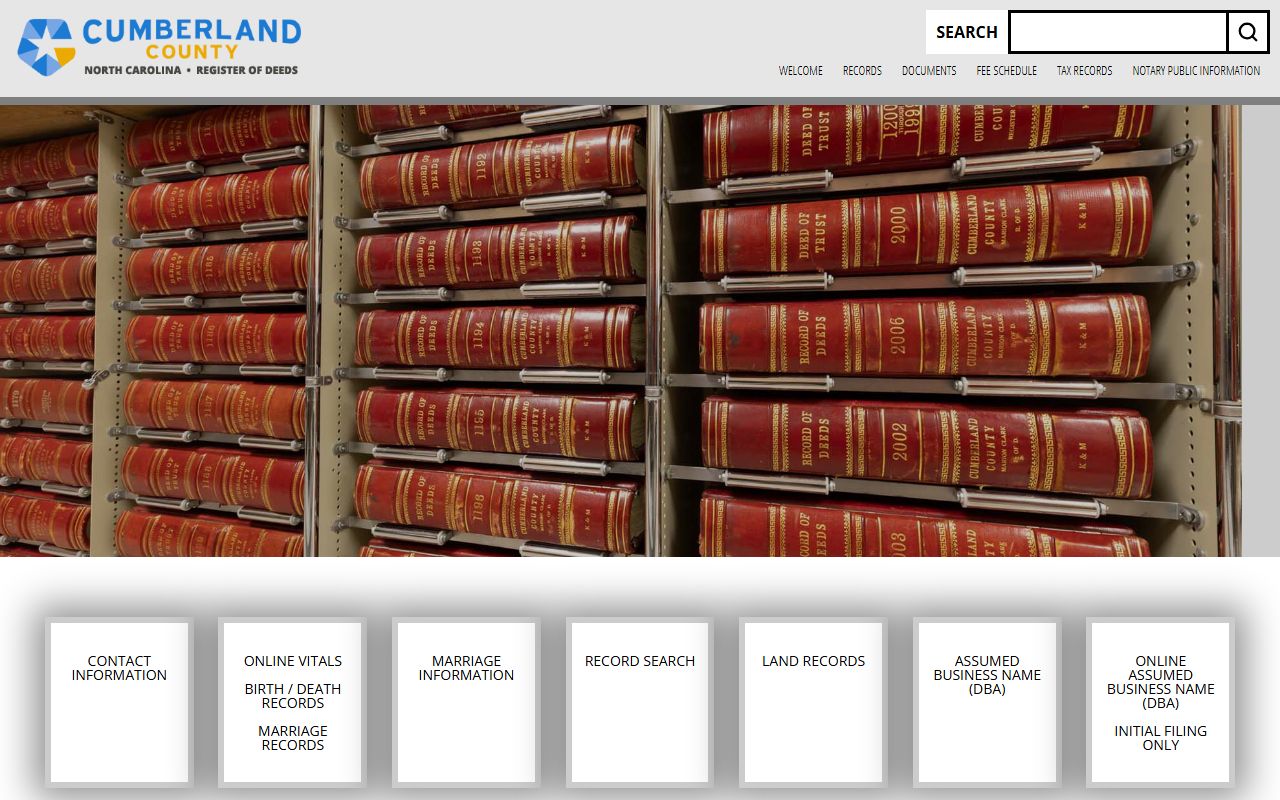
The image below shows the Cumberland County property records system used for Fayetteville searches.
For a full title search, you may need to visit the office or hire a title company. Online tools cover most recent recordings, but some older documents are only available in person at the Cumberland County office.
Fayetteville Deed Property Records
Each property sale in Fayetteville creates a new deed. The deed names the buyer and seller, describes the property, and is recorded at the Cumberland County Register of Deeds. Recording makes the transfer public. It gives notice that the property has changed hands.
Fayetteville's real estate market is closely tied to the military community near Fort Liberty. Properties in areas that serve military families see frequent sales as service members move in and out of the area. This creates a steady flow of new deed recordings at the Register of Deeds. Revenue stamps on each deed show the excise tax, which reflects the sale price. These records help track property values across Fayetteville neighborhoods.
The most common deed types in Fayetteville are general warranty deeds and special warranty deeds. General warranty deeds give buyers the strongest title protection. Quitclaim deeds are also used for family transfers and to clear up title issues. Each type serves a different purpose depending on the nature of the sale.
Property Liens in Fayetteville
Many types of liens are recorded against Fayetteville properties. Deeds of trust secure mortgage loans. Tax liens come from unpaid property taxes. Mechanic's liens protect contractors who did work on a property. All of these are filed at the Cumberland County Register of Deeds and become part of the public record.
Title searches check for all liens before a property sale closes in Fayetteville. A clear title means there are no outstanding claims against the property. Title companies run these searches for every real estate closing. If a lien shows up, the seller must clear it before the buyer takes ownership. Mortgage lenders in Fayetteville require title insurance to guard against any liens that might have been missed. This protects both the buyer and the lender after the sale closes.
Fayetteville Property Tax Records
Cumberland County assesses all property values in Fayetteville. Tax records show the assessed value, building data, and taxes owed. You can look up these records through the county tax office or GIS viewer. These records are public and free to access.
Fayetteville property owners pay both county and city taxes. The combined rate is set each year by the county and city. Property values are reassessed on a regular cycle as required by Chapter 105 of the NC General Statutes. If you believe your assessment is too high, you can file an appeal. The deadline for appeals is on your tax notice. Unpaid taxes create a lien and can eventually lead to a tax sale. Checking tax records before a purchase helps you estimate your tax costs in Fayetteville.
Recording Documents in Fayetteville
You can record property documents in Fayetteville at the Cumberland County Register of Deeds or through eRecording. The office charges recording fees set by Chapter 161 of the General Statutes. Excise tax is also collected on most property transfers at the time of recording.
All documents must meet formatting standards under Chapter 47 of the General Statutes. This means proper margins, legible text, and valid notarization. Documents that do not meet standards will be returned for correction. The NC Secretary of State sets notarization requirements that apply to all recorded documents. Call (910) 678-7775 to confirm current fees and requirements before submitting documents for recording in Fayetteville.
Historical Property Records in Fayetteville
Cumberland County has some of the oldest property records in North Carolina. The county was formed in 1754, and land records begin from that period. Fayetteville was an important trading center in the colonial era. Early deeds document land grants and sales from before the American Revolution.
The city played a key role in North Carolina history. The state convention that ratified the U.S. Constitution met in Fayetteville in 1789. Property records from that era show who owned land in the growing town. The NC State Archives holds many original Cumberland County documents from the 1700s and 1800s. The NC Association of Registers of Deeds can help you find the right office for your historical search. These records serve genealogists, historians, and property owners who need to trace the full history of their Fayetteville land.
Fayetteville Military Community Property Records
Fort Liberty creates a strong demand for housing in Fayetteville. Military families buy and sell homes frequently as duty stations change. This results in a high volume of property recordings at the Cumberland County Register of Deeds. Areas near the base see more turnover than other parts of the city.
Military buyers in Fayetteville often use VA loans. These loans have specific requirements that show up in the recorded documents. The deed of trust for a VA loan may look different from a conventional mortgage. Title companies in Fayetteville are familiar with military-related transactions and the documents they generate. Property records for these sales follow the same recording process as any other transfer in Cumberland County.
Cumberland County Property Records
Fayetteville is the county seat of Cumberland County. All property recordings for Fayetteville go through the Cumberland County Register of Deeds. The county serves Fayetteville, Spring Lake, Hope Mills, and other communities. For full details on the county office, fees, and resources, visit the Cumberland County property records page.