
Apex NC Property Records
Apex property records are maintained by the Wake County Register of Deeds. Apex does not have its own recording office. All deeds, liens, and land documents for Apex go through the county office in Raleigh. Apex is one of the fastest-growing towns in North Carolina, and that growth drives a high volume of property recordings each year. The Town Planning Department works closely with Wake County to keep property data current. Wake County records date back to 1771, covering centuries of land history across the Apex area.
Apex Quick Facts
Apex Property Records Through Wake County
The Wake County Register of Deeds handles all property recordings for Apex. The office is at 300 S. Salisbury Street in Raleigh. Apex residents must use this office for deed recordings, lien filings, and document searches. There is no separate recording office in Apex itself.
Wake County was formed in 1771. Property records span more than 250 years. Early documents cover land grants from the colonial era. Modern records include warranty deeds, deeds of trust, plats, and maps. The office records thousands of documents each year from across the county, including a large share from Apex due to its rapid growth.
| Office | Wake County Register of Deeds |
|---|---|
| Address | 300 S. Salisbury St Raleigh, NC 27601 |
| Hours | Monday through Friday, 8:00 AM to 5:00 PM |
Apex Town Planning coordinates with Wake County on zoning, land use, and subdivision matters. When a new neighborhood is built in Apex, the plats are recorded at the Wake County office. The town and county share data to keep property records accurate and up to date.
How to Search Apex Property Records Online
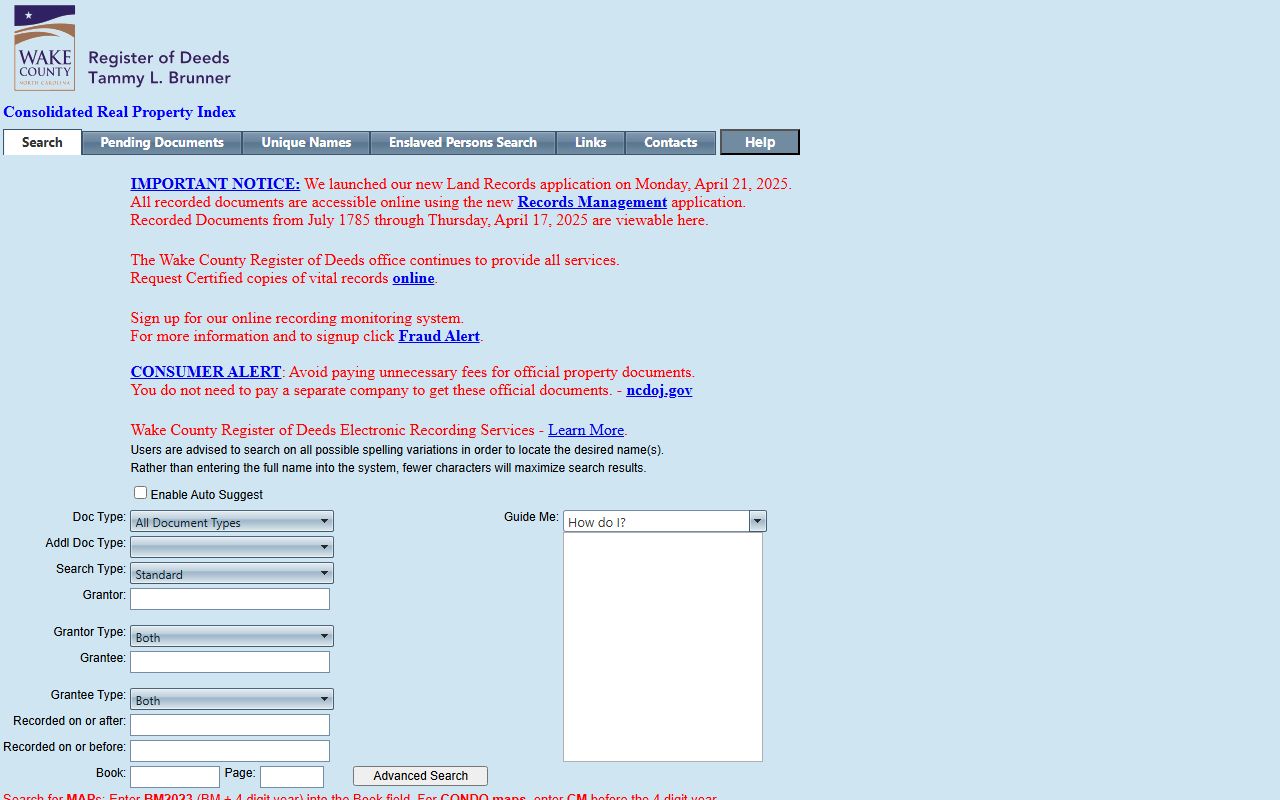
Wake County provides two main online tools for property searches. BooksWeb lets you search recorded documents by name, book and page, or recording date. You can view scanned images of deeds, liens, and other recorded instruments. The system is free and runs around the clock.
iMaps is the county's GIS tool. It shows parcel maps, ownership data, tax values, and zoning for every property in Apex. You can search by address or click a parcel on the map. The layers include flood zones, school districts, and municipal boundaries. Together, BooksWeb and iMaps give you a full picture of any Apex property without leaving your home.
The image below shows resources used to search Wake County property records for Apex.
For documents not yet online, you can contact the Wake County office by phone or visit in person. Staff can help locate older records that may not appear in the digital system. Most recent Apex recordings are available online within days of filing.
Apex Growth and Property Records
Apex has grown fast. The town has more than doubled in size over the past two decades. That growth shows up clearly in the property records. New subdivision plats, construction deeds, and lot sales fill the Wake County files. Each year brings hundreds of new recordings tied to Apex addresses.
The growth extends in every direction. Neighborhoods south of Highway 64 and west toward Holly Springs have added thousands of parcels. New commercial areas along US 1 generate their own set of recorded documents. Developers record plats and restrictive covenants that shape how these areas are built and used. All of these become part of the permanent public record at the Wake County Register of Deeds.
Buyers moving to Apex benefit from this well-kept record system. A title search through Wake County shows the full chain of ownership. It reveals any liens, easements, or restrictions on a property. In a fast-growing area like Apex, current records are essential for making sound buying decisions.
Apex Deed Records
Deeds for Apex properties are recorded at the Wake County office. A deed transfers ownership from seller to buyer. It includes the names of both parties, the legal description, and the recording date. Revenue stamps show the sale price based on the state excise tax rate.
General warranty deeds are the most common type in Apex home sales. They provide the strongest protection for buyers. Special warranty deeds and quitclaim deeds also appear in the records. Each deed type is indexed by the Wake County Register of Deeds so it can be found through a name or parcel search.
Apex Property Liens and Title Searches
Liens on Apex properties are filed at Wake County. Deeds of trust secure mortgages. Tax liens arise from unpaid taxes. Mechanic's liens protect contractors. All are part of the public record and can be found through a title search.
Title companies run searches before every closing in Apex. They check deeds, liens, judgments, and other recorded documents. The goal is a clean title with no hidden claims. Most lenders require title insurance as well. This protects both the buyer and the bank. North Carolina recording standards under Chapter 47 and Chapter 161 of the General Statutes apply to all filings in Wake County.
Property Tax Records for Apex
The Wake County Tax Assessor values all Apex properties. Tax records include the assessed value, the tax rate, and the yearly amount owed. Apex property owners pay both Wake County and Town of Apex taxes. The combined rate funds local services like schools, roads, and public safety.
Tax assessments follow the schedule set by Chapter 105 of the General Statutes. If you disagree with your Apex property's assessed value, you can appeal through the county tax office. Appeals have strict deadlines. Act quickly after your notice arrives. Unpaid taxes can lead to a lien on the property, which is recorded at the Register of Deeds and becomes part of the public record.
Historical Property Records in Apex
Apex was once a small railroad town. Its name comes from being the highest point on the Chatham Railroad between Richmond and Jacksonville. Property records from the late 1800s and early 1900s show a quiet community of farms and small lots. The town stayed small for most of the 20th century.
Old deeds and plats tell the story of how Apex changed. Land that was farmland in the 1970s is now full of homes and shops. The Wake County records trace each step of that transformation. Researchers can explore these records through BooksWeb or at the office in Raleigh. The North Carolina State Archives also holds older documents from the Wake County area. The NC Association of Registers of Deeds can guide you to the right search tools.
Recording Documents for Apex Properties
Recording a document for an Apex property requires a trip to the Wake County Register of Deeds in Raleigh, unless you use eRecording. The office charges fees set by state law. Excise tax is collected on property transfers at the time of recording.
Documents must have proper margins, clear text, and correct notarization. The NC Secretary of State sets notarization standards. Documents that do not meet the requirements will be rejected. Most Apex attorneys and title companies use eRecording to submit documents online, which cuts turnaround time. Requirements are outlined in Chapter 47B of the General Statutes.
Wake County Property Records
Apex is part of Wake County. All property recordings for Apex go through the Wake County Register of Deeds in Raleigh. The county serves Apex along with Raleigh, Cary, and other towns. For full details on the Wake County office, recording fees, and online tools, visit the county page.