
Transylvania County Property Records
Transylvania County property records are managed by the Register of Deeds in Brevard, North Carolina. Known as the Land of Waterfalls, Transylvania County sits in the Blue Ridge Mountains and holds land documents stretching back to the mid-1800s. The Register of Deeds office records and indexes all real estate transactions in the county. Public access is available at the courthouse in Brevard. These records cover deeds, liens, plats, and other instruments that document ownership across this scenic mountain county.
Transylvania County Quick Facts
Transylvania County Register of Deeds
The Transylvania County Register of Deeds is located in the courthouse in Brevard. This office records all land documents for the county. Staff handle deeds, deeds of trust, plats, liens, easements, and other instruments tied to real property. Each document is indexed for public access by name, date, and type.
Transylvania County was formed in 1861 from Henderson and Jackson counties. It covers about 381 square miles of mountain terrain in western North Carolina. The county is bordered by the Pisgah National Forest on multiple sides. Waterfalls, rivers, and dense forests define the landscape. Brevard serves as both the county seat and the cultural hub of the area. Land transactions here include mountain homes, vacation cabins, rural tracts, and town properties in Brevard.
The Transylvania County Register of Deeds website is shown below.
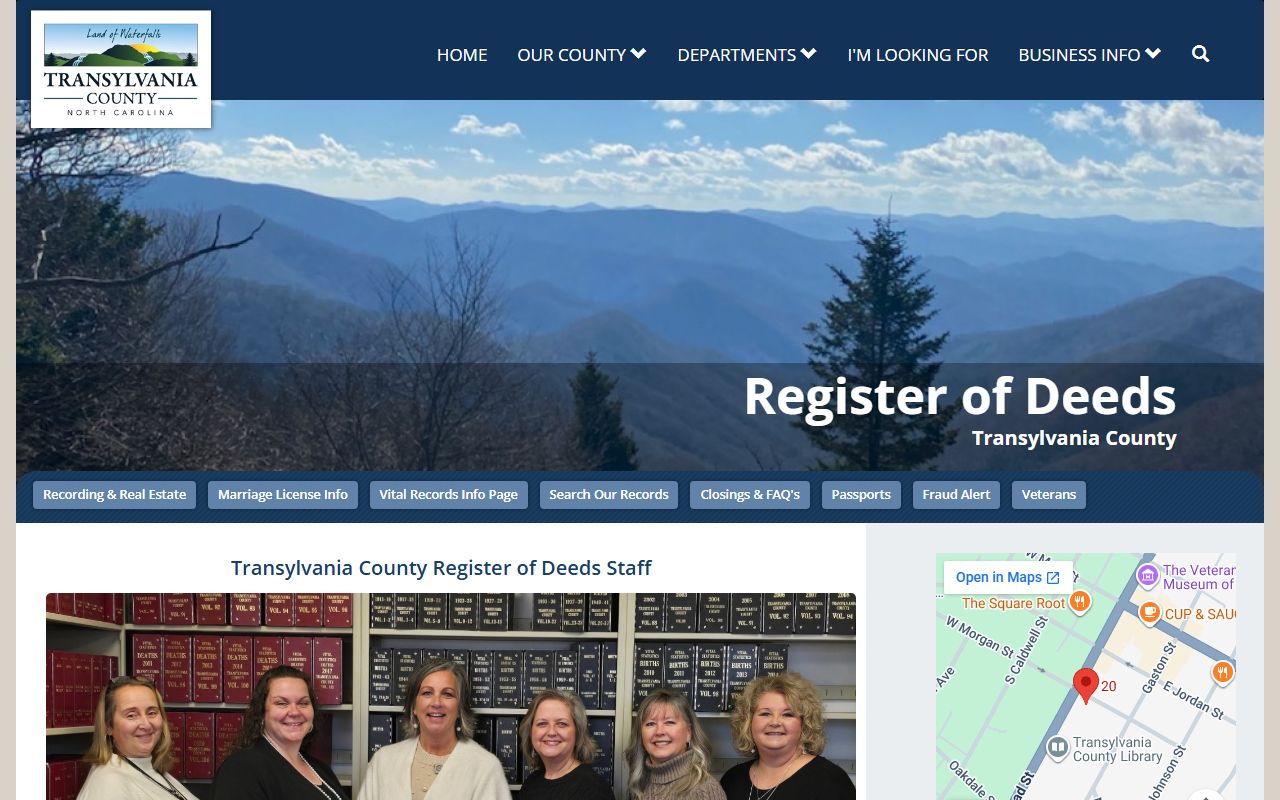
This is the main page for accessing recorded property documents in Transylvania County.
You can visit the Transylvania County Register of Deeds website for contact details and to begin searching records. The North Carolina Association of Register of Deeds directory also lists the office.
Searching Transylvania County Land Records
Finding property records in Transylvania County starts with the grantor and grantee indexes at the Register of Deeds. The grantor index lists sellers. The grantee index lists buyers. Search by name to find all transfers for a given person or entity.
For a title search, start with the current owner in the grantee index and trace backward. Each deed should connect to the previous one. This builds the chain of title for the parcel. Breaks in the chain may need to be addressed before a sale can go through. In Transylvania County, some mountain parcels have complicated histories involving timber company ownership, national forest boundaries, and family transfers over many generations.
Under N.C.G.S. Chapter 161, the Register of Deeds must maintain accurate and complete indexes. Transylvania County complies with these requirements. The indexes cover all instruments from 1861 forward. For records before that date, check Henderson or Jackson County, the parent counties.
Types of Transylvania County Property Records
Warranty deeds are the primary deed type in Transylvania County. They transfer full ownership and guarantee the title is clear. Quitclaim deeds transfer whatever interest the grantor holds without any warranty. These are common in family transfers, boundary agreements, and estate settlements.
Deeds of trust secure real estate loans in Transylvania County. North Carolina uses this system instead of mortgages. The borrower conveys the property to a trustee who holds it as collateral. When the loan is paid off, a cancellation is filed. If the borrower defaults, the trustee may sell the property through state foreclosure procedures.
Liens appear throughout the county records. Tax liens arise from unpaid property taxes. Mechanic's liens protect contractors. Judgment liens result from court orders. All liens attach to the property and stay on record until released. Plats and maps are also recorded. They show boundaries, lot lines, easements, and dedicated areas for roads and utilities.
Recording Property Documents
Documents filed in Transylvania County must meet the standards of N.C.G.S. Chapter 47. They must be signed and notarized. A return address is required on the first page. The grantor's name must match the name shown in the prior deed. Documents that do not meet these standards may be rejected by the Register of Deeds.
Recording fees and the excise tax on real estate transfers are collected at the time of filing. The excise tax is one dollar per five hundred dollars of sale price, as required by N.C.G.S. Chapter 105. Both the fee and the tax must be paid before the document is entered into the Transylvania County records.
Transylvania County Title Research
Title research in Transylvania County traces ownership from the present back through every recorded transfer. The search covers deeds, deeds of trust, liens, judgments, easements, and covenants. Every link in the chain must check out for the title to be considered clear.
The Marketable Title Act in North Carolina limits most searches to 30 years. Older claims not renewed or re-recorded may be extinguished under this law. This gives buyers and lenders in Transylvania County confidence that the recorded chain reflects true ownership.
Mountain land in Transylvania County can present unique challenges. Older parcels may reference natural landmarks in their legal descriptions. Boundaries may follow ridge tops, creek beds, or old trails that have shifted. Timber companies once owned large tracts that were later subdivided. Working with a title professional who knows the area can help untangle complex ownership histories and ensure a clean title.
Historical Records for Transylvania County
Transylvania County's history is shaped by its mountain setting. Early settlers farmed the valleys and harvested timber from the slopes. The logging industry brought railroads and growth in the late 1800s. Many land records from that period show large timber tracts changing hands. The creation of Pisgah National Forest in 1916 removed significant acreage from private ownership, and those transfers are documented in the county records.
The North Carolina State Archives holds older land grants and historical documents relevant to Transylvania County. These can help researchers trace ownership back to the earliest settlements in the area.
The State Archives is a key resource for historical land research in Transylvania County.
The North Carolina Secretary of State maintains records for business entities that may hold property in the county. This is useful when land is owned by a corporation, LLC, or trust.
Transylvania County Tax Records
The Transylvania County tax office keeps assessed values and payment histories for all parcels. These records show how the county values each property and whether taxes are current. Unpaid taxes can result in a lien that must be cleared before the property can be sold.
North Carolina requires revaluations at least every eight years. Transylvania County follows this schedule. Mountain properties can see significant shifts in value during a revaluation, especially those with views, water access, or proximity to the national forest. Buyers should review both deed records and tax records to get a complete understanding of a property before purchasing in Transylvania County.