
Scotland County Deed Property Records
Scotland County property records are managed by the Register of Deeds in Laurinburg, North Carolina. Formed in 1899, Scotland County is one of the newer counties in the state, but its land records reach back through the parent county of Richmond. The Register of Deeds office records and indexes all real estate transactions for the county. Public access is available at the courthouse in Laurinburg. These records cover deeds, liens, plats, and other instruments that affect property ownership throughout Scotland County.
Scotland County Quick Facts
Scotland County Register of Deeds
The Scotland County Register of Deeds office is located in the courthouse in Laurinburg. Staff in this office record all land documents for the county. This includes deeds, deeds of trust, plats, liens, easements, and other recorded instruments. Every document is indexed so the public can search by name, date, or instrument type.
Scotland County was carved from Richmond County in 1899. It sits in the Sandhills region of south-central North Carolina. The county covers about 321 square miles of sandy soil and pine forests. Laurinburg serves as both the county seat and the largest town. Land transactions here include residential lots in town, farm tracts in the rural areas, and commercial parcels along the main corridors.
The North Carolina Association of Register of Deeds provides a statewide directory of county offices. You can use it to find the Scotland County office address, phone number, and hours of operation.
The statewide directory for locating Register of Deeds offices is shown below.
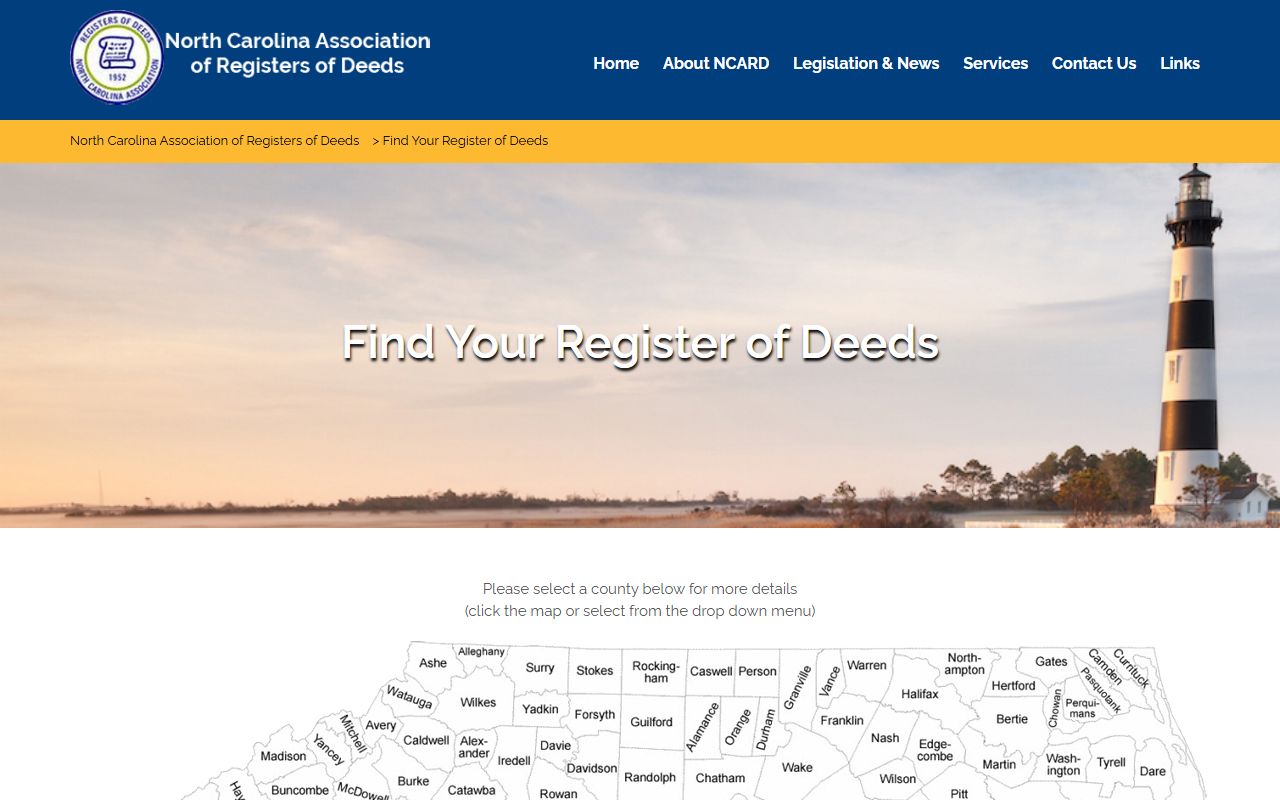
This directory includes contact details for the Scotland County Register of Deeds.
Searching Scotland County Land Records
Property record searches in Scotland County begin at the Register of Deeds office. The grantor index lists those who sold or transferred property. The grantee index lists those who received it. You can search by name to find all transfers involving a specific person or entity.
If you already have a book and page number, the staff can locate the document quickly. For broader searches, start with the grantee index and work backward through each prior owner. This builds the chain of title for the property. A complete chain shows every transfer from the present back to the earliest recorded deed.
North Carolina law under N.C.G.S. Chapter 161 requires each county's Register of Deeds to keep accurate indexes. Scotland County complies with these standards. For records predating 1899, you may need to check Richmond County records, since Scotland County was formed from Richmond.
Types of Scotland County Property Records
Warranty deeds are the primary deed type in Scotland County. They transfer full ownership and guarantee clear title. Quitclaim deeds transfer whatever interest the grantor has without any title guarantee. These are common in family transfers and divorce settlements.
Deeds of trust secure real estate loans in Scotland County. North Carolina uses this system instead of mortgages. Under state law, the borrower transfers the property to a trustee who holds it as collateral for the lender. When the loan is repaid, a cancellation is filed. If the borrower fails to pay, the trustee may sell the property through a foreclosure process.
Liens also appear in the Scotland County records. These include:
- Tax liens for unpaid property taxes
- Mechanic's liens from contractors or suppliers
- Judgment liens from court rulings
- Federal tax liens from the IRS
Each lien attaches to the property and stays until it is released. Plats and maps are recorded as well. They show lot lines, easements, and road access for subdivided land in Scotland County.
Recording Documents in Scotland County
Documents filed in Scotland County must meet the standards of N.C.G.S. Chapter 47. They must be signed, notarized, and include a return address on the first page. The grantor's name has to match the name in the prior deed. Documents that fail to meet these requirements may be rejected by the Register of Deeds.
Recording fees and excise taxes are collected at the time of filing. The excise tax in North Carolina is one dollar per five hundred dollars of sale price, as set by N.C.G.S. Chapter 105. Both the fee and the tax must be paid before the document is recorded and indexed in Scotland County.
Scotland County Title Research
Title research in Scotland County traces ownership from the current holder back through each prior transfer. The search covers deeds, deeds of trust, liens, judgments, easements, and covenants. Every link in the chain must be verified to ensure the title is clear.
The Marketable Title Act simplifies title searches in North Carolina. A chain going back 30 years is generally sufficient. Older claims that were not renewed may be extinguished under this law. For Scotland County parcels, remember that records before 1899 are in Richmond County. A complete title search may need to span both counties.
Professional title searchers use the Scotland County indexes to build the chain. They check the grantee index first, then trace back through each grantor. Gaps or breaks in the chain signal potential problems. A clean chain of title means the property can change hands without legal issues.
Historical Records for Scotland County
Scotland County's history is tied to the Scottish settlers who gave the region its name. The area around Laurinburg was home to Scottish Highland immigrants in the colonial period. Their land patterns helped shape the county's rural character. Many older parcels reflect the agricultural traditions of these early communities.
The North Carolina State Archives holds older land grants and historical records for areas that became Scotland County. These include colonial-era documents and early state land sales. The North Carolina Secretary of State maintains business entity records that can help identify companies or trusts holding property in the county.
The State Archives provides access to historical land records relevant to Scotland County.
Scotland County Tax Property Records
The Scotland County tax office maintains assessed values and payment histories for all parcels. These records show the county's valuation of each property and whether taxes have been paid. Unpaid taxes can lead to a lien on the property.
Revaluations happen at least every eight years in North Carolina. Scotland County follows this cycle. A revaluation can shift assessed values up or down depending on market conditions. Buyers should review tax records alongside deed records to get a full understanding of a property's status before closing on a purchase in Scotland County.