
Richmond County Land Property Records
Richmond County property records are on file at the Register of Deeds office in Rockingham, North Carolina. The county was formed in 1779 and sits in the south-central part of the state near the South Carolina border. The register's office records deeds, deeds of trust, plat maps, liens, and other instruments that touch real property ownership. Richmond County includes the towns of Rockingham, Hamlet, and Ellerbe, along with rural areas of farmland and forest. The office serves as the official repository for all land documents in the county.
Richmond County Quick Facts
Richmond County Register of Deeds
The Richmond County Register of Deeds office operates from the courthouse in Rockingham. This office records and indexes all land documents for the county. Staff handle deeds, deeds of trust, plat maps, liens, and releases daily. The office also manages vital records.
Visitors can search records in person during regular business hours. Staff assist with searches by owner name, parcel number, or book and page reference. If you need a certified copy of a recorded document, the office provides them for a standard fee. Richmond County has a moderate filing volume, so wait times are usually reasonable. Calling ahead is always a good idea to confirm hours and check on a specific document.
For a statewide directory of register offices, visit the North Carolina Association of Register of Deeds website.
Searching Richmond County Records
Property searches in Richmond County use the grantor and grantee indexes. The grantor index lists sellers. The grantee index lists buyers. These indexes are the foundation of any property records search in North Carolina. By cross-referencing both, you can trace ownership forward or backward through time.
You can search by name, parcel ID, or book and page number. Book and page is the most precise method. If you have a deed already, it will typically cite the book and page of the prior deed. This lets you follow the chain backward with ease. Name searches work well too, though common names may produce many results. Narrowing by date range or township helps.
Some Richmond County records are available online. Online tools show index data and may include scanned images of documents. For older records or complex searches, visiting the office in Rockingham gives you access to the full collection.
Richmond County Deed Types
Richmond County records contain the standard deed types used across North Carolina. General warranty deeds are the most common in residential sales. They guarantee clear title from the beginning of the ownership chain. Special warranty deeds cover only the seller's time of ownership. Quitclaim deeds transfer the grantor's interest without any promises about the quality of title.
Deeds of trust secure real estate loans in North Carolina. They name a borrower, a lender, and a trustee. The trustee holds legal title until the borrower pays the loan in full. At that point, the lender files a cancellation with the Richmond County Register of Deeds. This removes the lien from the property.
Plat maps are also recorded in Richmond County. They show lot boundaries, roads, and easements within subdivisions. Before lots in a new development can be sold, the plat must be filed with the register's office. This protects buyers by putting clear boundaries on the public record.
Recording Property Documents
North Carolina law governs what documents the Richmond County Register of Deeds will accept. N.C.G.S. Chapter 47 sets the requirements. Documents must be signed and notarized. The first page must include a return address. The grantor's name must match the name on the prior recorded deed.
Richmond County collects an excise tax on real estate transfers. The rate is one dollar per five hundred dollars of the sale price under N.C.G.S. Chapter 105. Recording fees also apply. Both are collected when the document is filed. Original documents are preferred. Copies may be accepted in specific situations where statute allows.
The state also permits electronic recording. Under N.C.G.S. Chapter 47B, authorized submitters can file instruments in Richmond County remotely. Title companies and attorneys use this for routine filings, saving a trip to Rockingham.
These recording standards are explained in the state's general statutes.
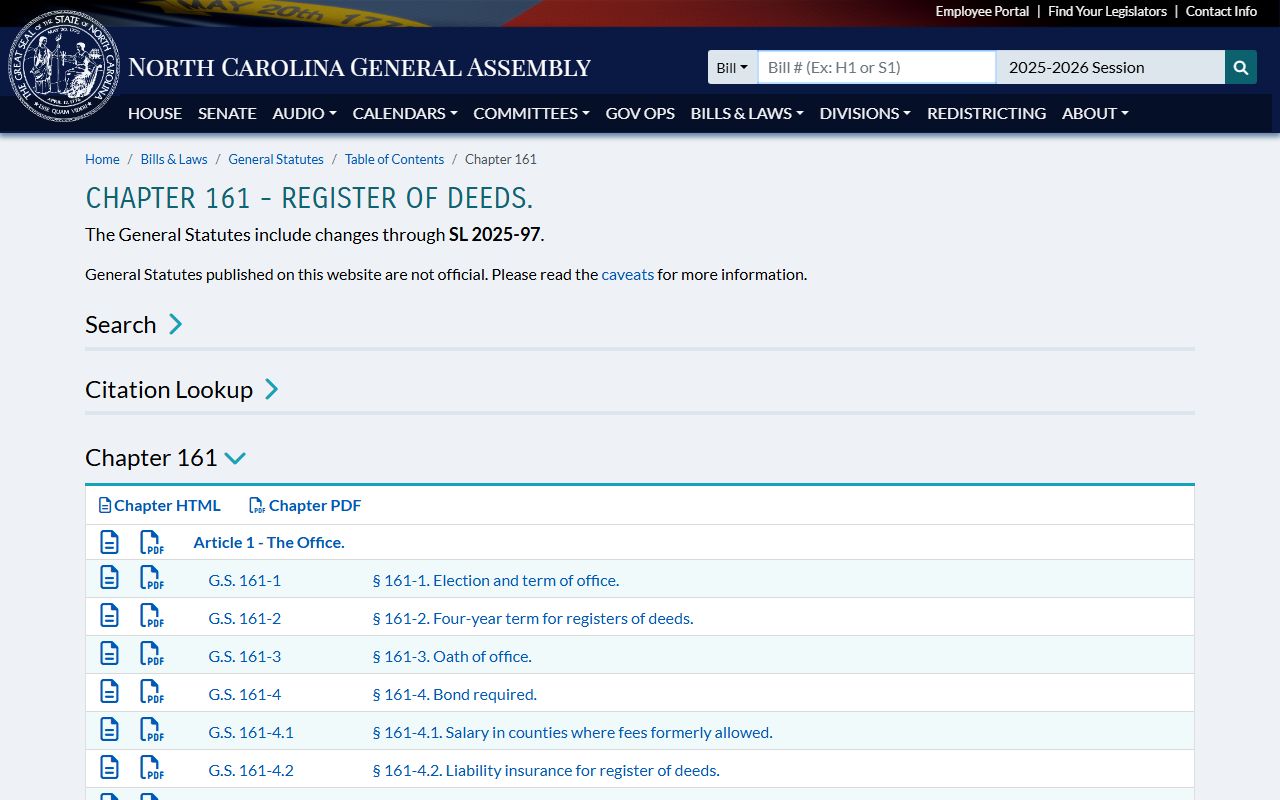
The statutes apply to every county in North Carolina and set a consistent standard for document recording.
Richmond County Title Research
Title research in Richmond County works the same way it does across North Carolina. A searcher traces ownership backward through the grantor and grantee indexes. Each deed cites the prior recorded instrument. The searcher follows this chain to confirm that every transfer is properly recorded and that no defects exist.
The Marketable Title Act provides that a 30-year chain is generally sufficient for clear title in North Carolina. Older claims not renewed within that window may be extinguished. A thorough search also reviews liens, judgments, easements, and restrictive covenants. Tax records from the Richmond County tax office add assessed values and payment history to the picture.
In Richmond County, some parcels have long histories tied to family farms. These chains may involve deeds of gift, estate settlements, and court-ordered partitions. A title professional familiar with the county knows how to handle these situations and where to find any missing pieces.
Historical Richmond County Records
Richmond County dates to 1779. Its land records span nearly 250 years. Early deeds were handwritten and bound in large volumes that are still stored at the courthouse in Rockingham. Some of these records have been microfilmed for preservation.
The North Carolina State Archives holds additional early Richmond County materials. Land grants, estate files, and court records from the colonial and early statehood periods are available. These are useful for tracing property ownership back to the original land grants. The North Carolina Secretary of State maintains records of business entities and UCC filings that may affect property research.
Richmond County's history includes textile mills, railroads, and agriculture. Deeds for mill properties along the Pee Dee River, railroad rights-of-way, and large farm tracts appear in the historical volumes. These records paint a picture of how the county grew and changed over time. Hamlet, in particular, became a major railroad junction, and property records in that area reflect that legacy.