
Randolph County Property Records
Randolph County property records are kept at the Register of Deeds office in Asheboro, North Carolina. This Piedmont county was formed in 1779 and has a long history of land ownership tied to farming, manufacturing, and small-town life. The register's office files deeds, deeds of trust, plat maps, liens, and other instruments that affect real property. Randolph County covers more than 790 square miles, making it one of the larger counties in the state by area. Whether you are buying land near Asheboro or researching a family farm, the records at this office are where you start.
Randolph County Quick Facts
Randolph County Register of Deeds
The Randolph County Register of Deeds office is located in the courthouse in Asheboro. This office is the central point for all recorded land documents in the county. Staff record deeds, deeds of trust, plat maps, liens, and releases. The office also files vital records including birth and death certificates.
Asheboro sits in the heart of the Piedmont, and Randolph County has a mix of rural and small-town properties. The register's office handles a moderate volume of filings. Staff can help you search by owner name, parcel number, or book and page. Certified copies are available for a small fee. The office is open during standard business hours on weekdays. Call ahead if you plan to visit for the first time so staff can let you know what to expect.
The North Carolina Association of Register of Deeds maintains a directory of all county offices. You can find contact details for the Randolph County register there.
Randolph County Property Records Online
Randolph County provides online access to some property records. You can search recorded documents from home using the county's online tools. Searches can be done by owner name, date, or document type. This is a good first step before visiting the office in Asheboro.
Online systems show index information for recorded documents. Some entries include scanned images of the actual document. Not every record may be available online, especially older filings. For a thorough search, combining online tools with an in-person visit gives the best results. If you need a certified copy, you will need to contact the register's office directly.
The statewide directory at the North Carolina Association of Register of Deeds also helps when you need records from counties other than Randolph.
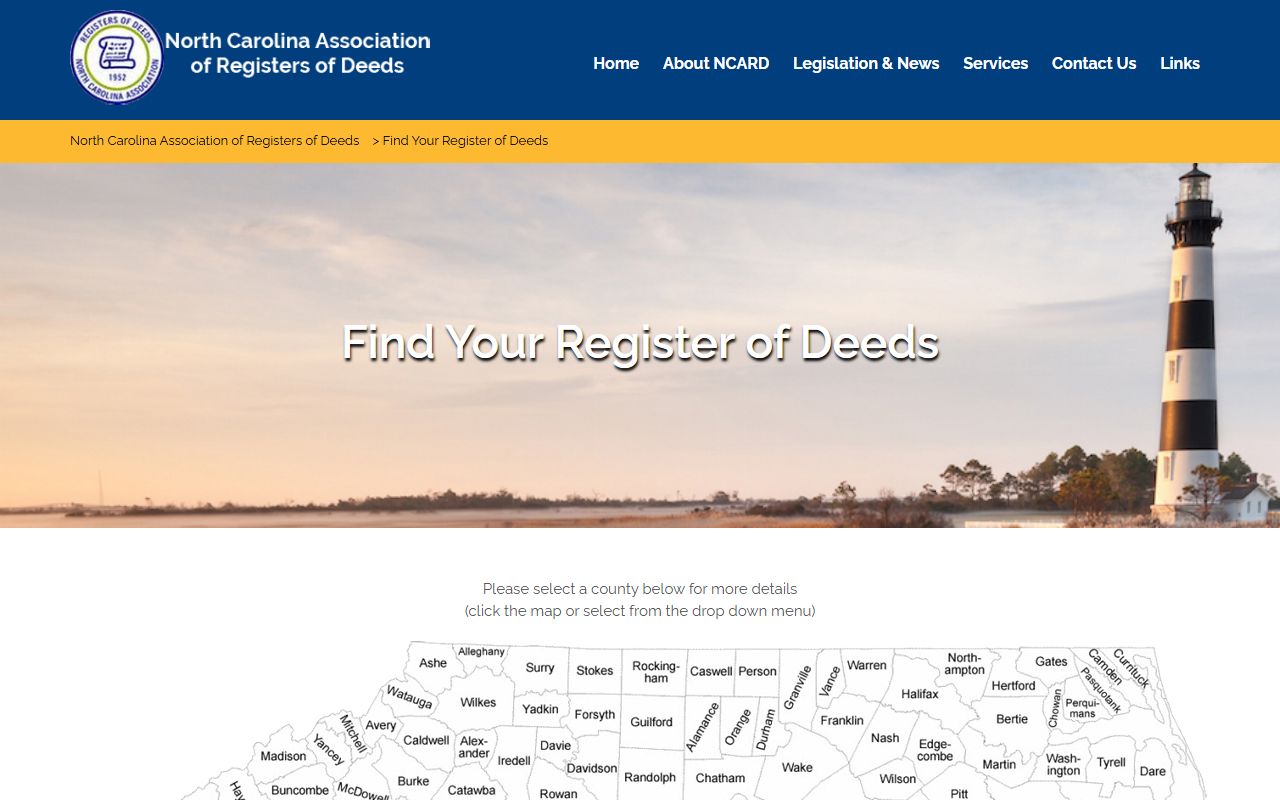
This resource connects you to register offices across all 100 North Carolina counties.
Deed Types in Randolph County
Randolph County records hold several deed types. General warranty deeds are standard for most sales. They guarantee title all the way back to the original grant. Special warranty deeds cover only the time the current seller owned the property. Quitclaim deeds pass whatever interest the grantor has without any title guarantee.
Deeds of trust are a regular part of Randolph County records. North Carolina uses deeds of trust to secure real estate loans. The borrower, lender, and a trustee are all named. The trustee holds legal title until the loan is paid. When the debt is cleared, the lender files a cancellation at the register's office. This releases the property from the lien.
Plat maps are filed in Randolph County whenever land is subdivided. These maps show lot boundaries, street layouts, and easements. State law requires plats to be recorded before individual lots can be sold. This ensures every buyer knows the exact boundaries of the land they are purchasing.
Recording Requirements
N.C.G.S. Chapter 47 sets the rules for recording documents in Randolph County. All instruments must be signed and notarized. The first page must include a return address. The grantor's name must match the name on the prior deed in the chain of title.
Randolph County charges an excise tax on property sales. The rate is one dollar per five hundred dollars of the purchase price, as outlined in N.C.G.S. Chapter 105. Recording fees are collected as well. Both are due at the time of filing. The register's office accepts original documents. Copies may be accepted in certain situations as allowed by statute.
Under N.C.G.S. Chapter 47B, electronic recording is permitted. Authorized submitters such as title companies and attorneys can file documents in Randolph County without visiting the office. This speeds up routine transactions and cuts down on paperwork.
Randolph County Title Research
Title research in Randolph County follows the standard North Carolina process. A searcher traces ownership backward through the grantor and grantee indexes. Each deed cites the prior instrument, creating a chain of title. The searcher confirms that every link is complete and properly recorded.
Most searches cover at least 30 years under the Marketable Title Act. This state law treats a 30-year chain as generally sufficient for establishing clear title. Claims not re-recorded within that period may be extinguished. Beyond the chain of ownership, a good title search checks for liens, judgments, easements, and restrictive covenants. Tax records from the Randolph County tax office add another layer of useful data.
Randolph County's large size and rural character mean some parcels have complex histories. Family farms passed down through generations may involve multiple deeds of gift, estate settlements, and partitions. A professional title searcher familiar with Randolph County can navigate these situations efficiently.
Historical Randolph County Records
Randolph County was formed in 1779 from Guilford County. Land records date back to that time. Early documents include handwritten deeds, land grants, and court orders affecting property. Many of these old records remain at the courthouse in Asheboro. Some have been preserved on microfilm.
The North Carolina State Archives in Raleigh holds additional materials from Randolph County's early years. Land grants, estate files, and colonial court records are available to researchers. The North Carolina Secretary of State maintains business filings and UCC records that may relate to property in Randolph County.
Randolph County's heritage as a center of pottery, furniture making, and textile manufacturing shows up in its property records. Deeds for factory sites, mill properties, and workshop lots appear throughout the historical volumes. These documents reveal how the county's economy shaped its landscape over nearly 250 years.