
Person County Real Property Records
Person County property records are maintained at the Register of Deeds office in Roxboro, North Carolina. The county sits along the Virginia border in the northern Piedmont region and was formed in 1791 from Caswell County. Property records here cover deeds, deeds of trust, plat maps, liens, and other land instruments. Person County's rural character means many parcels are large farms or wooded tracts, though the area around Roxboro includes residential and commercial properties as well. The register's office serves as the central repository for all recorded land documents in the county.
Person County Quick Facts
Person County Register of Deeds
The Person County Register of Deeds office sits in the courthouse complex in Roxboro. Staff record and index deeds, deeds of trust, plat maps, liens, and other instruments tied to real property. The office also handles birth and death certificates.
Roxboro is a small town, and the register's office reflects that pace. Visits tend to be straightforward. Staff can help you find records by owner name, parcel number, or book and page. If you need a certified copy, the office prepares them for a standard fee. Person County's filing volume is modest compared to larger urban counties, so turnaround times are usually quick.
You can reach the office by phone during business hours to ask questions before visiting. The North Carolina Association of Register of Deeds lists contact information for the Person County office and every other county in the state.
Person County Property Records Search
Searching Person County property records starts with the grantor and grantee indexes. These are the backbone of any records search in North Carolina. The grantor index lists sellers. The grantee index lists buyers. Together, they let you trace who owned a parcel and when.
You can search by name, by parcel ID, or by book and page reference. Book and page is the fastest method when you already have a reference from a prior deed. For broader searches, the name index works well. Just keep in mind that common names may return many results. Adding other details like a date range or township can narrow things down.
North Carolina's recording statutes under N.C.G.S. Chapter 161 outline the duties of the Register of Deeds, including maintaining these indexes. The law requires each register to keep accurate, up-to-date records that the public can access.
Types of Deeds in Person County
Person County records contain several types of deeds. General warranty deeds are the standard for most sales. They promise clear title from the very beginning. Special warranty deeds limit that promise to the seller's period of ownership. Quitclaim deeds make no promises about title quality at all and simply transfer whatever interest the grantor has.
Deeds of trust are common in Person County. North Carolina uses deeds of trust rather than mortgages. Three parties are involved. The borrower signs. The lender funds the loan. A trustee holds legal title as security. When the borrower pays the loan in full, the lender files a cancellation at the register's office. This removes the lien from the public record.
Person County also records plat maps. These show lot lines, roads, and easements within subdivisions. North Carolina law requires plats to be filed before lots in a new subdivision can be sold. This protects buyers by ensuring clear boundaries are on record.
Recording Property Records
Filing a document in Person County requires meeting state standards. N.C.G.S. Chapter 47 governs recording. Every instrument must be signed and notarized. The first page must show a return address. The grantor's name must match the name appearing on the most recent deed in the chain.
Person County collects excise tax on real estate transfers. The tax rate is one dollar for every five hundred dollars of the sale price, as set by N.C.G.S. Chapter 105. Recording fees apply as well. Both are due when the document is filed. Original documents are preferred over copies unless a statute provides an exception.
Electronic recording is available in North Carolina under N.C.G.S. Chapter 47B. This allows authorized submitters to file documents in Person County remotely. Title companies and attorneys use this option for routine filings.
Recording standards are consistent across North Carolina. The statewide rules ensure that a deed filed in Person County meets the same requirements as one filed anywhere else in the state.
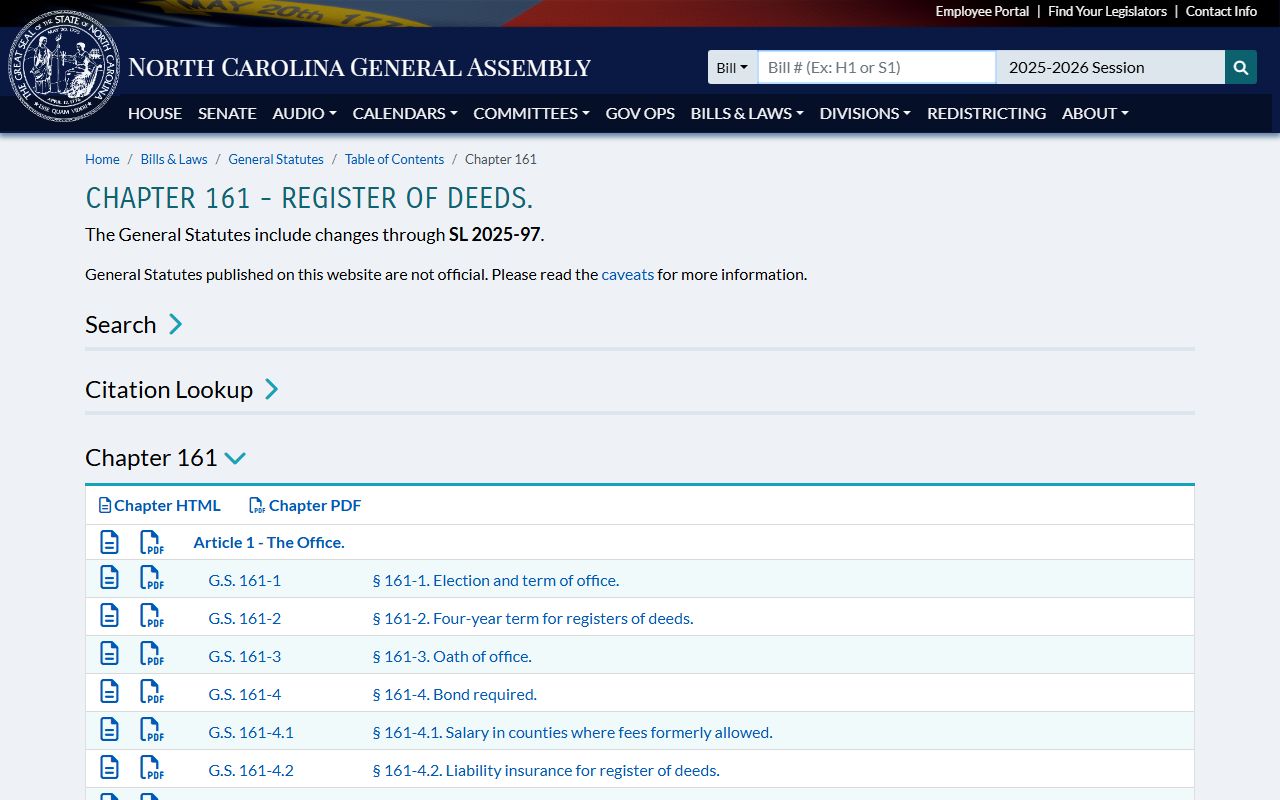
These state statutes set the framework for how property documents are recorded in every North Carolina county, including Person.
Person County Title Research
Title research in Person County follows standard North Carolina methods. A searcher works backward through the chain of ownership using the grantor and grantee indexes. The goal is to confirm that each transfer was properly recorded and that no breaks exist in the chain.
Most title searches cover at least 30 years. North Carolina's Marketable Title Act generally treats a 30-year chain as sufficient for clear title. Older claims that were not renewed within that window may be cut off. This gives buyers and lenders confidence in the recorded history.
A complete search also checks for liens, judgments, and easements. Tax records from the Person County tax office provide assessed values and payment history. Mechanic's liens from contractors and court judgments against property owners can also cloud title. A thorough search catches these issues before a sale closes.
Historical Records in Person County
Person County has recorded land documents since 1791. Early records were written by hand in bound volumes. Many of these old books are still at the courthouse in Roxboro. Some have been preserved on microfilm or in digital format.
The North Carolina State Archives holds additional early records for Person County. Land grants, estate records, and court files from the colonial and early statehood periods are available. These documents can fill gaps in the county-level records, especially for parcels with very long histories. The North Carolina Secretary of State also maintains records of business filings and UCC liens that may be relevant to property research in Person County.
Person County's tobacco farming heritage shows in its historical records. Many old deeds describe large tracts of farmland. Boundary descriptions reference creeks, old roads, and neighboring landowners rather than modern survey coordinates. Understanding these older descriptions takes patience and sometimes local knowledge.