
New Hanover Property Records Search
New Hanover County property records are maintained by the Register of Deeds at 320 Chestnut Street in Wilmington. Formed in 1729 from Craven County, New Hanover is one of the oldest counties in North Carolina with nearly 300 years of recorded land documents. The county includes Wilmington, a major port city, along with beach communities like Wrightsville Beach, Carolina Beach, and Kure Beach. Property records cover deeds, liens, plat maps, and other documents essential for verifying ownership across this active real estate market.
New Hanover County Quick Facts
New Hanover County Register of Deeds
The Register of Deeds office sits at 320 Chestnut Street in Wilmington, NC 28401. The office is open Monday through Friday from 8 AM to 5 PM. Recording is accepted until 4:30 PM. You can call 910-798-4530 for questions before your visit.
Staff at the office record deeds, deeds of trust, liens, plat maps, and other land instruments. The office also handles vital records and notary filings. All documents must meet the standards of N.C.G.S. Chapter 47 before recording. Once accepted, each document receives a book and page number that becomes its permanent reference in the New Hanover County records system.
The North Carolina Association of Registers of Deeds provides a statewide directory of offices.
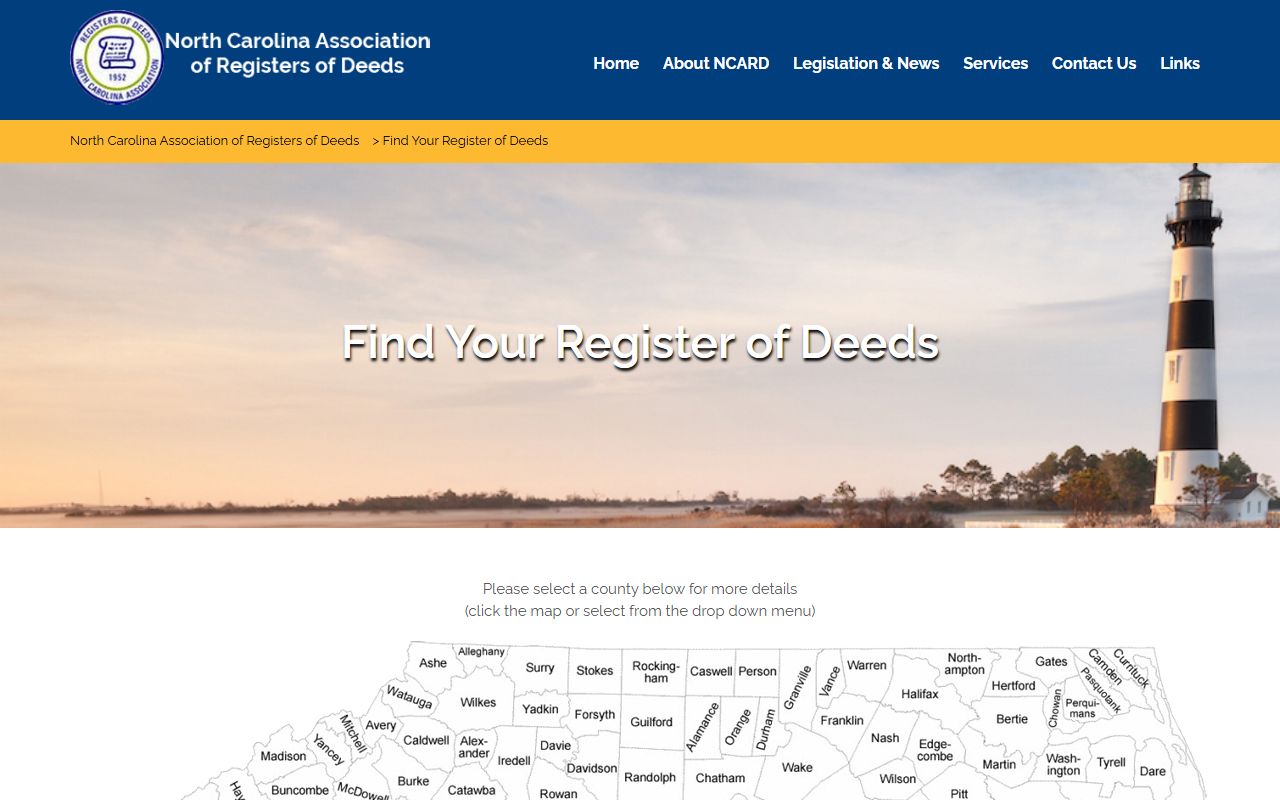
The NCARD website lists current contact details and office hours for every Register of Deeds in North Carolina, including New Hanover County.
Online Property Records Search
New Hanover County offers online access to property records dating back to 1977. This is one of the more extensive online collections among North Carolina counties. You can search from home or office without visiting the courthouse.
The online system lets you search by grantor name, grantee name, document type, or recording date. Results show book and page numbers along with recording dates. Document images are available for viewing on screen. For certified copies, contact the Register of Deeds office or visit in person. Certified copies cost a fee set under N.C.G.S. Chapter 161 and carry the official seal needed for legal proceedings.
For records before 1977, you will need to visit the office. These older documents are stored in the original deed books and can be searched using the grantor and grantee indexes at the courthouse in Wilmington.
New Hanover County Tax Records
The New Hanover County Tax Department handles property assessments, GIS mapping, and flood zone information. Tax records show the assessed value, tax rate, and payment history for every parcel in the county.
Under N.C.G.S. Chapter 105, North Carolina counties reappraise property on a regular cycle. New Hanover County follows this schedule to keep assessments current with the active coastal real estate market. The county also maintains GIS maps that show parcel boundaries, zoning, and flood zones. Flood zone data is especially important in New Hanover County because of its coastal location. Many properties fall within FEMA flood zones and require flood insurance.
Beach communities in New Hanover County have special tax districts. Wrightsville Beach, Carolina Beach, and Kure Beach each have their own municipal tax rates in addition to the county rate. Check the tax records for your specific parcel to see all applicable rates and any outstanding balances.
Coastal Property Records
New Hanover County's coastline creates unique property record considerations. Beach erosion, storm damage, and shifting shorelines affect property boundaries over time.
The state of North Carolina owns the beach below the mean high water line. Property records for oceanfront lots describe the boundary relative to the dune line or a fixed monument. As the shoreline changes, these boundaries may shift. Beach nourishment projects can also affect where the property line falls. Buyers of coastal land in New Hanover County should review the recorded plat carefully and consider getting a current survey.
Flood zone designations appear in the tax and planning records. Properties in high-risk flood zones carry different insurance requirements. The county GIS system shows current flood maps for all parcels in New Hanover County. Review these maps before buying waterfront or near-waterfront property in the county.
- Oceanfront lot boundary descriptions
- Flood zone designations and maps
- Beach nourishment easements
- CAMA permits for coastal construction
- Special tax districts for beach towns
Historical Property Records
New Hanover County was formed in 1729. It is one of the original precincts of colonial North Carolina. Records stretch back nearly three centuries, covering the full span of the county's history from colonial times through the present day.
Wilmington was a major port from the earliest days. Property records reflect the growth of the city from a colonial trading post to a modern metropolitan area. Early deeds are handwritten and use metes and bounds descriptions. Some reference landmarks that no longer exist. The North Carolina State Archives holds copies of early New Hanover County records, including colonial-era land grants and court records.
Title searches in New Hanover County typically cover 30 years. Given the county's long history and active market, the chain of title can be extensive. A title professional reviews each transfer, lien, and easement in the chain to confirm clear ownership before closing.
North Carolina Recording Standards
State law sets the rules for property records in New Hanover County. Chapter 47 of the General Statutes covers recording requirements. Chapter 47B addresses electronic recording, which New Hanover County supports for qualifying documents.
The excise tax on real estate transfers is $1 per $500 of the sale price. The Register of Deeds collects this tax at the time of recording. The North Carolina Secretary of State handles UCC filings that may affect property titles. A complete title search checks both New Hanover County land records and state-level filings to ensure clear title before a transaction closes.
Nearby Counties
These counties border New Hanover County. Verify which county a property falls in before beginning your records search.