
Access Guilford County Property Records
Guilford County property records are managed by the Register of Deeds office in Greensboro, North Carolina. The county was formed in 1771 from parts of Orange and Rowan Counties, making it one of the older counties in the state. Property records here include deeds, deeds of trust, plat maps, liens, and other land documents. You can search Guilford County records online through the county GIS Data Viewer or visit the office in person at 201 South Eugene Street in Greensboro. The office is open Monday through Friday from 8 AM to 5 PM, with recording accepted until 4:30 PM.
Guilford County Quick Facts
Guilford County Register of Deeds
The Guilford County Register of Deeds office sits at 201 South Eugene Street in Greensboro, NC 27401. This is the main office for all recorded land documents in the county. Staff record deeds, deeds of trust, plat maps, liens, and other instruments tied to real property. The office also handles vital records, including birth and death certificates.
Office hours run from 8 AM to 5 PM, Monday through Friday. Recording stops at 4:30 PM each day to allow time for processing. You can call 336-641-7556 to ask questions before you visit. Staff can help you find specific records by owner name, parcel number, or book and page reference. Guilford County is one of the largest counties in North Carolina, so the volume of recorded documents is substantial. The office has kept these records since 1771, when the county was carved from Orange and Rowan Counties.
The Guilford County Register of Deeds provides online tools for searching recorded documents from home.
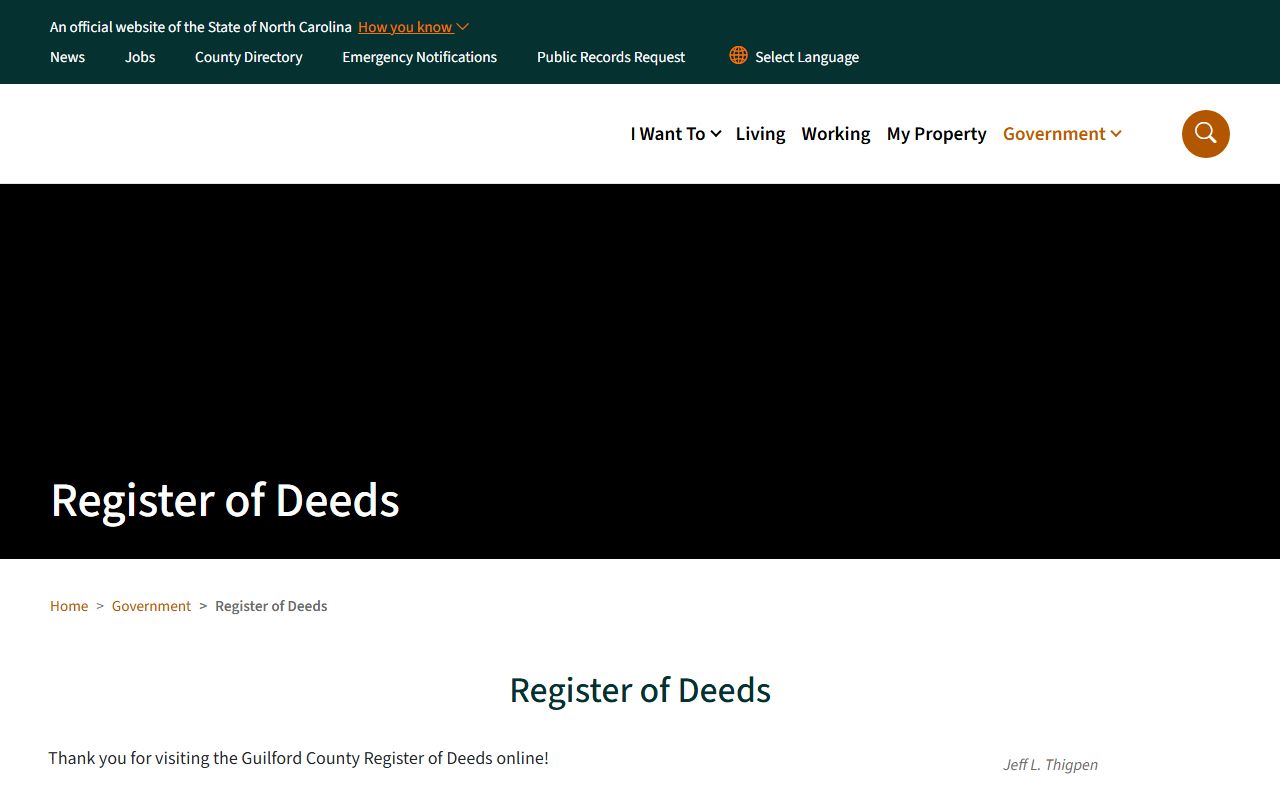
This portal connects you to the full index of recorded instruments in Guilford County.
Guilford County Property Records Online
Online access makes it easy to search Guilford County property records without visiting the office. The county maintains a Register of Deeds website where you can look up recorded documents. The GIS Data Viewer is another tool that shows parcel maps, ownership data, and tax information for every property in Guilford County.
The GIS system lets you search by address, owner name, or parcel ID. Results display lot boundaries, zoning, and assessed values. You can also view aerial photos of any parcel in Guilford County. This is helpful when you need a quick look at a property before pulling the full deed history. The system is free to use and does not require an account.
When using the online search, keep a few things in mind:
- Try alternate name spellings if your first search fails
- Use book and page numbers from a prior deed for precise results
- Check both the GIS viewer and the ROD portal for the most complete picture
- Recent filings may take a short time to appear online
For statewide searches, the North Carolina Association of Register of Deeds maintains a directory of every county office. This helps when you need records from more than one county.
Types of Guilford County Deeds
Guilford County property records contain several types of deeds. General warranty deeds are the most common. They give the buyer full protection by guaranteeing clear title back to the original grant. Special warranty deeds only cover the period of the seller's ownership. Quitclaim deeds transfer whatever interest the grantor holds but make no promises about the title.
Deeds of trust appear frequently in Guilford County records. North Carolina uses deeds of trust rather than mortgages to secure home loans. A deed of trust involves three parties: the borrower, the lender, and a trustee who holds legal title until the loan is paid. When the borrower pays off the loan, the lender files a cancellation that gets recorded in Guilford County. This clears the lien from the property. Liens from taxes, court judgments, and contractor work also show up in the records. Each type of lien has its own rules for how it attaches and how it gets released.
Plat maps are another key part of Guilford County records. These maps show lot divisions, streets, and easements within subdivisions. Guilford County requires plats to be recorded before lots can be sold. This ensures buyers know exactly what land they are getting.
Recording Property Documents in Guilford
All property documents filed in Guilford County must meet state requirements. N.C.G.S. Chapter 47 sets the rules for recording. Documents must be signed and notarized. The grantor's name must match the name on the prior recorded deed. A return address must appear on the first page of every instrument.
Guilford County collects an excise tax on real estate transfers. The rate is one dollar per five hundred dollars of the sale price, as set by N.C.G.S. Chapter 105. Recording fees also apply. These cover indexing and storing the document. The Register of Deeds collects both the excise tax and the recording fee at the time of filing. Documents should be originals, not copies, unless a statute says otherwise.
North Carolina also allows electronic recording under N.C.G.S. Chapter 47B, the Uniform Real Property Electronic Recording Act. This means some documents can be filed in Guilford County without a physical visit to the office. Title companies and law firms often use this method for routine recordings.
Guilford County Title Research
Title research in Guilford County traces the chain of ownership for a parcel of land. The process starts with the current owner and works backward through each prior deed. The grantor and grantee indexes at the Register of Deeds office are the main tools for this work. The grantor index lists sellers. The grantee index lists buyers. By cross-referencing these indexes, a searcher can build a complete chain of title.
Most title searches in Guilford County go back at least 30 years. The Marketable Title Act under North Carolina law generally treats a 30-year chain as sufficient. Older claims not re-recorded within that window may be cut off. This protects buyers and lenders who rely on the recorded chain.
A thorough search also checks for liens, judgments, easements, and restrictive covenants. Tax records from the Guilford County tax office add another layer of information. Professional title searchers often start with the online system, then verify details in person at the office on South Eugene Street in Greensboro.
Historical Land Records in Guilford County
Guilford County dates to 1771. Its records span more than 250 years. Early documents were handwritten and stored in large leather-bound volumes. Many of these old records have been preserved and are still on file at the Register of Deeds office. Some have been digitized for online access.
The North Carolina State Archives in Raleigh holds copies of early Guilford County land grants and court records. These can help researchers trace ownership back to the original colonial grants. The archives also have estate files that sometimes reference land transfers not recorded at the county level. For business filings that may affect property, the North Carolina Secretary of State maintains a searchable database of UCC liens and corporate records.
Guilford County's long history means its records cover a wide range of document types. Land grants, deeds of gift, timber rights, mineral rights, and water rights all appear in the older volumes. Researchers studying family history often find land records to be the most reliable source of information about where ancestors lived and what they owned.