
Franklin County Property Records
Franklin County property records are stored at the Register of Deeds office in Louisburg, North Carolina. The county was formed in 1779 and has kept land records for nearly two and a half centuries. These records include deeds, plat maps, liens, and deeds of trust. Franklin County sits just north of Wake County and has seen steady growth in recent years. Whether you need to verify ownership, trace a chain of title, or check for liens, the Register of Deeds office in Louisburg is the starting point for your search.
Franklin County Quick Facts
Franklin County Register of Deeds
The Franklin County Register of Deeds office is in Louisburg, the county seat. Staff at this office record deeds, deeds of trust, plat maps, liens, and other instruments related to real estate. The office also handles vital records such as birth, death, and marriage certificates.
Franklin County was carved from Bute County in 1779. The county was named after Benjamin Franklin. Its land records stretch from that founding year to the present. Older records are stored in bound books and on microfilm. More recent documents may be available through the county's records system.
You can find the office contact information through the NC Association of Register of Deeds directory. This statewide resource lists every Register of Deeds office in North Carolina with addresses and phone numbers. It is a good place to start if you need to plan a visit or call ahead.
The state directory for Register of Deeds offices is shown below.
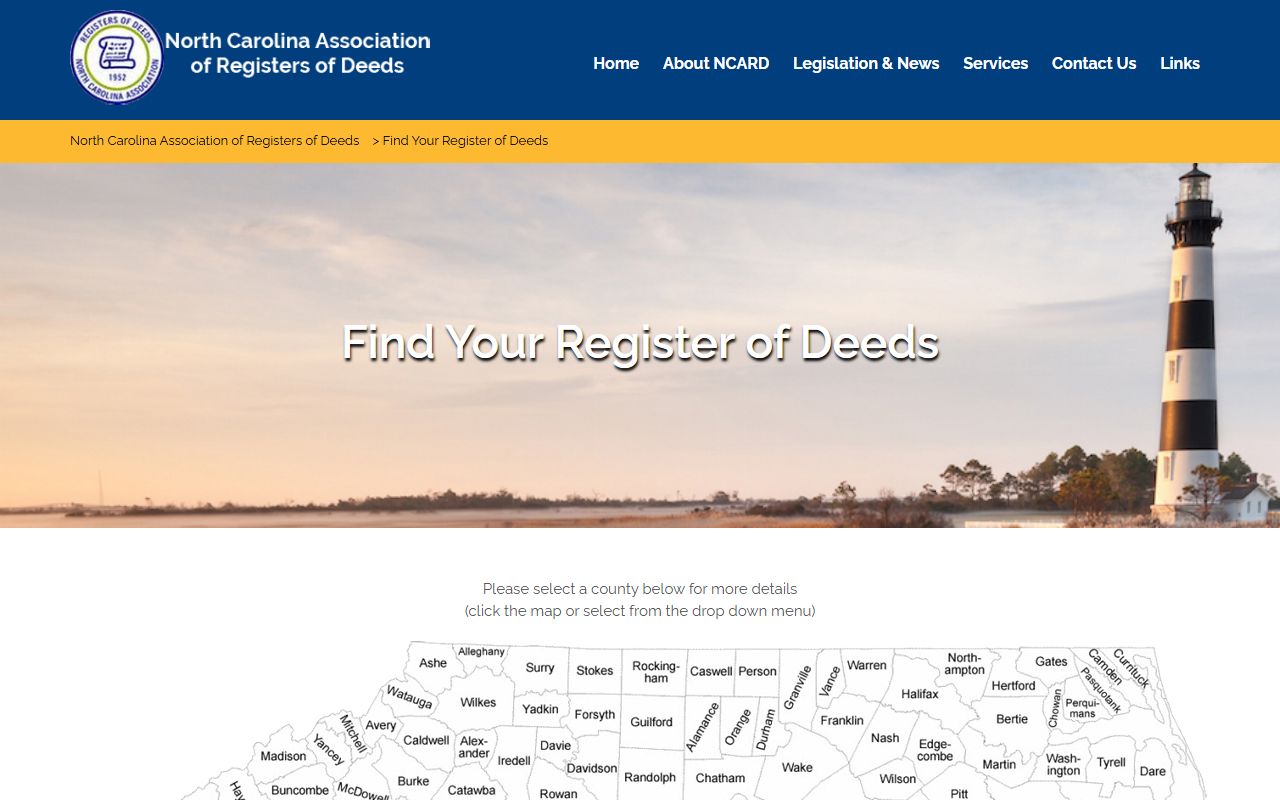
This directory connects you with every county office in North Carolina, including Franklin County.
Note: Franklin County's proximity to Raleigh has brought new development in recent years, which means a growing number of recordings at the Register of Deeds office.
How to Search Franklin County Records
Visit the Register of Deeds office in Louisburg to search Franklin County property records in person. Bring any information you have about the property. An owner name, street address, or parcel number will help staff find the right documents.
The office maintains grantor and grantee indexes. The grantor index lists people who transferred property. The grantee index lists those who received it. By using both indexes, you can trace a property's ownership history. This process is called building a chain of title. It shows every transfer from the current owner back through all prior owners.
Franklin County covers about 495 square miles. The landscape is a mix of farmland, wooded areas, and growing residential communities. Properties near the Wake County border tend to have more recent and frequent transfers due to suburban growth. Rural parcels in the northern and eastern parts of the county may have fewer transfers and older records to review.
Types of Franklin County Deeds
Several types of deeds are recorded in Franklin County. Warranty deeds are the standard for most sales. A general warranty deed guarantees clear title through the property's entire history. A special warranty deed covers only the seller's period of ownership.
Quitclaim deeds transfer whatever interest the grantor holds. They make no warranty about the state of the title. These are often used between family members or to clear up minor title issues. Deeds of trust secure home loans in North Carolina. Under N.C.G.S. Chapter 45, a deed of trust names a trustee who can sell the property if the borrower defaults. Once the loan is paid, the lender records a release in Franklin County property records.
Liens are another common entry in the records. Tax liens arise from unpaid property taxes. Mechanic's liens protect contractors and suppliers. Judgment liens come from court orders. Each one attaches to the property and stays on record until it is satisfied or released.
Recording Documents in Franklin County
Documents recorded in Franklin County must meet state requirements under N.C.G.S. Chapter 47. Each document must be signed by the grantor and notarized. A return address is required on the first page. The grantor's name should match the prior recorded deed.
Franklin County collects the state excise tax on property transfers. The rate is one dollar per five hundred dollars of the sale price, set by N.C.G.S. Chapter 105. Recording fees are also charged. These cover the cost of indexing and storing the document in the county's system.
The recording requirements under North Carolina law are shown below.
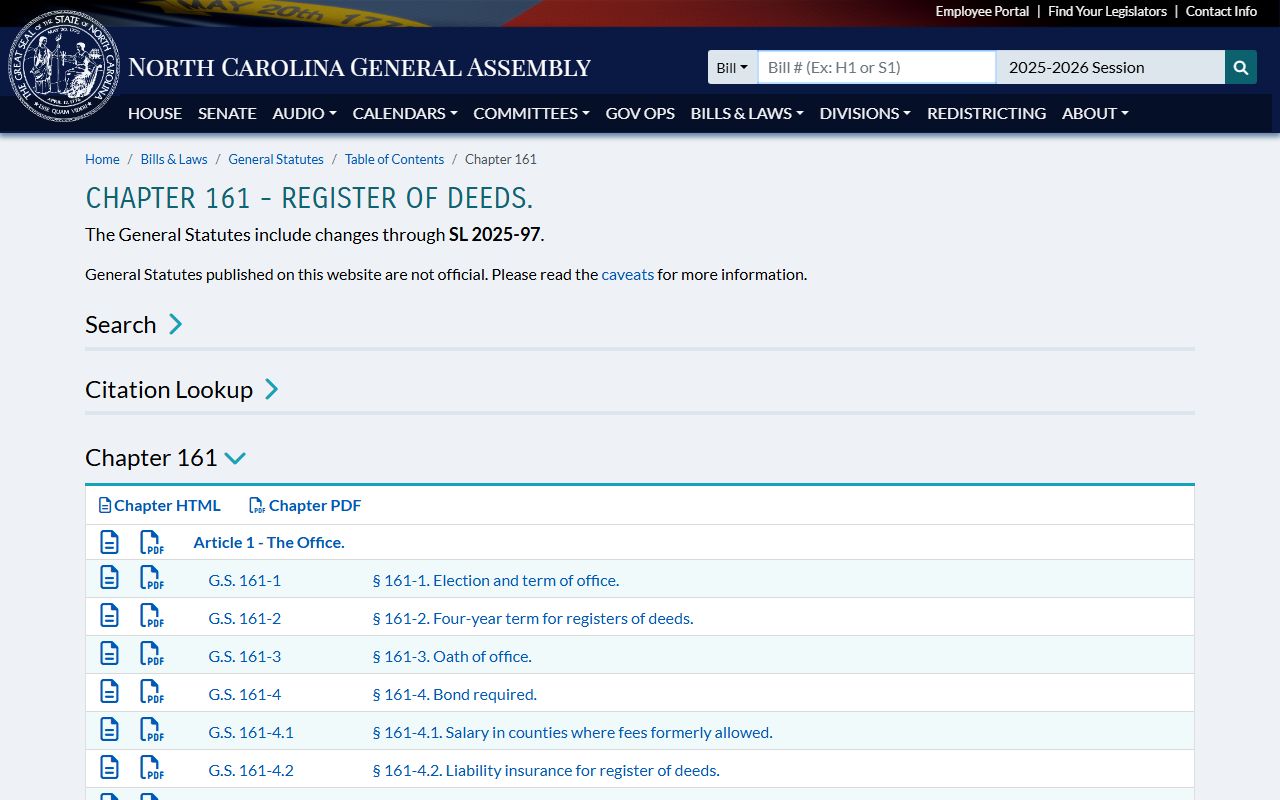
These statutes apply to every document recorded in Franklin County.
Franklin County Tax Records
The Franklin County Tax Office maintains records of assessed values for every parcel in the county. Tax records show the assessed value, the tax rate, and any amounts owed. You can search by owner name, property address, or parcel number.
North Carolina requires counties to reappraise property on a regular cycle under N.C.G.S. Chapter 105. During reappraisal, county staff examine sales data and physical property conditions to set new values. Owners who disagree with their value can file an appeal with the board of equalization and review.
Tax data is helpful in many situations. Buyers review tax records before making an offer. They want to know the annual tax burden and whether the assessed value matches the asking price. Lenders check tax status to make sure there are no outstanding liens. Title searchers include tax information in their reports to give a complete picture of the property.
Note: Tax records and deed records are kept by different offices in Franklin County, but both relate to the same parcels of land.
Title Research in Franklin County
A title search in Franklin County traces the chain of ownership from the current owner backward through each prior transfer. The purpose is to confirm clear title and find any liens, easements, or encumbrances. A clean title is required before a buyer can get title insurance or close on a purchase.
The Marketable Title Act in North Carolina sets a 30-year standard. Claims older than 30 years that have not been re-recorded may no longer affect the title. This protects buyers and lenders who rely on the recorded chain. For parcels with a long history, the State Archives and the Secretary of State can provide additional records.