
Edgecombe County Property Records
Edgecombe County property records are maintained by the Register of Deeds in Tarboro, North Carolina. The county dates back to 1741, making it one of the oldest in the state. Its land records cover nearly three centuries of real estate transactions. Deeds, plats, liens, and deeds of trust are all part of this collection. Property owners, buyers, and researchers can use these records to trace ownership, verify title, and check for encumbrances on real estate in Edgecombe County.
Edgecombe County Quick Facts
Edgecombe County Register of Deeds
The Edgecombe County Register of Deeds office is the primary place to search for and record property documents. This office sits in Tarboro, the county seat. Staff record deeds, deeds of trust, plat maps, liens, and other instruments tied to real estate. The office also handles vital records including birth, death, and marriage certificates.
Edgecombe County was formed from Bertie County in 1741. At that time, it was much larger than it is today. Several other counties were later carved from its territory. The oldest land records in Edgecombe County date to the colonial era. These early documents were often written by hand on heavy paper. They remain part of the county's legal record.
The NC Association of Register of Deeds maintains a directory of all county offices in the state. You can use this site to find contact details for the Edgecombe County office, including the address and phone number. This is a good first step if you plan to visit or call ahead.
The statewide directory for all Register of Deeds offices is shown below.
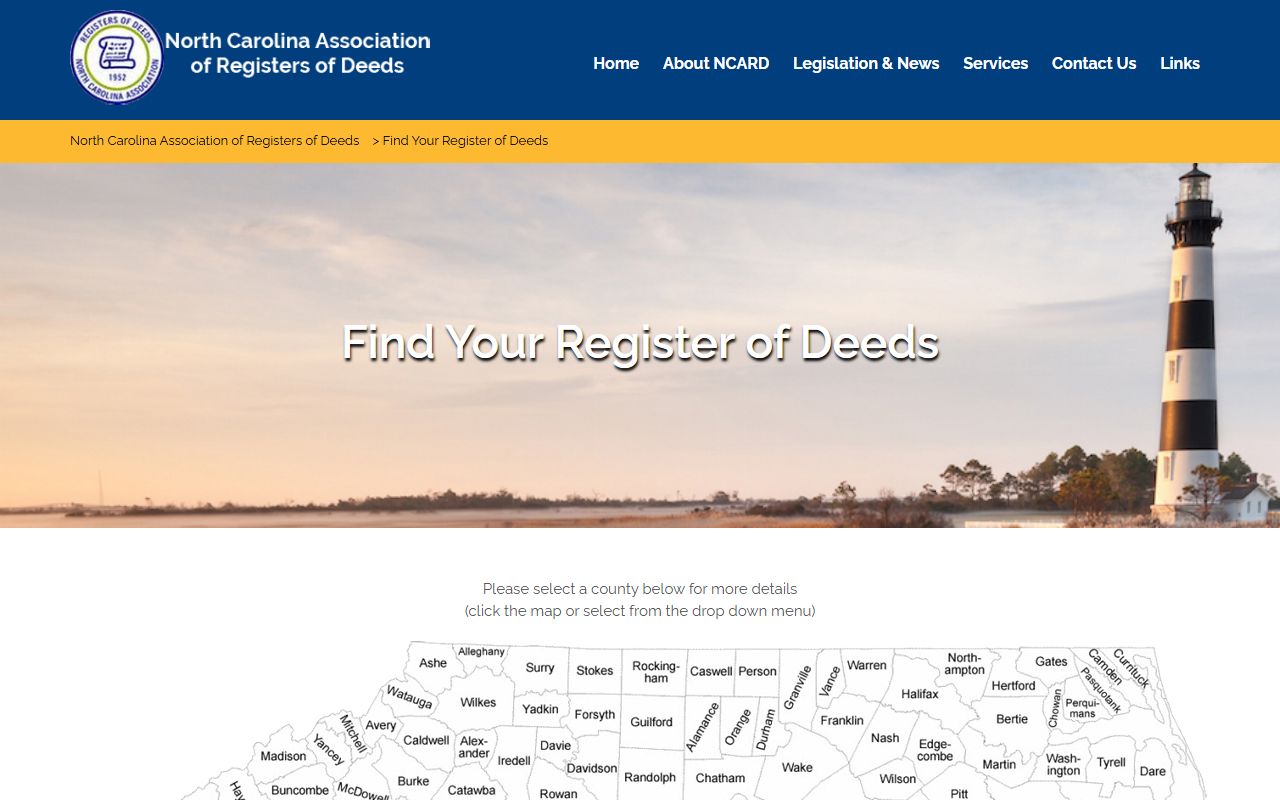
Use this tool to locate the Edgecombe County Register of Deeds and other county offices.
Searching Edgecombe Property Records
To search Edgecombe County property records, visit the Register of Deeds office in Tarboro. Bring the owner's name, a parcel number, or an address. Staff will help you search the grantor and grantee indexes. These indexes list every person who has transferred or received real estate in the county.
A title search uses both indexes to build a chain of ownership. Start with the current owner in the grantee index. Find the deed that gave them the property. Then look up the prior owner in the grantee index to find the deed before that. Keep going until you reach the desired starting point. Most title searches go back at least 30 years.
Edgecombe County has a largely agricultural landscape. Many parcels are farm tracts that have stayed in the same family for decades. This can simplify title work, since there are fewer transfers to trace. But old farm deeds sometimes use metes and bounds descriptions that reference landmarks like trees or creek beds. These natural features can shift over time, which may complicate boundary questions.
Types of Edgecombe County Deeds
Edgecombe County property records contain several types of deeds. General warranty deeds provide the strongest title protection. The seller guarantees clear title through the entire history of the property. Special warranty deeds limit that guarantee to the seller's period of ownership. Quitclaim deeds pass along whatever interest the grantor holds with no promises at all.
Deeds of trust are also common. North Carolina uses deeds of trust instead of mortgages to secure real estate loans. N.C.G.S. Chapter 45 governs these instruments. A deed of trust names a trustee who holds the power to sell the property if the borrower defaults. When the loan is paid off, the lender files a cancellation that gets recorded in Edgecombe County property records.
Liens also appear in the county's records. Tax liens attach to property when taxes go unpaid. Mechanic's liens can be filed by contractors who have not been paid for work on a property. Judgment liens result from court orders. All of these stay on record until they are resolved.
Note: Plat maps must be recorded in Edgecombe County before any lots in a new subdivision can be sold.
Recording Documents in Edgecombe County
Documents filed in Edgecombe County must meet the standards laid out in N.C.G.S. Chapter 47. This means the document must be signed, notarized, and include a return address. The grantor's name should match the name in the last recorded deed for that property.
The county charges an excise tax on real estate sales. The rate is one dollar per five hundred dollars of the sale price. This is a state rate that applies in every North Carolina county under N.C.G.S. Chapter 105. Recording fees are also collected at the time of filing. These fees cover the cost of indexing and preserving the document.
Below is a view of the North Carolina General Statutes that govern recording.
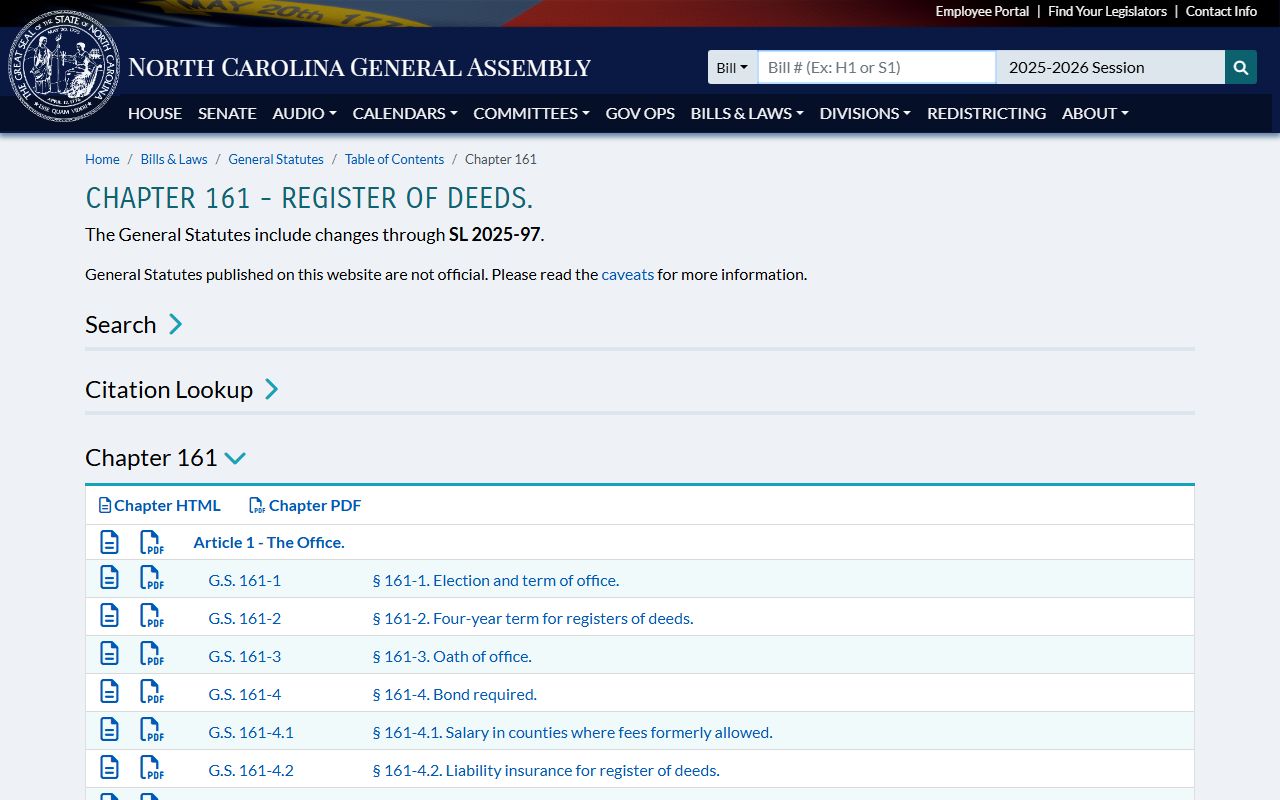
These rules apply to all documents recorded in Edgecombe County.
Edgecombe County Tax Records
The Edgecombe County Tax Office assesses all real property in the county. Tax records show the assessed value, the tax rate, and any balances owed. You can search these records by owner name, address, or parcel number.
Counties in North Carolina must reappraise property on a regular cycle. Edgecombe County follows this requirement under N.C.G.S. Chapter 105. Reappraisal involves reviewing sales data and property conditions to set fair market values. If you disagree with your assessed value, you can appeal to the county board of equalization and review.
Tax records serve many purposes beyond tax collection. Buyers check them before a purchase. Lenders review them to confirm there are no outstanding tax liens. Appraisers use them as a reference when setting values for loans. In Edgecombe County, these records are a key part of any real estate transaction.
Title Research in Edgecombe County
Title research in Edgecombe County traces the chain of ownership for a parcel of land. The process starts with the current owner and works backward through each transfer. A thorough search covers deeds, deeds of trust, liens, judgments, and tax records. It also checks for easements and restrictions.
The Marketable Title Act under North Carolina law helps shorten the search period. A 30-year chain of title is generally sufficient. Older claims that have not been renewed may be extinguished. This law protects buyers who rely on the recorded chain in Edgecombe County.
For records that predate the county's formation, the North Carolina State Archives in Raleigh hold early land grants and colonial documents. The Secretary of State also keeps records that may affect real property, including UCC filings against business assets tied to land.
The North Carolina State Archives portal is shown below.
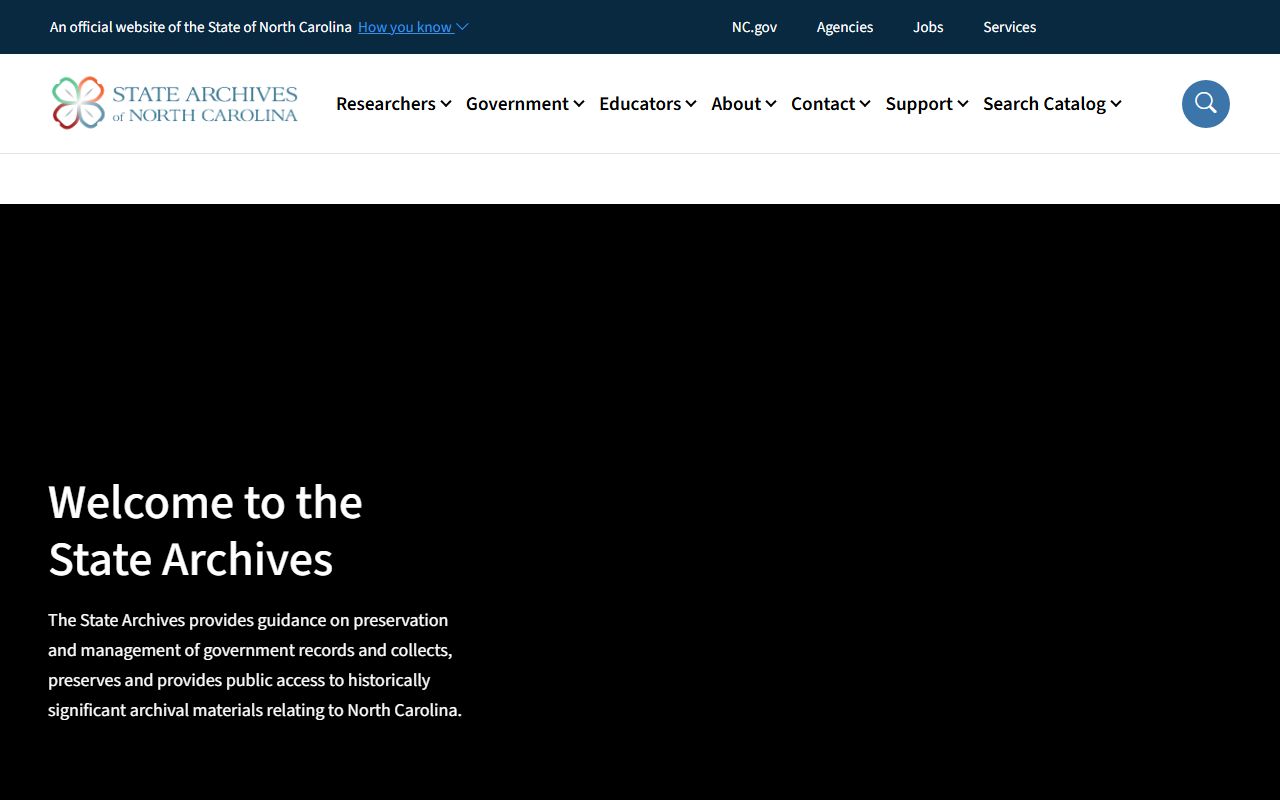
These archives hold some of the oldest land records in the state, including documents from Edgecombe County's early years.