
Duplin County Property Records
Duplin County property records are kept by the Register of Deeds in Kenansville, North Carolina. The county was formed in 1750 and is one of the oldest in the state. Its land records stretch back more than two and a half centuries. These records include deeds, plats, liens, and deeds of trust. Residents, buyers, and researchers can access Duplin County property records to verify ownership, check for liens, or trace land history. The Register of Deeds office is the primary place to search for and record real estate documents in Duplin County.
Duplin County Quick Facts
Duplin County Register of Deeds
The Register of Deeds office in Duplin County handles all recorded land documents. Staff at this office file deeds, deeds of trust, plat maps, liens, and other instruments tied to real estate. The office sits in Kenansville, the county seat. It serves the public during normal business hours on weekdays.
Duplin County was carved from New Hanover County in 1750. That makes it one of the earliest counties formed in what is now North Carolina. Land records from the colonial era through the present day form part of the county's collection. Some of the oldest documents are handwritten on parchment. They remain part of the legal record and still carry weight in title disputes.
The North Carolina Association of Register of Deeds lists contact details for every county office in the state. You can use this directory to reach the Duplin County office by phone or mail before your visit. The association also provides general guidance on how to search for property records across North Carolina.
Below is a view of the NC Association of Register of Deeds directory, which can help you find the Duplin County office.
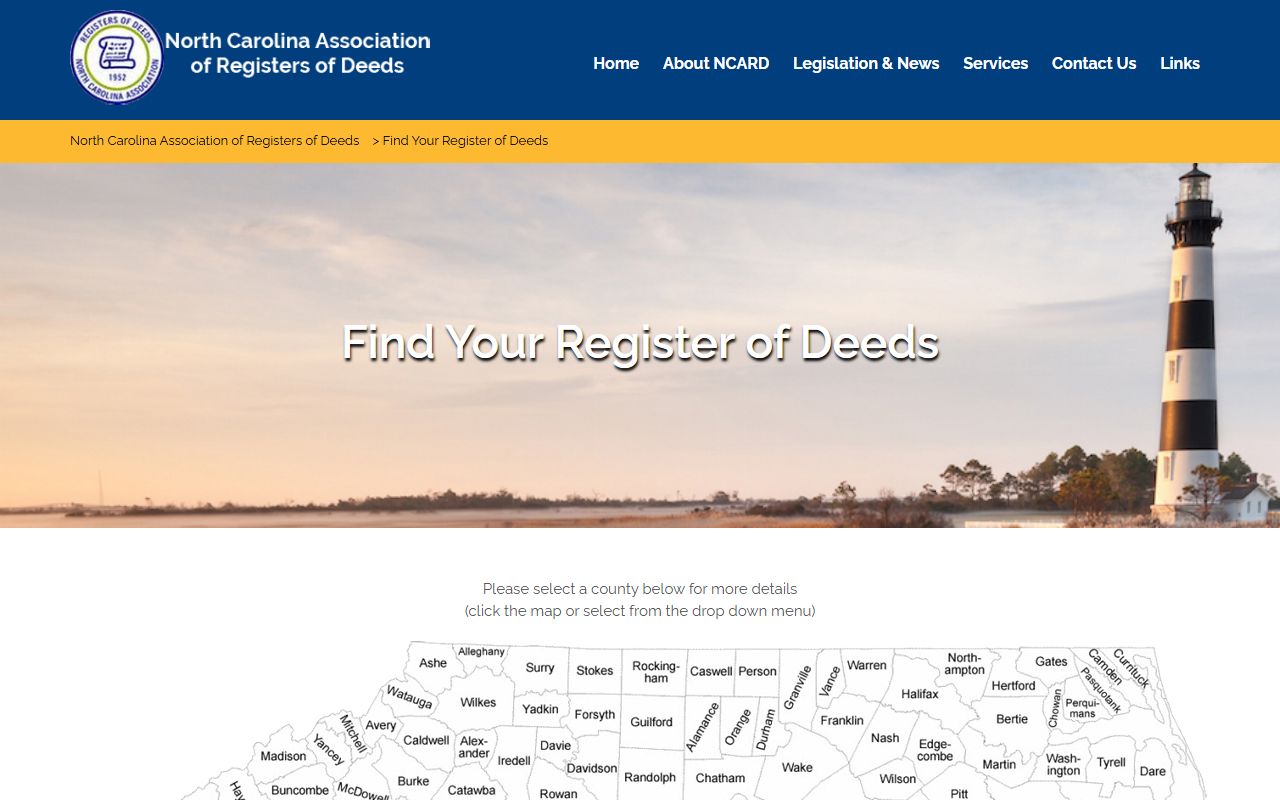
This statewide directory connects you with every Register of Deeds office in North Carolina.
Searching Duplin County Land Records
To search Duplin County property records, you can visit the Register of Deeds office in person. Bring any details you have about the property. An owner name, parcel number, or street address will help staff locate the right records. The office maintains grantor and grantee indexes that list every transfer of real estate in the county.
The grantor index lists people who sold or transferred land. The grantee index lists those who received it. By cross-referencing both indexes, you can build a chain of title for any parcel in Duplin County. This chain shows each transfer from the current owner back through all prior owners. Title searchers rely on this process to confirm clear ownership before a sale or loan closes.
Duplin County is a largely rural area with a mix of farms, timber land, and small towns. Property records here often involve large tracts of land that have been in the same family for generations. Some parcels have gone through only a handful of transfers over more than a century. This can make title research simpler in some cases, but older records may be harder to read due to their age.
Note: If you cannot find a record at the county level, the North Carolina State Archives may hold older Duplin County land documents.
Types of Deeds in Duplin County
Several deed types appear in Duplin County property records. Warranty deeds are the most common. They guarantee that the seller holds clear title and has the right to transfer the land. A general warranty deed covers the full history of the property. A special warranty deed covers only the time the seller owned it.
Quitclaim deeds also show up in Duplin County records. These deeds transfer whatever interest the grantor holds, but they make no promise about the quality of title. Family members often use quitclaim deeds to move property between themselves. They are also common in divorce cases where one spouse gives up their claim to the home.
North Carolina is a deed of trust state. That means lenders use a deed of trust rather than a mortgage to secure a home loan. Under N.C.G.S. Chapter 45, a deed of trust involves three parties: the borrower, the lender, and a trustee. When the loan is paid off, the lender records a cancellation. This release appears in Duplin County property records and shows that the lien has been cleared.
Recording Documents in Duplin County
To record a deed or other instrument in Duplin County, the document must meet requirements set by N.C.G.S. Chapter 47. The document must be signed by the grantor and notarized. It needs a return address on the first page. The grantor's name must match the name shown in the prior deed on record.
Duplin County collects an excise tax on real estate transfers. The state rate is one dollar for every five hundred dollars of the sale price. This tax is paid at the time of recording. N.C.G.S. Chapter 105 governs this tax across all North Carolina counties. Recording fees also apply and cover the cost of indexing and storing the document.
The North Carolina General Statutes outline the rules for recording instruments. You can review the relevant statutes below.
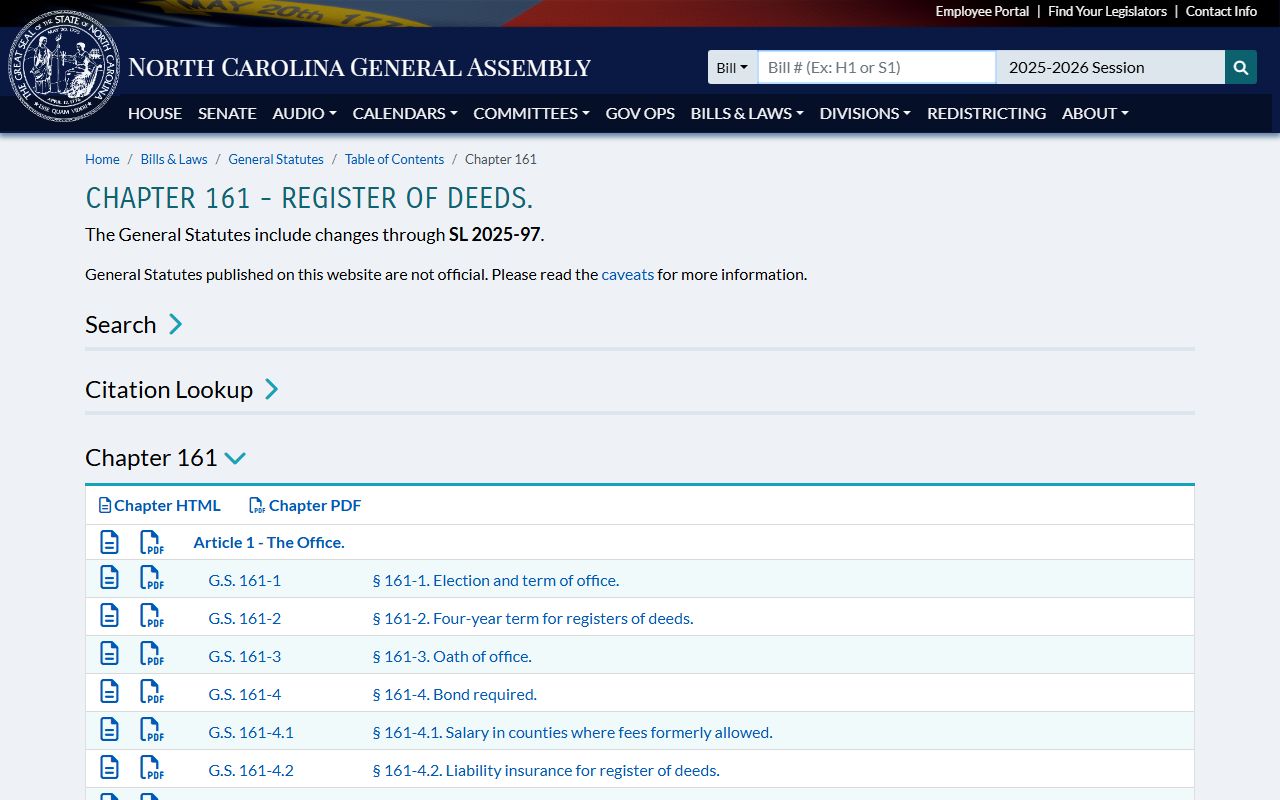
These statutes apply to all documents recorded in Duplin County and throughout North Carolina.
Note: Duplin County requires original documents for recording. Copies are generally not accepted unless a statute allows it.
Duplin County Tax and Assessment Records
The Duplin County Tax Office maintains records of assessed values for all real property in the county. These records include the current assessed value, the tax rate, and any outstanding balances. You can search tax records by owner name, address, or parcel ID.
North Carolina requires counties to reappraise property on a regular cycle. Duplin County follows this rule as set out in N.C.G.S. Chapter 105. During a reappraisal, county staff review sales data and property conditions to set new values. Property owners who disagree with their assessed value can file an appeal with the county board of equalization.
Tax records are useful for more than just paying bills. Buyers often check tax records before a purchase to see the assessed value and compare it to the asking price. Lenders review tax status to make sure there are no unpaid taxes that could become a lien. Real estate agents use tax data to help set listing prices for homes and land in Duplin County.
Title Research in Duplin County
A title search in Duplin County traces each transfer of a property from the current owner back through prior owners. This process confirms that the seller has clear title and the right to sell. It also reveals any liens, easements, or restrictions that attach to the land.
North Carolina's Marketable Title Act simplifies title searches. Under this law, a chain of title that goes back at least 30 years is generally enough to prove ownership. Older claims that have not been re-recorded may be cut off. This protects buyers and lenders who rely on the recorded chain of title in Duplin County.
For parcels with a long history, researchers may need to visit the State Archives in Raleigh. The archives hold early land grants and colonial records that predate Duplin County's formation. The North Carolina Secretary of State also maintains records of business filings and UCC liens that could affect real property ownership.
Historical Duplin County Property Records
Duplin County's records stretch back to 1750. Few counties in North Carolina have a longer history. The earliest land records document transfers from the colonial period, when the area was part of the Province of North Carolina. These old records use language and legal terms that differ from modern deeds.
Researchers who study genealogy often turn to Duplin County land records. Property transfers, wills, and estate records can reveal family connections that other sources miss. The county's rural character means that many families stayed on the same land for generations. Tracing a parcel through the deed books can unlock a family's history in the region.
The State Archives hold some early Duplin County documents. You can view the State Archives portal below.
The archives contain land grants, court records, and other documents from Duplin County's earliest years.