
Columbus County Property Records
Columbus County property records are maintained by the Register of Deeds in Whiteville, North Carolina. The office stores deeds, deeds of trust, liens, plats, and other instruments related to land ownership in Columbus County. These records are open to the public and can be searched in person at the courthouse. Researchers, buyers, and sellers rely on Columbus County property records to verify ownership, trace title history, and confirm that a parcel is free of liens before a transfer takes place.
Columbus County Quick Facts
Columbus County Register of Deeds
The Columbus County Register of Deeds office is the official source for all recorded land documents in the county. Located in Whiteville, the office handles the recording, indexing, and storage of real estate instruments. Staff receive documents from attorneys, title companies, and individuals, and they file each one in the county's record books.
Columbus County was formed in 1808 from parts of Bladen and Brunswick counties. Property records in Columbus County date back to that time. The county sits in southeastern North Carolina and covers a large area of rural and agricultural land. Whiteville is the county seat and the center of government operations. Many early property transactions in the county involved large farm tracts and timber parcels.
The North Carolina Association of Register of Deeds provides a statewide directory with contact information for the Columbus County office. You can use this directory to confirm hours, phone numbers, and the physical address before visiting.
The statewide Register of Deeds directory is shown below.
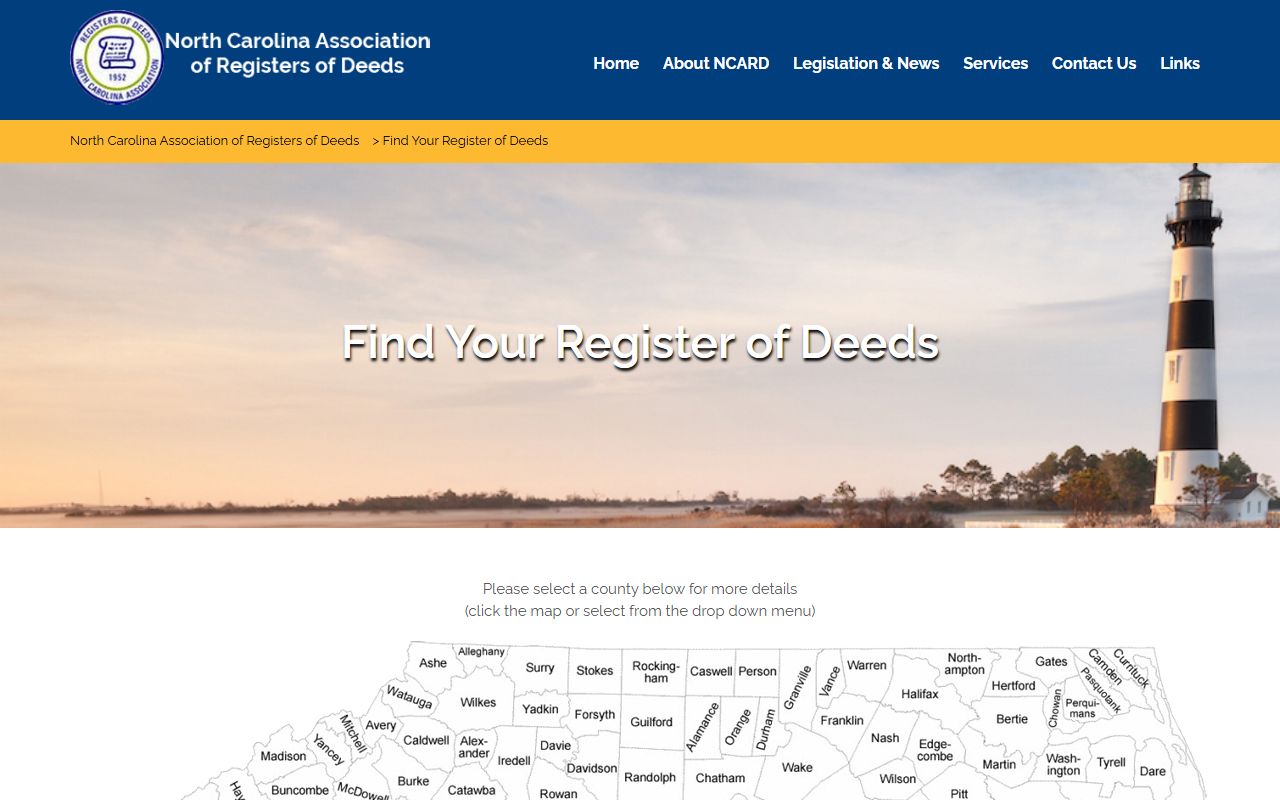
Locate the Columbus County Register of Deeds through this statewide resource.
Searching Columbus County Property Records
To find property records in Columbus County, the most reliable method is visiting the Register of Deeds office in Whiteville. The office maintains grantor and grantee indexes that cover all recorded documents. The grantor index lists those who have transferred property. The grantee index lists those who received it. Together, these indexes let you trace the ownership history of any parcel in Columbus County.
If you know the book and page number of a document, staff can locate it quickly. For broader searches, start with a name and work through the indexes. You can also search by date range or document type. Staff members at the Columbus County office can guide you through the process if you are unfamiliar with how the indexes work.
Under N.C.G.S. Chapter 161, every Register of Deeds in North Carolina must maintain complete and accurate indexes. Columbus County follows this requirement. The indexes are updated as new documents are recorded.
Note: Contact the Columbus County Register of Deeds before visiting to confirm current office hours and any document request procedures.
Types of Columbus County Deeds
Columbus County property records contain various document types. Warranty deeds are the standard instrument for real estate sales. They guarantee clear title and protect the buyer from hidden claims. Quitclaim deeds are also common, especially for transfers between family members. They pass along whatever interest the grantor holds without making promises about the title.
Deeds of trust are a key part of Columbus County records. North Carolina is a deed of trust state, not a mortgage state. Under N.C.G.S. Chapter 45, a deed of trust places the property with a trustee as collateral for a loan. When the debt is paid, the lender records a cancellation. If the borrower defaults, the trustee has the power to sell the property without going through a lengthy court process.
Liens, easements, and plats round out the records. Tax liens stem from unpaid property taxes. Mechanic's liens protect those who provide labor or materials for improvements. Subdivision plats map out lots and streets in planned developments. All of these are recorded at the Columbus County Register of Deeds.
Recording in Columbus County
Recording a document in Columbus County requires compliance with N.C.G.S. Chapter 47. The instrument must be signed by the grantor and acknowledged before a notary public. The grantor's name must match the name used in the previous deed. A return address is needed on the first page. Documents that fail these checks will not be accepted for recording.
Fees are charged for recording. These cover the costs of processing, indexing, and storing the document. The North Carolina excise tax on property transfers also applies. It is set at one dollar per five hundred dollars of the sale price under N.C.G.S. Chapter 105. Both the recording fee and the excise tax must be paid at the time of filing.
The image below shows the relevant North Carolina statutes that govern recording.
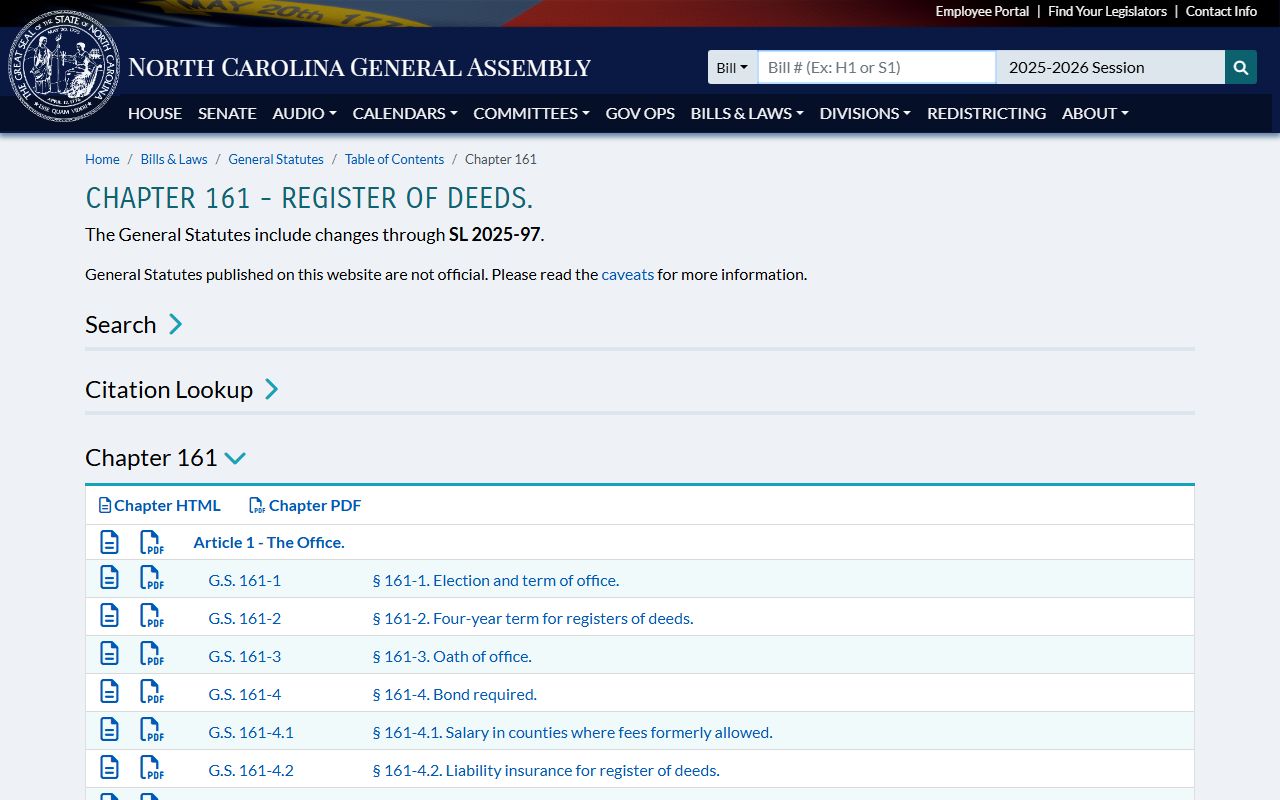
These laws apply to all documents recorded in Columbus County.
Columbus County Title Research
Title research in Columbus County builds a chain of ownership from the present back through prior deeds. Each transfer is verified. The goal is to make sure there are no gaps, conflicting claims, or outstanding liens. A clean chain of title is essential before any real estate transaction can close.
The Marketable Title Act limits how far back a title search must go. In most cases, a 30-year chain is sufficient. Claims older than that which were not re-recorded may be cut off by law. This streamlines the title search process in Columbus County and reduces the risk of ancient claims disrupting modern transactions.
For older records, the North Carolina State Archives can be a valuable resource. The archives hold early land grants, maps, and historical documents that may predate Columbus County's formation. Researchers studying land in southeastern North Carolina often find useful materials there.
Additional Columbus County Resources
The Columbus County tax office is another source of property information. Tax records show assessed values, tax rates, and payment histories for each parcel. These records help buyers understand a property's tax burden before purchasing. They also reveal any unpaid taxes that could become liens.
The North Carolina Secretary of State maintains records for business entities that may own property in Columbus County. If a deed lists a corporation or LLC as the grantor or grantee, the Secretary of State can confirm whether that entity is active and in good standing. This is a useful step in due diligence for commercial property transactions.
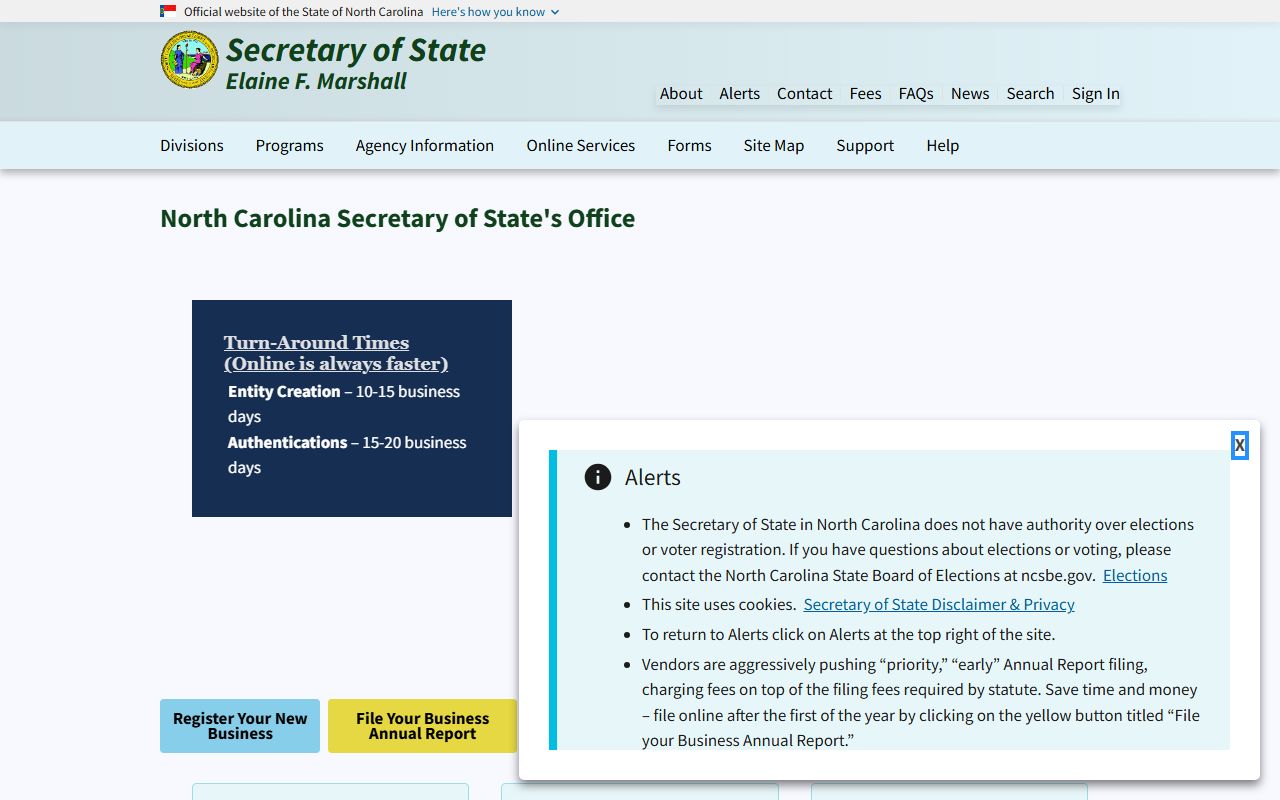
Use the Secretary of State website to verify business entities involved in Columbus County property transactions.
Columbus County remains a largely rural area with a steady real estate market. Farm land, timber tracts, and residential lots are the most common property types. The Register of Deeds office processes new recordings daily, keeping the public records current for anyone who needs them.
Note: For Columbus County parcels that border Bladen or Brunswick counties, check those counties' records as well for any documents recorded before 1808.