
Clay County Property Records
Clay County property records are kept by the Register of Deeds in Hayesville, North Carolina. This western mountain county holds deeds, liens, plats, and other land documents going back to its formation in 1861. Residents and the public can search Clay County property records at the county office. The Register of Deeds records and indexes all real estate transactions. Whether you are buying mountain land or researching family history, these records provide the information you need to understand property ownership in Clay County.
Clay County Quick Facts
Clay County Register of Deeds
The Clay County Register of Deeds office is located in the courthouse in Hayesville. This office is the official keeper of all land records in Clay County. Staff record deeds, deeds of trust, plats, liens, and other documents tied to real estate. They also maintain indexes that allow the public to search for records by name, date, or instrument type.
Clay County was formed from Cherokee County in 1861. Property records in Clay County begin from that year. For documents recorded before 1861, you would need to check Cherokee County records. The county is small and rural, set in the mountains of far western North Carolina near the Georgia border. Land transactions here often involve mountain parcels, lakefront lots near Lake Chatuge, and rural tracts.
The North Carolina Association of Register of Deeds maintains a directory that includes Clay County contact details. You can use this resource to find phone numbers, addresses, and hours for the Clay County office.
The image below shows the statewide directory for locating Register of Deeds offices across North Carolina, including Clay County.
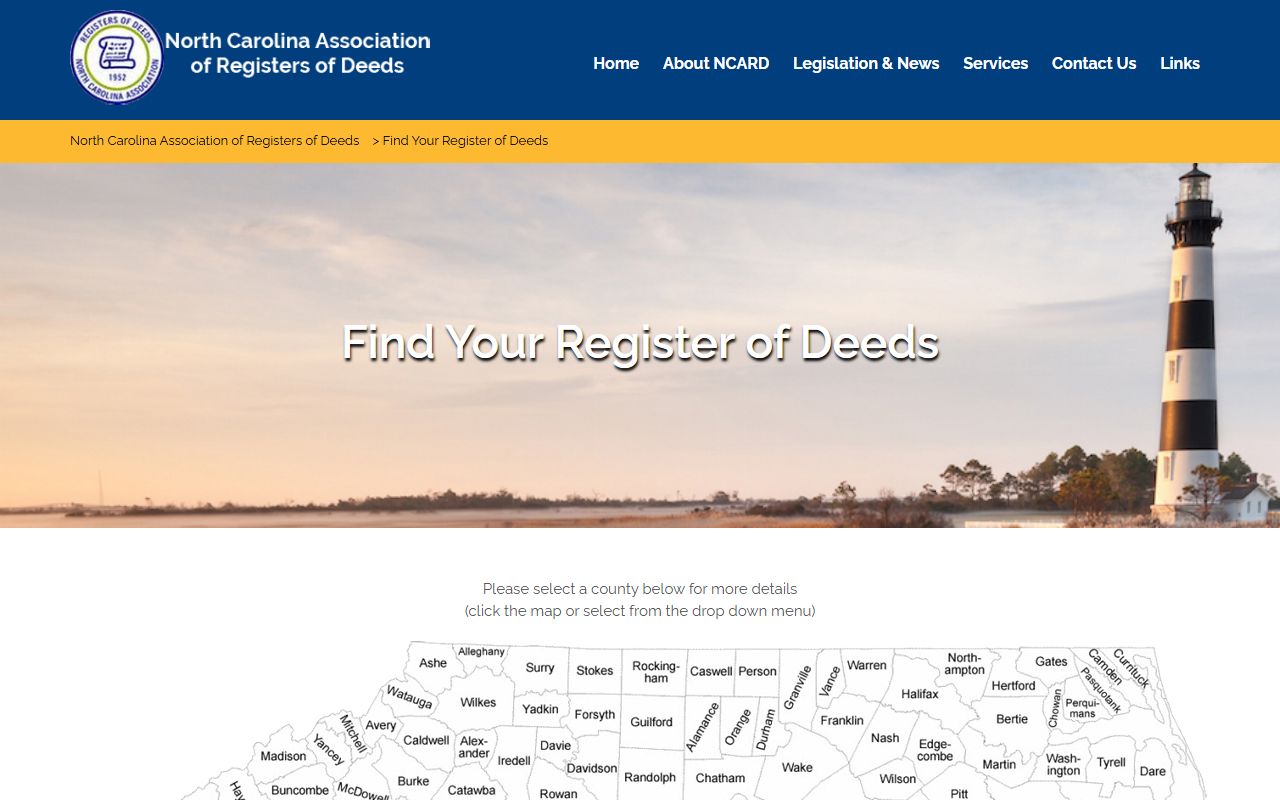
Use this directory to find contact information for the Clay County Register of Deeds.
Searching Clay County Land Records
Searching for property records in Clay County typically requires a visit to the courthouse in Hayesville. The office maintains grantor and grantee index books. The grantor index lists sellers and transferors. The grantee index lists buyers and recipients. You can search by name to find all recorded transactions involving a specific person or entity.
If you know the book and page number of a document, staff can pull it up directly. This is the fastest way to find a specific deed or lien. For broader searches, start with the grantee index and trace ownership backward through each transfer. This builds the chain of title for a given parcel in Clay County.
North Carolina law under N.C.G.S. Chapter 161 requires each Register of Deeds to keep accurate and complete indexes. Clay County follows these requirements. The indexes cover all recorded instruments from 1861 to the present.
Note: Clay County may have limited online access to property records, so plan to contact the office directly for detailed searches.
Types of Clay County Property Records
Several types of documents make up the property records in Clay County. Warranty deeds are the most common. They transfer ownership and guarantee clear title. Quitclaim deeds transfer whatever interest the grantor has without any title guarantee. Special warranty deeds fall in between, offering limited protection.
Deeds of trust serve as security for real estate loans in Clay County. North Carolina is a deed of trust state. Under N.C.G.S. Chapter 45, the borrower conveys the property to a trustee who holds it as collateral. When the loan is paid, the lender files a cancellation. If the borrower defaults, the trustee can sell the property through a foreclosure process outlined in state law.
Liens also appear in Clay County records. Tax liens arise from unpaid property taxes. Mechanic's liens protect contractors who perform work on a property. Judgment liens result from court orders. All of these attach to the property and remain until they are resolved. Plats and subdivision maps are recorded as well. These show lot lines, boundaries, and easements that affect how land can be used.
Recording Property Documents in Clay County
To record a deed or other instrument in Clay County, you must meet the requirements of N.C.G.S. Chapter 47. Documents must be signed, notarized, and include a return address on the first page. The grantor's name must match the name shown in the prior deed. If these standards are not met, the Register of Deeds may reject the document.
Recording fees apply to all documents filed in Clay County. The excise tax on real estate transfers is also collected at the time of recording. North Carolina sets this tax at one dollar per five hundred dollars of the sale price, as specified in N.C.G.S. Chapter 105. The Register of Deeds collects both the recording fee and the excise tax before the document is filed and indexed.
The North Carolina General Statutes governing recording are shown in the resource below.
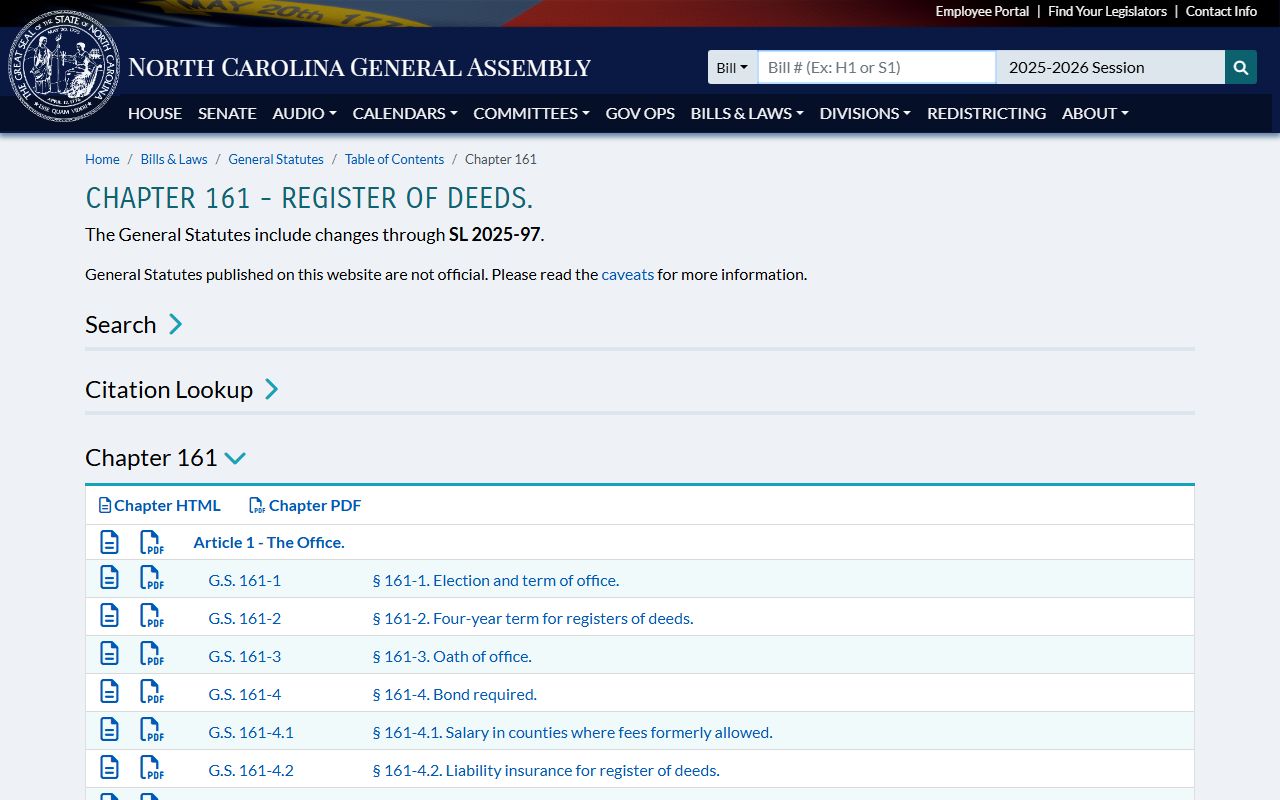
These statutes set the rules that Clay County follows for recording property documents.
Title Research in Clay County
Title research in Clay County involves building a chain of ownership for a parcel of land. This chain starts with the current owner and traces back through every recorded transfer. A thorough search covers deeds, deeds of trust, liens, judgments, easements, and covenants. Each link in the chain must be accounted for.
The Marketable Title Act helps simplify title searches in North Carolina. Under this act, a chain of title going back 30 years is generally sufficient. Older claims that were not renewed or re-recorded may be cut off. This rule protects buyers and lenders in Clay County who rely on the recorded chain.
Mountain land in Clay County can present unique title issues. Older parcels may have vague legal descriptions based on natural landmarks. Boundaries may reference trees, streams, or ridgelines that have shifted over time. Surveyors and title professionals familiar with Clay County terrain can help resolve these ambiguities. Checking the original plats and survey records at the Register of Deeds is an important step.
Note: For Clay County parcels that predate 1861, check Cherokee County records for the original deeds and grants.
Historical Records for Clay County
Clay County's history as a mountain community shapes its property records. Many early land transactions involved large tracts of timber and farm land. Over time, these tracts have been divided and sold in smaller parcels. Lake Chatuge, created in the 1940s, changed the landscape and affected property boundaries along its shores.
The North Carolina State Archives holds older land grants and historical records that may relate to Clay County parcels. These include colonial-era grants and early state land sales. Researchers interested in the history of land ownership in western North Carolina will find these archives valuable.
The State Archives is a key resource for historical property research in Clay County and across the state.
The North Carolina Secretary of State maintains business entity records. If a property in Clay County is held by a company or trust, the Secretary of State's office can help identify the entity and its registered agent.
Clay County Real Estate Resources
Beyond the Register of Deeds, several resources can help with Clay County property research. The county tax office maintains assessed values and tax payment records for all parcels. These records show what a property is worth for tax purposes and whether the taxes are current. Tax data complements the deed records held at the Register of Deeds.
When buying or selling land in Clay County, a title search is a standard part of the process. Lenders require it before they will approve a loan. The search confirms that the seller has clear title and that no hidden liens or claims exist. In Clay County, where many parcels have long histories of family ownership, a careful title search is especially important. Gaps in the chain can arise from informal transfers, lost documents, or recording errors over the decades.