
Avery County Property Records
Avery County property records are managed by the Register of Deeds in Newland, North Carolina. Avery County is one of the younger counties in the state, formed in 1911 from parts of Caldwell, Mitchell, and Watauga counties. The Register of Deeds office handles all real estate recordings, including deeds, deeds of trust, and plats. Avery County also offers eRecording for electronic document submission. Property tax records and mapping data are available through separate county offices. Together, these resources give a complete picture of land ownership in Avery County.
Avery County Quick Facts
Avery County Register of Deeds
Erin G. English is the Register of Deeds for Avery County. The office is at 200 Montezuma Street in Newland, NC 28657. Phone is 828-733-8260. Office hours are Monday through Friday, 8:00 AM to 4:30 PM. Recording of documents stops at 4:15 PM. Marriage services run from 8:00 AM to 4:00 PM by appointment.
The Avery County Register of Deeds records and stores all property documents for the county. This includes warranty deeds, quitclaim deeds, deeds of trust, liens, plats, and easements. The office also handles vital records and marriage licenses. All recorded instruments become part of the permanent public record in Avery County.
You can access the Avery County Register of Deeds website below.
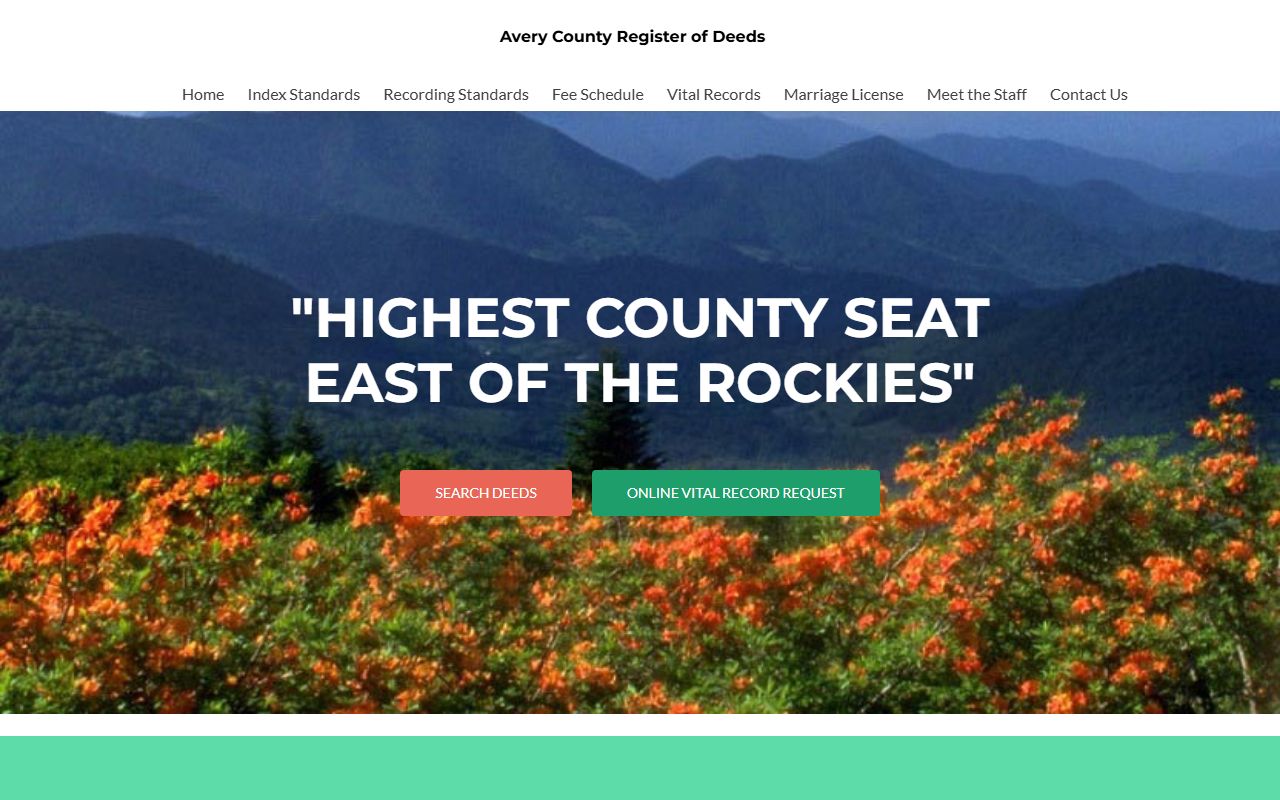
Visit averydeeds.com for Avery County property records and deed searches.
Avery County Real Estate Tax Records
The Avery County Tax Office maintains property tax records for all real estate in the county. The tax office phone number is 828-733-8214. Tax records show the assessed value of each parcel, the tax rate, and payment history. These records tie directly to the deeds recorded at the Register of Deeds.
You can search Avery County real estate tax records online. The Avery County Real Estate Tax portal lets you look up any parcel by owner name, parcel number, or address. Results show the current assessment, tax amounts owed, and payment status.
Here is a view of the Avery County real estate tax search.
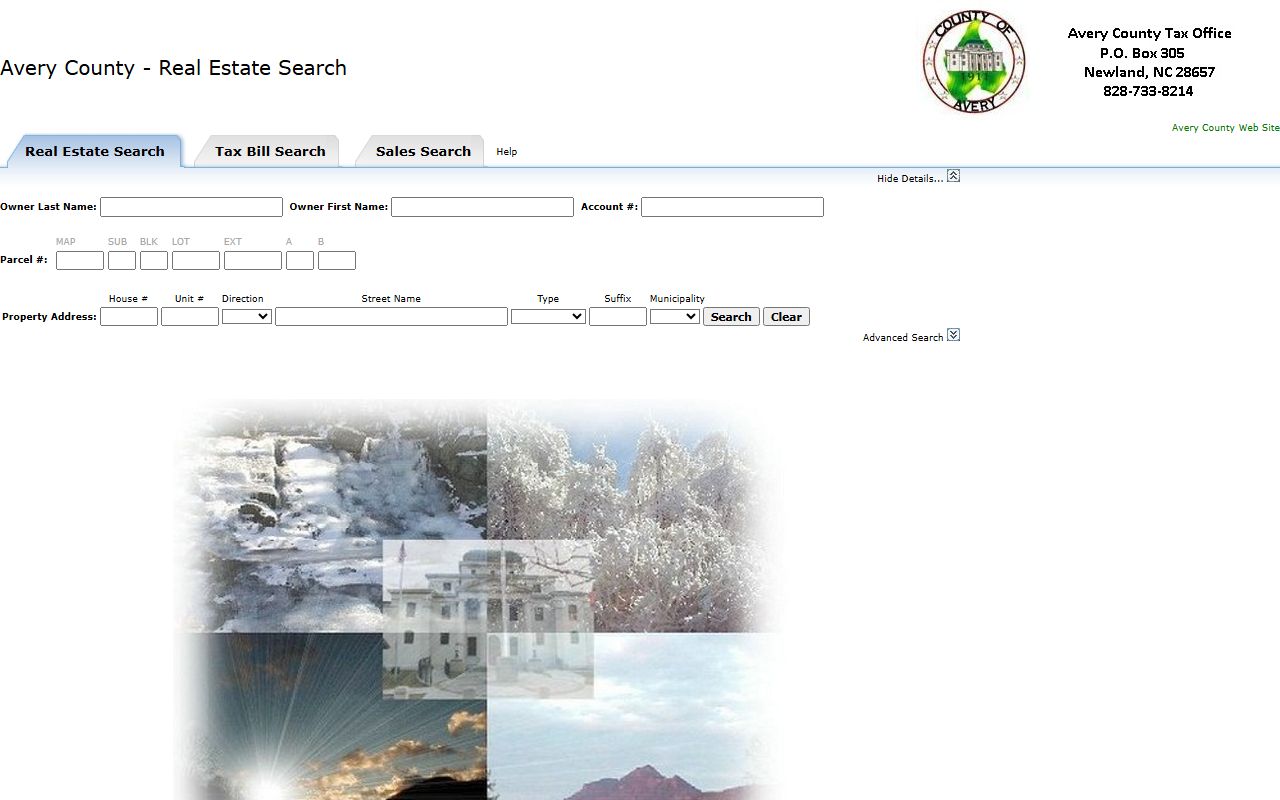
Tax records are an important part of property research in Avery County.
Property taxes in North Carolina are based on the assessed value of real estate. Avery County reassesses property values on a regular schedule as required by state law. Under N.C.G.S. Chapter 105, counties must revalue property at least every eight years. Avery County property owners can appeal their assessment if they believe the value is too high.
Note: Tax records in Avery County may show different ownership than deed records if a recent sale has not yet been updated in the tax system.
Avery County Property Mapping
Mapping services in Avery County are outsourced, but online GIS tools are still available. The Avery County Mapping page has links to the GIS system. You can view parcel boundaries, owner names, and lot dimensions on an interactive map.
Below is the Avery County Mapping page.
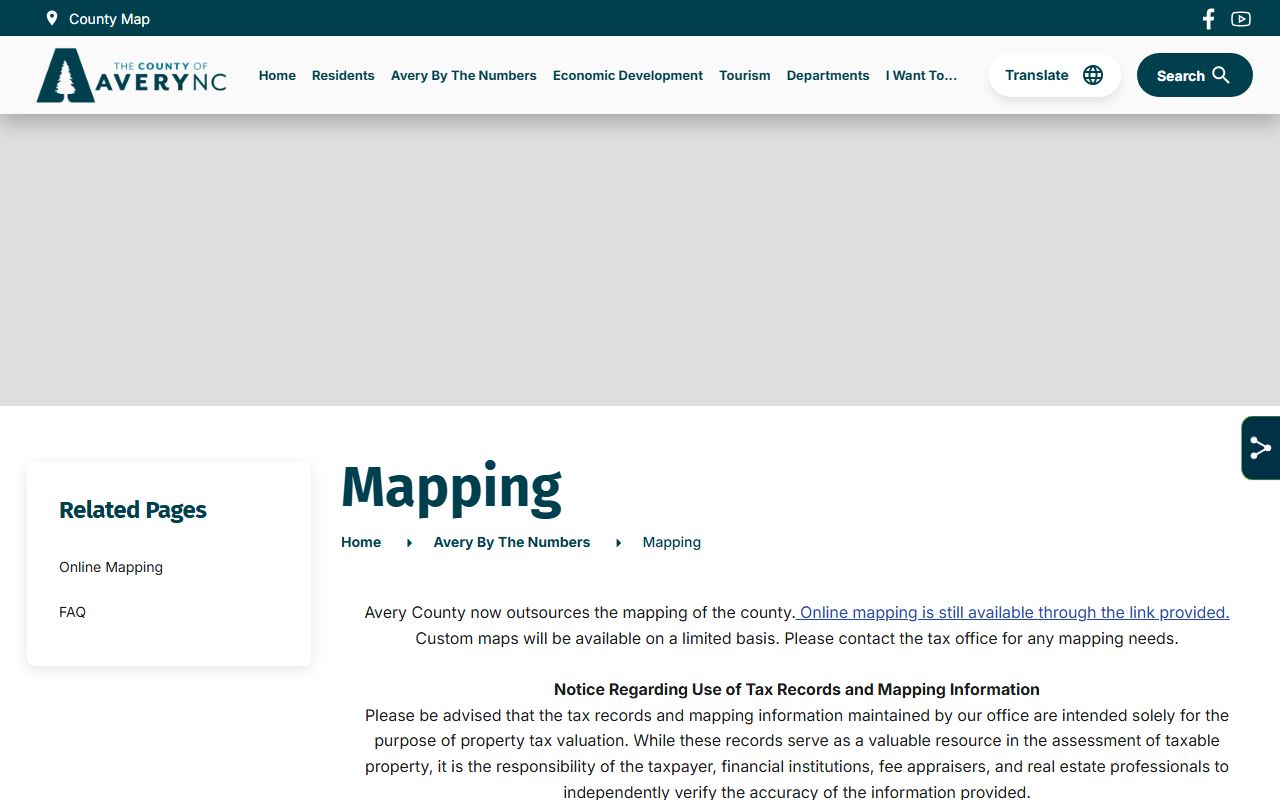
GIS maps complement deed records by showing the physical location and shape of each parcel in Avery County.
Mapping data is helpful for several reasons. It shows where a property is in relation to roads, creeks, and neighboring land. It also shows lot sizes and shapes that might not be clear from a deed description alone. For properties in Avery County that use old metes and bounds descriptions, the GIS map can give a visual sense of the parcel boundaries.
Electronic Recording in Avery County
Avery County accepts electronic recording of property documents. This service is mainly used by title companies, law firms, and lenders. It lets them submit deeds, deeds of trust, and other instruments online without visiting the office. The document gets reviewed and recorded the same way as a paper submission.
eRecording speeds up the filing process in Avery County. Documents submitted electronically are often recorded the same day. This is faster than mailing or hand-delivering paper documents. The recorded instrument gets indexed and becomes part of the public record in Avery County right away.
Searching Avery County Title Records
A title search in Avery County traces the chain of ownership for a parcel of land. It starts with the current owner and works backward through each recorded deed. The grantor and grantee indexes at the Avery County Register of Deeds are the primary tools for this research.
Because Avery County was formed in 1911 from Caldwell, Mitchell, and Watauga counties, older property records may be in those parent counties. A title search that goes back more than 110 years in Avery County will need to check those other offices. The NCARD directory can help you find the right offices.
The Marketable Title Act limits most title searches in Avery County to 30 years. A clear chain for that period is usually enough. This protects buyers and lenders from old claims that were never preserved in the recorded chain. Still, a careful search also checks for current liens, judgments, and tax claims in Avery County.
Recording requirements for Avery County follow N.C.G.S. Chapter 47. All deeds must be signed, notarized, and contain the proper information before recording. N.C.G.S. Chapter 161 governs the duties of the Register of Deeds office in maintaining these records.
Note: The North Carolina State Archives holds early land grants that may affect properties in Avery County.
Avery County Real Estate Documents
Several types of documents make up the property records in Avery County. Warranty deeds transfer full ownership with a guarantee of clear title. Quitclaim deeds transfer whatever interest the grantor holds but make no title promises. Both get recorded at the Avery County Register of Deeds.
Deeds of trust secure real estate loans in Avery County. North Carolina uses deeds of trust instead of mortgages for most lending. Under N.C.G.S. Chapter 45, a deed of trust involves three parties: borrower, lender, and trustee. When the loan is paid, the lender files a cancellation at the Avery County Register of Deeds.
Plats are another important part of Avery County property records. They show lot lines, road layouts, and the physical arrangement of subdivisions. Easements grant rights to use someone else's land for a specific purpose, like a driveway or utility line. Restrictive covenants limit how property can be used within certain developments in Avery County.