
Ashe County Land and Property Records
Ashe County property records are available through the Register of Deeds and the Tax Administration offices in Jefferson, North Carolina. Ashe County was formed in 1799 from Wilkes County and sits in the northwestern corner of the state. The Register of Deeds records all real estate documents, while the Tax Administration office maintains property valuations and tax records. Together, these offices provide a full view of property ownership and history in Ashe County. You can search records in person at the courthouse or use online tools provided by the county.
Ashe County Quick Facts
Ashe County Register of Deeds
Deaett R. Roten serves as the Register of Deeds for Ashe County. The office is in the courthouse at Suite 2300, 150 Government Circle, Jefferson, NC 28640. Hours are 8:00 AM to 5:00 PM, Monday through Friday. Recording of documents stops at 4:30 PM.
Staff at the Ashe County Register of Deeds include Donna Bowers, Beth Brooke, Jackie Stewart, and Lori Miller. They help the public search for property records, file new documents, and obtain copies. The office handles deeds, deeds of trust, plats, liens, and other instruments that affect real property in Ashe County.
Visit the Ashe County Register of Deeds page for full details about services and hours.
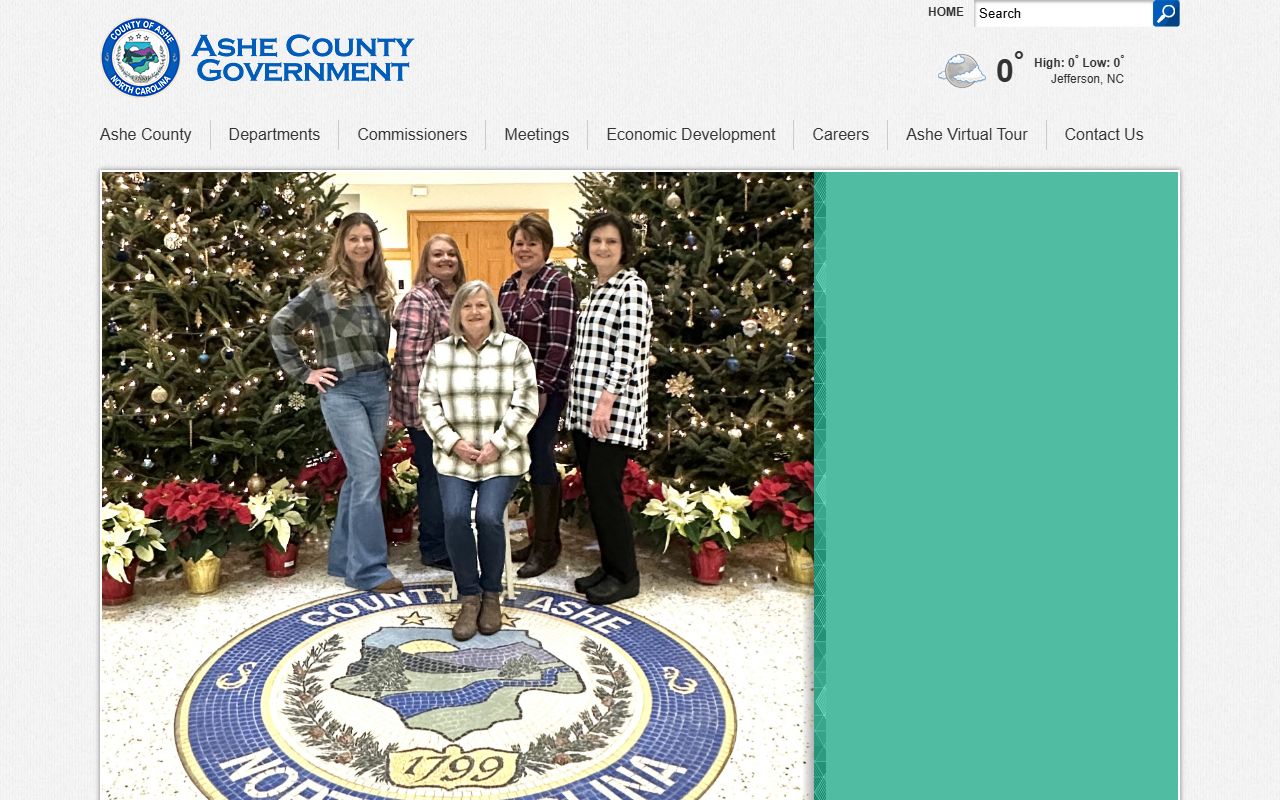
The Register of Deeds page lists contact information and available services for Ashe County.
Ashe County Tax and Property Records
The Ashe County Tax Administration office plays a key role in property records. It maintains the tax rolls, property valuations, and ownership data that tie into the deed records. The Tax Collections office is at Suite 2275, 150 Government Circle in Jefferson. The Tax Collector can be reached at 336-846-5577. Tax Assessing is at 336-846-5554. Tax Mapping is at 336-846-5555.
Ashe County offers online tax search and payment tools. You can look up property tax records by owner name, parcel number, or address. The Ashe County Tax Administration website has details on tax rates, payment options, and due dates. Online payment is accepted for current and some past-due taxes.
Here is the Ashe County Tax Administration page.
Tax records show assessed values, tax amounts, and payment status for parcels in Ashe County.
The Ashe County Tax Department page on the county website provides additional resources. It covers how properties are valued, the revaluation schedule, and how to appeal an assessment in Ashe County.
Below is the Ashe County Tax Department page.
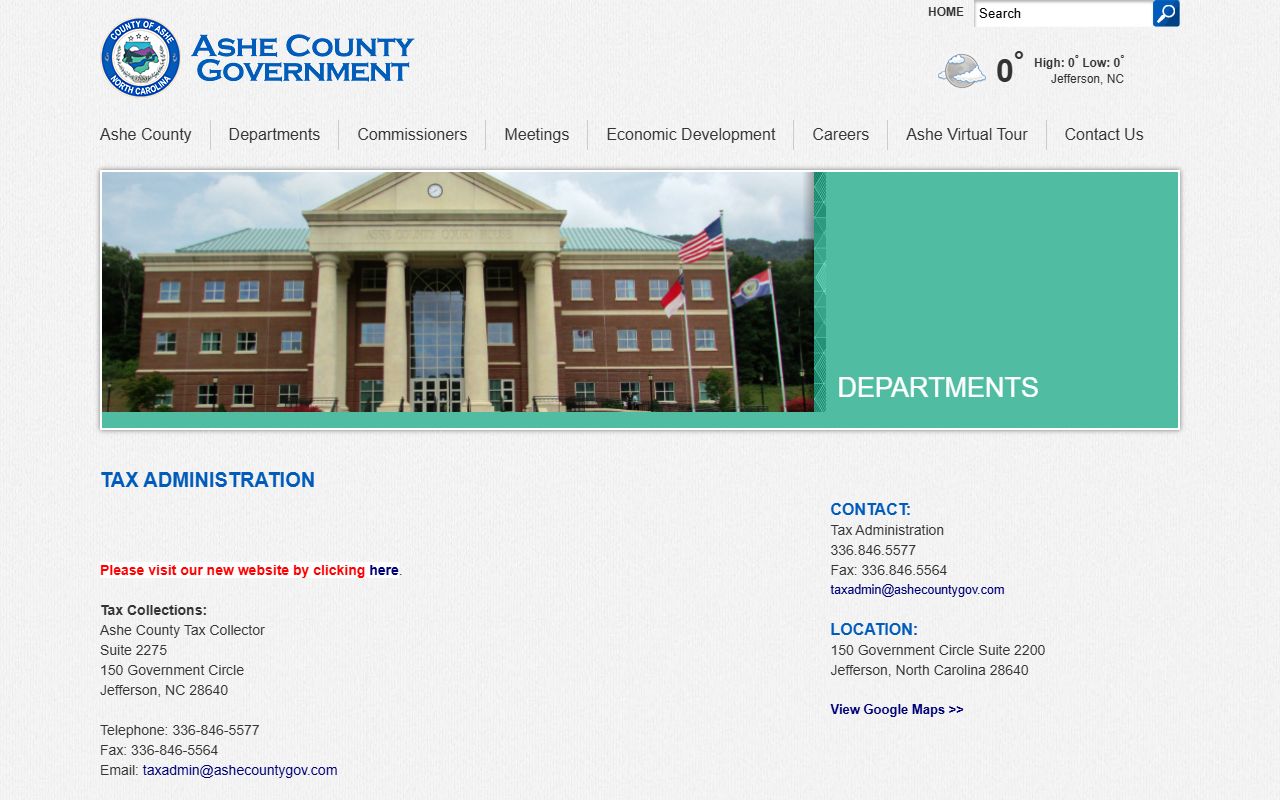
Use this page for information on assessments and tax appeals in Ashe County.
Recording Property Documents in Ashe County
Filing a deed or other property document in Ashe County follows North Carolina state law. N.C.G.S. Chapter 47 sets the requirements. Every deed must be signed by the grantor and notarized. The name on the new deed must match the name on the prior recorded deed in Ashe County. A return address must appear on the first page.
The excise tax on real estate sales in Ashe County is one dollar per five hundred dollars of the sale price. This is collected at the time of recording. N.C.G.S. Chapter 105 governs this tax. Recording fees also apply and cover the cost of indexing and storing the document.
Note: Documents must be submitted before 4:30 PM on weekdays for same-day recording in Ashe County.
Ashe County Deed and Title Research
Title research in Ashe County means tracing ownership from the current owner back through each prior deed. The grantor and grantee indexes at the Register of Deeds make this work possible. Each index entry shows names, dates, and book and page references.
A full title search in Ashe County also checks for liens. Tax liens show up when property taxes are unpaid. Judgment liens come from court cases. Mechanic's liens arise from unpaid construction work. All of these attach to the property and must be cleared before a clean title can pass to a new owner in Ashe County.
The Marketable Title Act simplifies some searches. A chain of title going back 30 years is usually enough in Ashe County. Older claims that were not preserved by re-recording can be cut off under this law. This gives buyers and lenders confidence in the recorded chain of ownership.
Since Ashe County was formed from Wilkes County in 1799, early property records are in Wilkes County. The North Carolina State Archives may also hold early land grants and surveys for the area now within Ashe County. The NCARD directory can help you locate offices in neighboring counties if your search extends beyond Ashe County.
Ashe County Real Estate Documents
Several types of documents make up the property records in Ashe County. Each serves a different purpose in real estate transactions.
- Warranty deeds transfer full ownership with a guarantee of clear title
- Quitclaim deeds transfer whatever interest the grantor holds without a title guarantee
- Deeds of trust secure loans against real property in Ashe County
- Plats show the division of land into lots or the boundaries of a parcel
- Easements grant rights to use another person's land for a specific purpose
All of these get recorded at the Ashe County Register of Deeds office. Once recorded, they become public records. Anyone can view them. This openness is required by N.C.G.S. Chapter 161, which defines the duties of the Register of Deeds.
Ashe County also records restrictive covenants that run with the land. These can limit how property is used. They often appear in subdivision developments. Checking for covenants is a key part of any property purchase in Ashe County.
Ashe County and State Resources
Several statewide tools support property research in Ashe County. The North Carolina Secretary of State website handles business filings and UCC liens. These can affect property titles in Ashe County when businesses own real estate.
The Registered Land Act may apply to certain properties in Ashe County that use the Torrens registration system. This is uncommon but worth checking if you encounter a registered land certificate during your research. The Ashe County Register of Deeds can tell you if a specific property falls under this system.