
Alamance County Property Records
Alamance County property records are held by the Register of Deeds in Graham, North Carolina. These records include deeds, liens, plats, and other land documents filed in Alamance County since its founding in 1793. Residents and the public can search Alamance County property records both online and in person. The Register of Deeds office provides access to real estate documents, tract indexes, and recorded instruments. Whether you need a deed copy or want to trace land ownership in Alamance County, several tools and resources can help you find the records you need.
Alamance County Quick Facts
Alamance County Register of Deeds
The Alamance County Register of Deeds office is the main source for property records in the county. It sits at 118 West Harden Street in Graham. Staff at this office record and store deeds, deeds of trust, liens, plats, and other real estate documents. They also handle vital records. Birth and death records go back to October 1913. Marriage records date to 1849.
Alamance County has an active online records system. You can search recorded documents through the official Alamance County Register of Deeds website without visiting the office. The site lets you look up property records by name, book and page, or instrument number. This makes it simple to check deed history from home or work. Alamance County also maintains an alternative Register of Deeds site that offers additional ways to access the same property records.
The Alamance County Register of Deeds can issue birth certificates for other North Carolina counties from 1971 onward. They use the NCDAVE system. This statewide network links all Register of Deeds offices in North Carolina for vital record requests.
You can view the official Alamance County Register of Deeds page below.
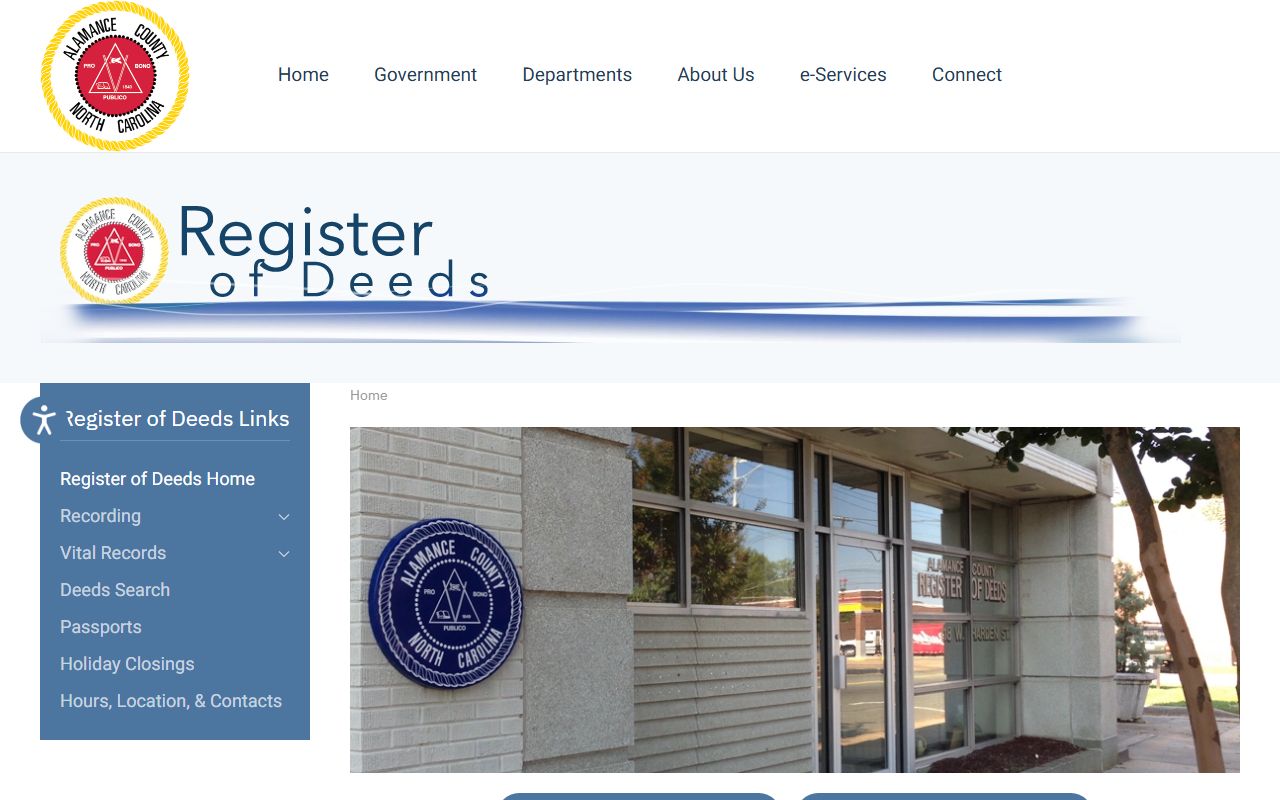
This is the main portal for all recorded documents in Alamance County.
Searching Alamance County Property Records Online
Online access is one of the best ways to find property records in Alamance County. The county offers more than one portal for this purpose. Each has its own strengths. You can pick the one that fits your needs best.
The Alamance County Register of Deeds website is the best starting point. You can search by owner name, parcel number, or book and page reference. Results show deed references, recording dates, and document types. The alternative county site provides additional access to land records and office information for Alamance County.
When searching Alamance County records online, keep these tips in mind:
- Try different name spellings if your first search returns no results
- Use book and page numbers when you have them from a prior deed
- Check both the main site and the alternative site for the most complete results
- Look at the grantor and grantee index to trace chains of title
Note: Online records may not include every document ever filed in Alamance County, especially older records that have not yet been digitized.
Types of Alamance County Land Records
Alamance County property records cover many types of documents. Warranty deeds transfer full ownership of real estate. They are the most common deed type in Alamance County. Quitclaim deeds transfer whatever interest the grantor holds, but they do not promise clear title. Both types get recorded at the Register of Deeds office.
Deeds of trust serve as the security instrument for most home loans in Alamance County. North Carolina is a deed of trust state rather than a mortgage state. Under N.C.G.S. Chapter 45, a deed of trust involves three parties: the borrower, the lender, and a trustee. When the loan is paid off, the lender files a cancellation. This release gets recorded in Alamance County property records.
Liens also appear in Alamance County land records. Tax liens, mechanic's liens, and judgment liens all attach to real property. They stay on record until they are satisfied or released. Plats show the division of land into lots. Alamance County requires subdivision plats to be recorded before lots can be sold.
Alamance County Records Access
Beyond the primary online tools, the Alamance County Register of Deeds provides in-person access at the office in Graham. You can visit during business hours to search the index books and view recorded instruments. Staff can assist you in finding specific property records. Copies of documents are available for a small fee.
The alternative Alamance County ROD site gives you another way to access records from home. Here is a view of that site.
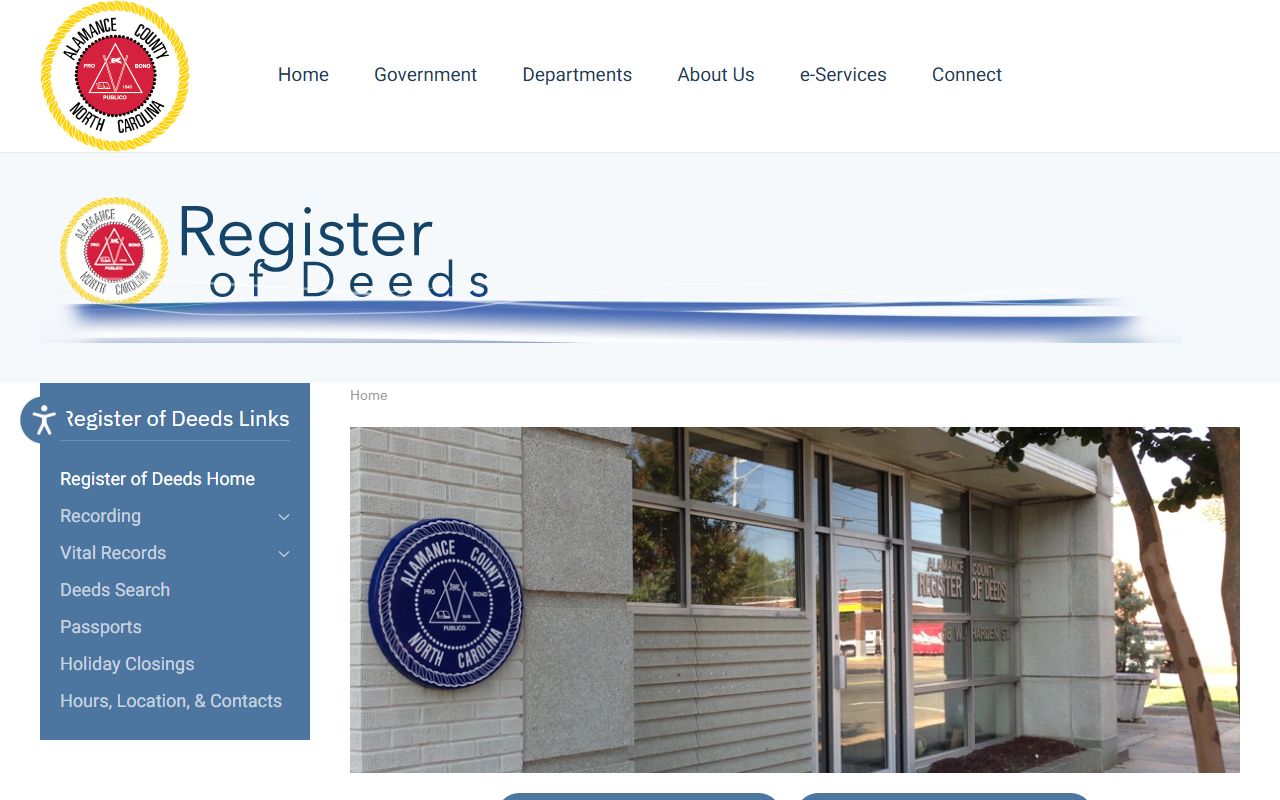
Both online portals connect to the same underlying Alamance County records system.
For statewide resources, the North Carolina Association of Register of Deeds maintains a directory of all county offices. This is helpful if you need records from multiple counties. The North Carolina State Archives holds older land grants and colonial-era property records that may predate Alamance County's formation in 1793.
Recording Property Documents in Alamance County
To record a deed or other property document in Alamance County, the instrument must meet certain requirements under North Carolina law. N.C.G.S. Chapter 47 sets out the rules for recording. Documents must be signed and notarized. The grantor's name must appear as it does in the prior recorded deed. A return address must be on the first page.
Alamance County charges an excise tax on real estate transfers. North Carolina sets this at one dollar per five hundred dollars of sale price. The Register of Deeds collects this tax at the time of recording, as required by N.C.G.S. Chapter 105. Recording fees also apply. These cover the cost of indexing and storing the document in Alamance County's records.
Vital records are also part of the Alamance County Register of Deeds office. Below is a look at their vital records section.
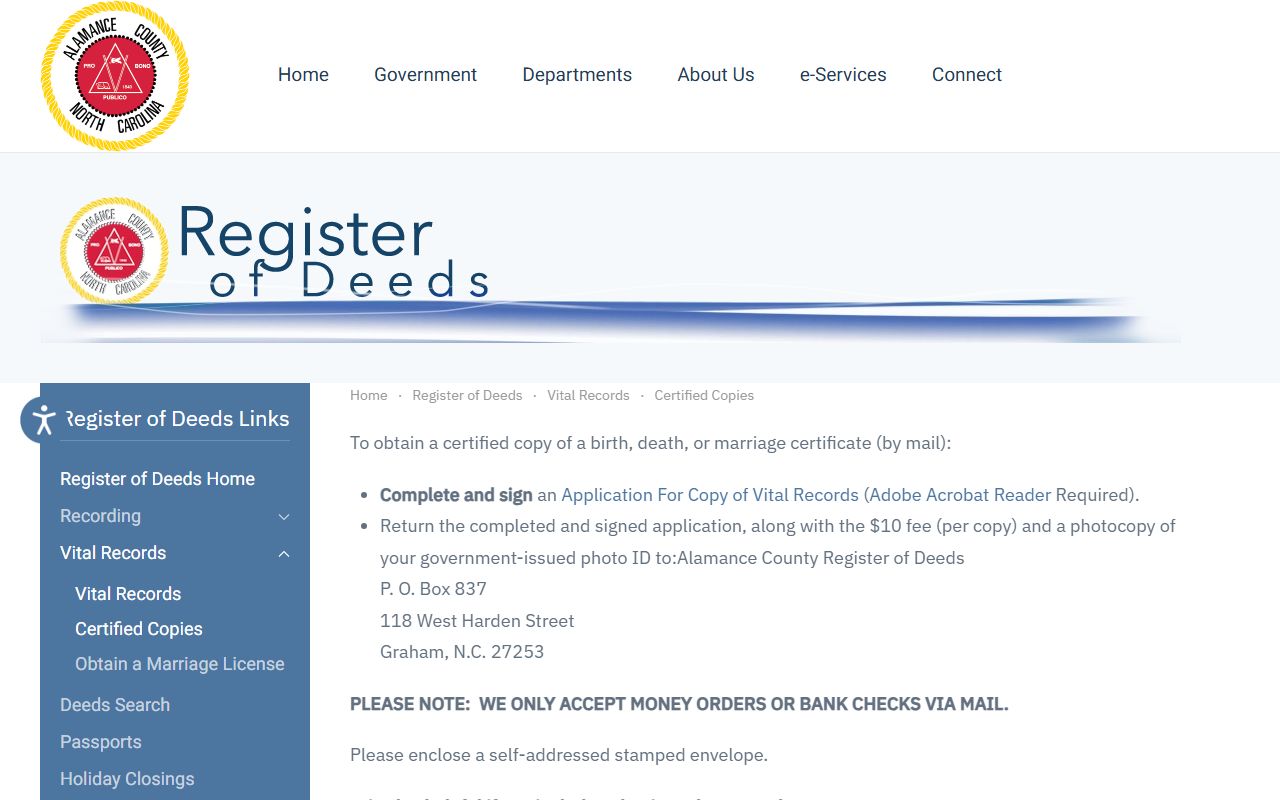
While vital records differ from property records, the same office handles both in Alamance County.
Note: All documents submitted for recording in Alamance County should be originals, not copies, unless otherwise allowed by statute.
Alamance County Title Research
Title research in Alamance County involves tracing the chain of ownership for a given parcel. This starts with the current owner and works backward through each deed. The Alamance County grantor and grantee indexes are the main tools for this work. The grantor index lists people who transferred property. The grantee index lists those who received it.
North Carolina's Marketable Title Act can simplify title searches in Alamance County. Under this law, a chain of title going back at least 30 years is generally sufficient. Older claims that are not re-recorded may be cut off. This protects buyers and lenders who rely on the recorded chain in Alamance County.
Professional title searchers often use the Alamance County online records system for initial research. They then visit the office to verify details and check for items that may not appear online. A thorough title search in Alamance County covers deeds, deeds of trust, liens, judgments, and tax records. It also checks for easements and restrictive covenants that run with the land.