
Jacksonville Property Records
Jacksonville property records are filed at the Onslow County Register of Deeds. Jacksonville serves as the county seat of Onslow County, located on the coast of eastern North Carolina. The city sits near Camp Lejeune, one of the largest Marine Corps bases in the country. That military presence shapes much of the local real estate market. Property records here cover deeds, liens, plats, and other land documents for the entire Jacksonville area. The Register of Deeds office on Old Bridge Street handles all recordings and searches for Onslow County residents.
Jacksonville Quick Facts
Jacksonville Property Records at the Register of Deeds
The Onslow County Register of Deeds manages all property records for Jacksonville. This office is in the heart of the city on Old Bridge Street. Staff are available Monday through Friday from 8 AM to 5 PM. They assist with deed searches, copy requests, and document recordings.
Onslow County was formed in 1734. That means property records in this area span nearly three centuries. Early documents cover colonial land grants and transfers from the 1700s. Today the office records warranty deeds, quitclaim deeds, deeds of trust, maps, and plats. Each new recording becomes part of the permanent public record for Jacksonville.
| Office | Onslow County Register of Deeds |
|---|---|
| Address | Old Bridge St Jacksonville, NC 28540 |
| Phone | (910) 347-3451 |
| Hours | Monday through Friday, 8:00 AM to 5:00 PM |
The office also supports eRecording. Title companies and attorneys can submit documents online without a trip to the office. This speeds up closings for Jacksonville home sales. Walk-in service is still available for anyone who prefers to visit in person.
Camp Lejeune and Jacksonville Real Estate
Camp Lejeune shapes the Jacksonville real estate market. Thousands of service members and their families rent or buy homes here. That creates a steady flow of property transfers and deed recordings. Military relocations mean frequent sales in many Jacksonville neighborhoods.
Rental properties are common near the base. Investors purchase homes and record deeds through the Onslow County office. Deeds of trust tied to VA loans appear often in the records. The volume of transactions keeps the Register of Deeds busy year-round. Jacksonville property records reflect this active, military-driven market in ways few other North Carolina cities can match.
New construction has also grown in recent years. Subdivisions east and west of the city have added hundreds of parcels to the Onslow County records. Each new plat and deed becomes part of the public file. Builders, buyers, and title companies all rely on the Register of Deeds to keep these records current and correct.
How to Search Jacksonville Records Online
Onslow County offers online access to property records. You can search by owner name, parcel number, or address. The online portal covers recorded deeds, liens, and other land documents. It is free and available at any time.
The county GIS system provides map-based searches as well. You can click a parcel on the map to see its owner, size, tax value, and zoning. This is a quick way to look up a Jacksonville property when you only know its location. The GIS layers include flood zones, which matter in a coastal city like Jacksonville.
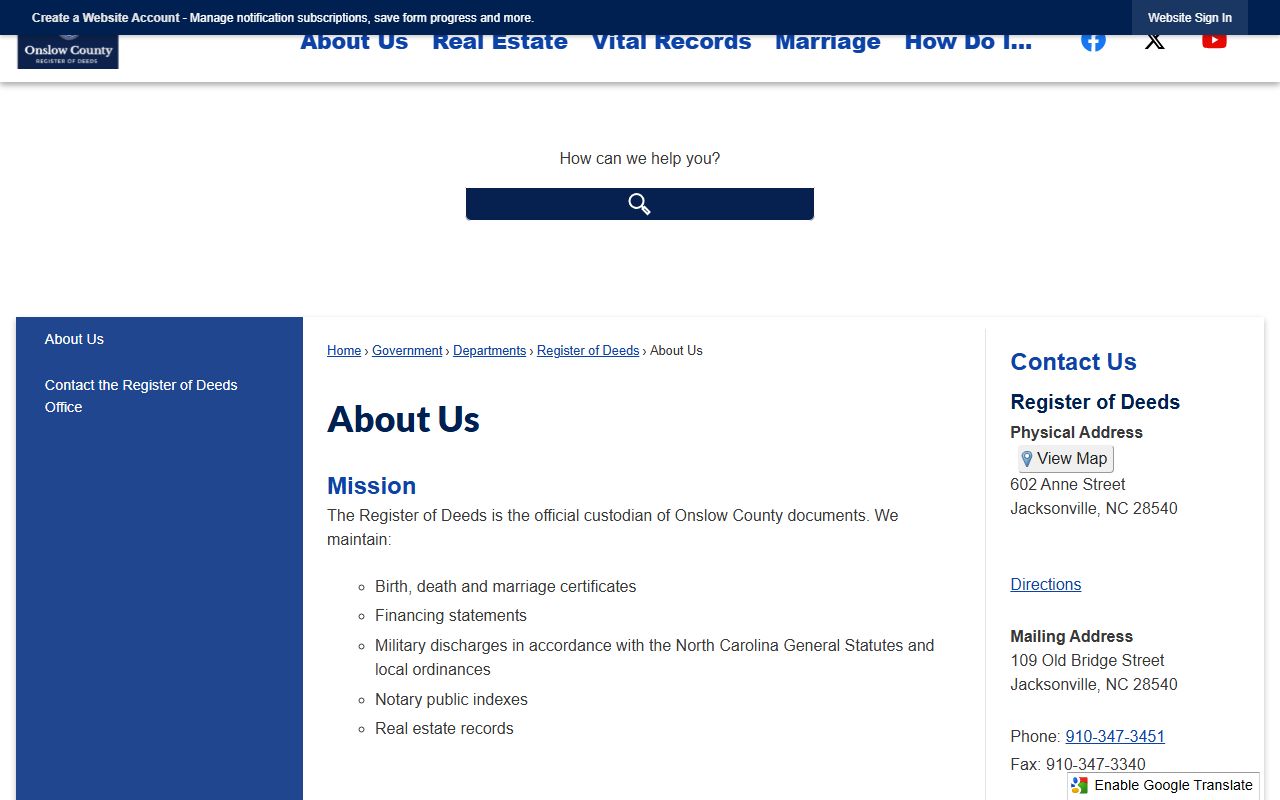
The image below shows Onslow County resources used for Jacksonville property searches.
For older documents, you may need to contact the office directly. Some early records have been scanned, but the oldest files may require an in-person visit. Staff can help locate hard-to-find documents from the county's long history.
Jacksonville Deed Records
Deeds are the core of property records in Jacksonville. A deed shows who sold a property and who bought it. It also contains the legal description and the recording date. Revenue stamps on the deed indicate the sale price based on the North Carolina excise tax rate.
Common deed types in Jacksonville include general warranty deeds and special warranty deeds. Quitclaim deeds are used for transfers between family members or to clear title issues. Each type serves a different purpose and offers a different level of protection. The Register of Deeds records all of them in the same public index.
Property Liens in Jacksonville
Liens affect many Jacksonville properties. A deed of trust secures a mortgage. Tax liens arise from unpaid property taxes. Mechanic's liens protect contractors who did work on a home. All of these are recorded at the Onslow County Register of Deeds.
Before buying a home in Jacksonville, a title search reveals any existing liens. Title companies check the public records for claims against the property. A clean search means no outstanding debts are tied to the land. Most lenders in Jacksonville require both a title search and title insurance before closing. This protects the buyer and the bank from hidden claims that could surface later.
North Carolina law under Chapter 47 of the General Statutes governs how liens and other documents are recorded. The Chapter 161 covers the duties of the Register of Deeds. These laws ensure that all recordings in Jacksonville follow the same standards used across the state.
Jacksonville Property Tax Records
The Onslow County Tax Assessor sets values for all Jacksonville properties. Tax records show assessed values, tax rates, and amounts owed. These records are public. You can look them up through the county tax office or online.
Jacksonville property owners pay both county and city taxes. The combined rate funds schools, roads, public safety, and other services. Property values are reassessed on a regular schedule as required by Chapter 105 of the General Statutes. Owners who disagree with their assessment can file an appeal through the county office. Deadlines for appeals are firm, so check your notice promptly.
Historical Records in Jacksonville
Onslow County records reach back to 1734. These early documents trace land ownership from the colonial period forward. Jacksonville grew slowly for much of its history. The arrival of Camp Lejeune in the 1940s changed everything. Property records from that era show a rapid increase in land sales and new construction.
Researchers can find older records through the North Carolina State Archives. The archives hold deeds, maps, and court records that supplement what the Register of Deeds has on file. For genealogy work, these old property documents can reveal where ancestors lived and what land they owned. The NC Association of Registers of Deeds can help point you to the right resources.
Recording Property Documents in Jacksonville
To record a document in Jacksonville, bring it to the Onslow County Register of Deeds. The office charges fees set by state law. Fees vary based on the document type and page count. Excise tax is collected on most property transfers at the time of recording.
Documents must meet format standards before they can be recorded. They need proper margins, clear text, and correct notarization. Documents filed under Chapter 47B must include specific notary information. The NC Secretary of State oversees notarization rules statewide. Check with the Register of Deeds before you submit to avoid rejections or delays.
Jacksonville attorneys and title companies often use eRecording for faster service. This electronic option lets them submit documents from their offices. It cuts down wait times and keeps the closing process on track.
Onslow County Property Records
Jacksonville is the county seat of Onslow County. All property recordings for Jacksonville go through the Onslow County Register of Deeds. The county office serves Jacksonville and the surrounding communities. For full details on the county office, fees, and search tools, visit the Onslow County property records page.