
Greenville Property Records Guide
Greenville property records are filed at the Pitt County Register of Deeds. Greenville serves as the county seat and the largest city in eastern North Carolina's inner coastal plain. Pitt County was formed in 1760, giving the area over 260 years of recorded property history. The city's real estate market is shaped by East Carolina University, the regional medical center, and steady residential growth. The Register of Deeds office maintains deeds, plat maps, liens, deeds of trust, and other land documents for all of Greenville and the surrounding county.
Greenville Quick Facts
Greenville Register of Deeds Office
The Pitt County Register of Deeds is at 100 W. 3rd Street, Greenville, NC 27835. You can call 252-902-2950 for office hours and assistance. As the county seat, Greenville houses the only Register of Deeds office for all of Pitt County.
The office records and stores all land documents for the county. Staff help visitors find deeds, deeds of trust, plat maps, liens, and other recorded instruments. You can search by owner name, parcel number, or book and page reference. The office has served the area since 1760, though the current building and systems are modern. Pitt County's long history means some property chains stretch back to colonial-era land grants.
Certified copies cost $5 for the first page and $2 for each page after that. These fees are set by N.C.G.S. Chapter 161. Plain copies for personal use cost less. Call ahead to confirm current pricing before visiting the Greenville office.
Searching Greenville Property Records Online
Pitt County offers online access to recorded property documents. The search portal covers deeds, liens, plat maps, and other instruments filed at the Register of Deeds. You can search by grantor, grantee, document type, or recording date from any device with internet access.
Search results show book and page numbers, recording dates, and the names of parties involved. Many records include viewable document images. The online system is free for basic searches. If you need a certified copy, you must contact the office or visit in person. The NC Association of Register of Deeds directory can help you find the correct online portal for Pitt County and other counties in the region.
The NC Secretary of State at sosnc.gov maintains records on business entities that own property in Greenville. This resource helps verify that a company listed on a deed is a valid, active entity in North Carolina.
Statewide resources from the NC Association of Register of Deeds help connect researchers with property record offices across North Carolina.
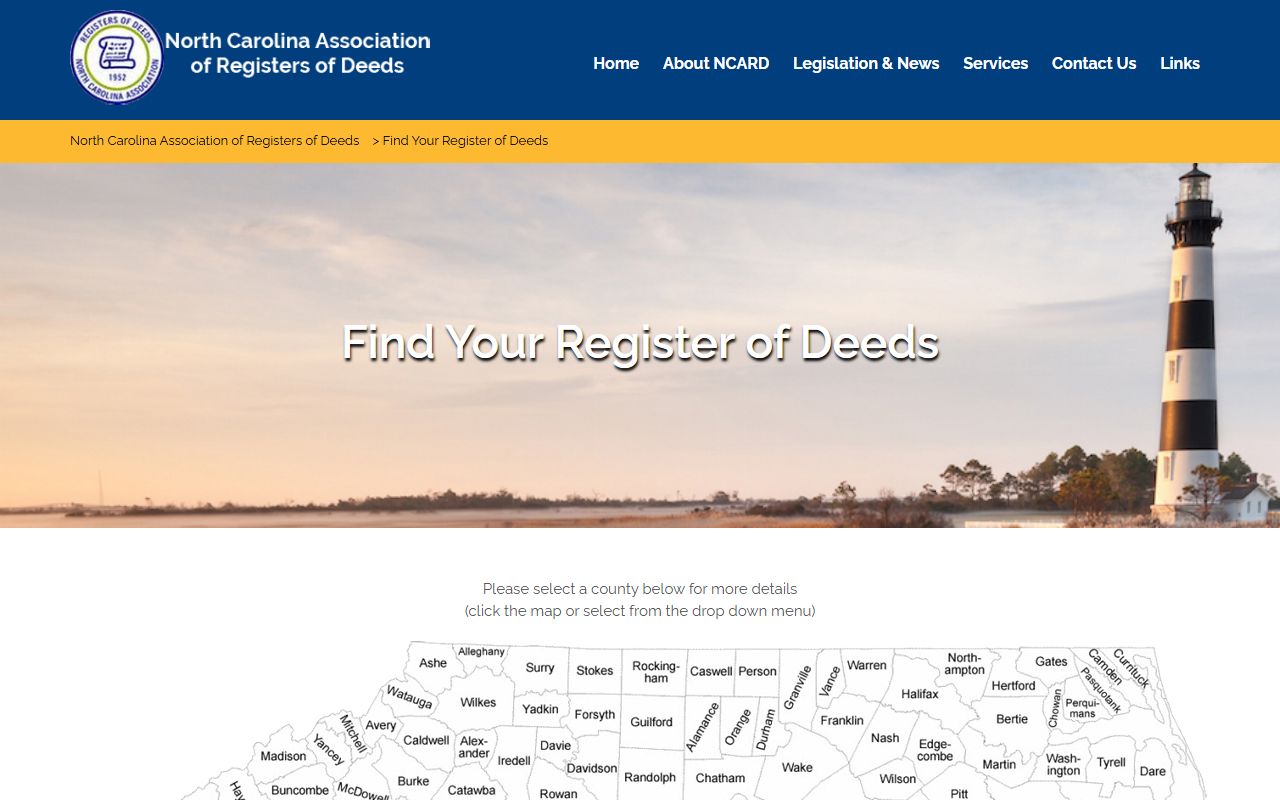
The association directory is a good starting point when you need to search property records in counties near Greenville.
University Area Property Records
East Carolina University shapes the real estate market in Greenville. The area around campus has a mix of single-family homes, apartment complexes, and student housing developments. Property records for this part of the city reflect decades of investor activity and rental property development.
Many properties near ECU have changed hands multiple times as investors buy, rent, and resell. Deed records show frequent transfers and sometimes complex ownership structures involving LLCs formed specifically to hold rental properties. If you are researching property near the university, review the full chain of ownership carefully. Check for any recorded liens, code violations, or unpaid assessments that could affect the title. The Pitt County tax records also show whether a property is classified as owner-occupied or investment, which affects the tax rate in some cases.
Growth near the medical district has also driven property activity. The Vidant Medical Center campus and related health care facilities have spurred commercial and residential development in the surrounding blocks of Greenville.
Deed Types in Greenville Records
Several deed types appear in Greenville property records. Each provides a different level of buyer protection. Understanding the differences helps when reviewing documents at the Pitt County Register of Deeds.
General warranty deeds offer the strongest protection. The seller guarantees clear title all the way back through the property's history. Special warranty deeds only cover the seller's period of ownership. Quitclaim deeds transfer whatever interest the seller has with no guarantees at all. In Greenville, quitclaim deeds are common between family members and in estate transfers. North Carolina law under N.C.G.S. Chapter 47 sets the requirements for all deed recordings in the state.
Deeds of trust are also common in Greenville records. These secure mortgage loans by giving a trustee the power to sell the property if the borrower defaults. When the loan is paid off, a cancellation of the deed of trust is recorded at the Register of Deeds. Checking for outstanding deeds of trust is a key part of any title search in Greenville.
Greenville Tax Property Records
The Pitt County Tax Office maintains assessed values and tax records for properties in Greenville. Tax records show the appraised value, the applicable tax rates, and the payment history for each parcel. Greenville properties pay both city and county taxes.
Pitt County conducts periodic revaluations. During a revaluation, every property in the county gets a new assessed value based on market conditions. The tax office notifies owners of their new values, and owners can appeal if they believe the assessment is incorrect. The Board of Equalization and Review hears these appeals. Tax liens for unpaid property taxes are recorded at the Register of Deeds in Greenville. These liens must be satisfied before a property can be sold or refinanced. Under N.C.G.S. Chapter 105, the county has the authority to foreclose on properties with delinquent taxes after a set period.
Title Searches in Greenville
A title search in Greenville examines the chain of ownership for a specific property. The search uses records at the Pitt County Register of Deeds to identify all transfers, liens, and encumbrances. A clear title means no outstanding claims exist against the property.
Professional title searchers review at least 30 years of records. They check each deed transfer for proper execution and look for any problems that could cloud the title. Common issues found during Greenville title searches include:
- Outstanding judgment or tax liens
- Unreleased deeds of trust
- Easements for utilities or access
- HOA covenants and deed restrictions
- Gaps in the ownership chain
Title insurance companies in Greenville require a clean search before issuing coverage. The insurance protects the buyer and lender from title defects that the search may not have caught. For properties with long histories in Pitt County, searchers sometimes need to consult the NC State Archives for older records that are not available online.
Electronic Recording in Greenville
Pitt County accepts electronic recording for many document types. Title companies and law firms in Greenville use this service to submit documents without visiting the office in person. eRecording speeds up the closing process and reduces the time between signing and recording.
Not all documents qualify for eRecording. Plat maps and certain other instruments may still require in-person filing. Contact the Register of Deeds at 252-902-2950 to confirm which documents can be submitted electronically. The office can also walk you through the technical requirements and approved vendor list for eRecording in Pitt County. Most documents submitted through the electronic system are processed the same business day.
Pitt County Property Records
Greenville is the county seat of Pitt County. All property recordings, deed filings, and lien records for Greenville go through the Pitt County Register of Deeds. For complete details on the county office, recording fees, online search tools, and additional resources, visit the Pitt County property records page.