
Chapel Hill Property Records
Chapel Hill property records are held by the Orange County Register of Deeds. The office is located in Hillsborough, the county seat. Chapel Hill is home to the University of North Carolina, and the campus area sees significant recording activity tied to both residential and institutional real estate. Orange County records go back to 1752, giving Chapel Hill one of the longest documented property histories in the state. All deeds, liens, plats, and other land documents for Chapel Hill pass through the Orange County office.
Chapel Hill Quick Facts
Chapel Hill Property Records at Orange County
The Orange County Register of Deeds handles all property recordings for Chapel Hill. The office sits at 228 S. Churton Street in Hillsborough. Staff assist with deed searches, recordings, and document copies Monday through Friday.
Orange County was formed in 1752. Its records are among the oldest in North Carolina. Early deeds trace land grants from the colonial period. The documents cover nearly 275 years of ownership changes in the Chapel Hill area. Today the office records warranty deeds, quitclaim deeds, deeds of trust, plats, and easements. Each new filing becomes part of the permanent public record.
| Office | Orange County Register of Deeds |
|---|---|
| Address | 228 S. Churton St Hillsborough, NC 27278 |
| Hours | Monday through Friday, 8:00 AM to 5:00 PM |
The office supports eRecording. Attorneys and title companies can submit documents without visiting Hillsborough. This electronic option speeds up closings for Chapel Hill real estate transactions. Walk-in service remains available for those who prefer to visit in person.
UNC Chapel Hill and Property Records
The University of North Carolina at Chapel Hill shapes the local real estate market. The campus drives demand for housing. Students, faculty, and staff need places to live. That creates a steady flow of property sales and rentals throughout the town.
Institutional property holdings are also part of the record. UNC owns substantial tracts of land in and around Chapel Hill. University-related land acquisitions and easements are recorded at the Orange County office. These documents join the thousands of residential deeds already on file. The mix of university and private property makes Chapel Hill's records especially active for a town of its size.
Development near campus has added new parcels to the county records in recent years. Mixed-use projects on Franklin Street and other corridors have generated plats, deeds, and covenants. Each one becomes part of the public file at the Register of Deeds.
Searching Chapel Hill Records Online
Orange County offers online access to recorded documents. You can search by name, book and page, or recording date. The system covers deeds, liens, and other instruments filed at the Register of Deeds. It is free and available around the clock.
The county GIS system shows parcel maps and property data for Chapel Hill. You can search by address or click a lot on the map. The details include ownership, tax value, lot size, and zoning. Flood zone data and other layers are available too. This is a fast way to check on a Chapel Hill property.
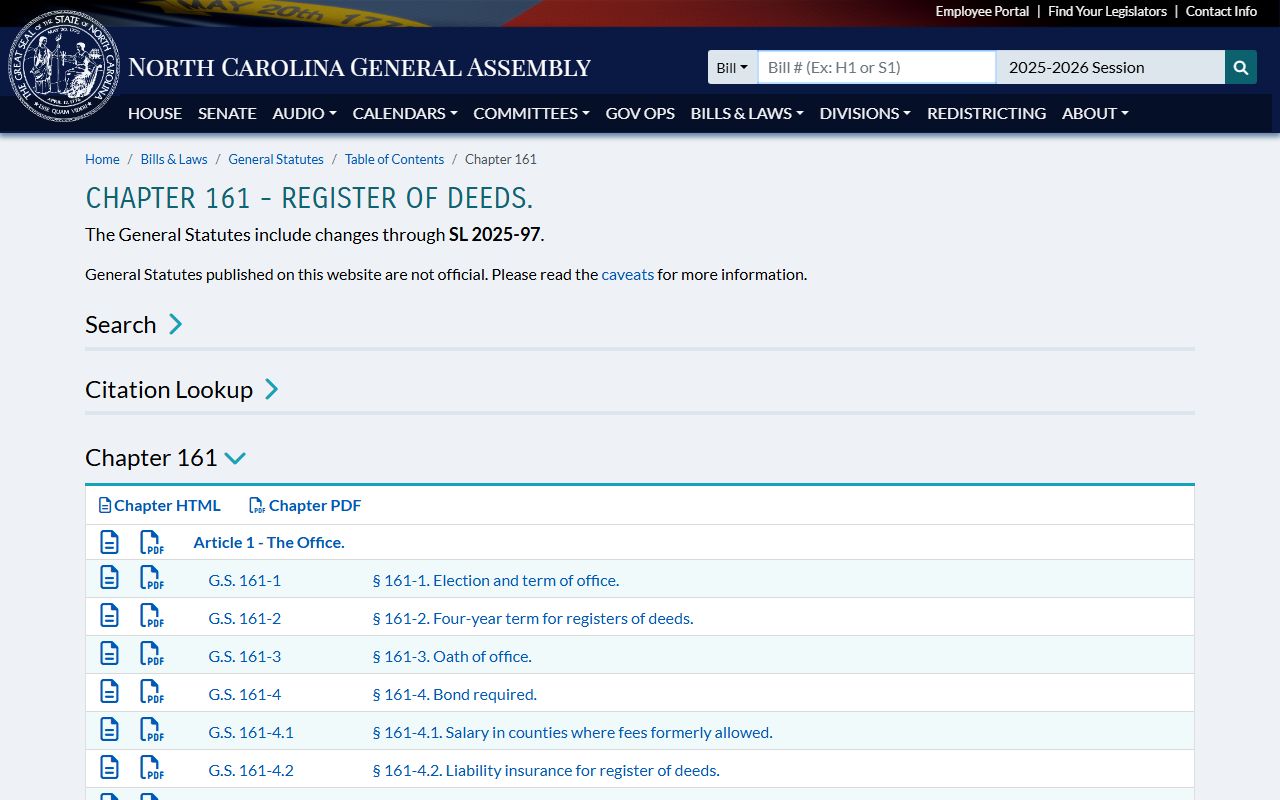
Below is an image showing state-level resources that support Chapel Hill property research.
For very old records not yet digitized, contact the Orange County office by phone. Staff can help track down documents from the earliest years of the county's history.
Chapel Hill Deed Records
Deeds record every ownership change in Chapel Hill. A deed names the seller and buyer. It describes the property and shows the recording date. Revenue stamps reflect the sale price. These stamps are based on the state excise tax rate.
Common types in Chapel Hill include general warranty deeds, special warranty deeds, and quitclaim deeds. General warranty deeds offer the strongest buyer protection. Quitclaim deeds are used for family transfers or to fix title issues. All deed types are recorded and indexed at the Orange County Register of Deeds so they can be searched by name or parcel.
Chapel Hill's real estate market includes homes near campus, family neighborhoods, and rural properties on the town's edges. Each segment generates its own steady volume of deed recordings. The range of property types means the Orange County records hold a wide variety of documents for researchers and buyers to review.
Property Liens in Chapel Hill
Liens are recorded at the Orange County Register of Deeds. Deeds of trust secure home loans. Tax liens stem from unpaid property taxes. Mechanic's liens protect those who did work on a property. Each type is filed in the public record.
A title search checks for all liens on a Chapel Hill property. Title companies examine the full chain of recorded documents before any closing. They look for outstanding claims that could affect the buyer. A clean search gives confidence that the property is free of hidden debts. North Carolina law under Chapter 47 governs how these documents are recorded and indexed.
Chapel Hill Property Tax Records
Orange County assesses property values for Chapel Hill. Tax records are public and show the assessed value, tax rate, and amount owed. Chapel Hill property owners pay both county and town taxes. The combined rate supports schools, town services, and county programs.
Assessments follow the cycle required by Chapter 105 of the General Statutes. Property owners who disagree with their assessed values can file appeals through the Orange County tax office. Deadlines are strict. Missing them means waiting until the next assessment cycle. Unpaid taxes lead to liens that are recorded at the Register of Deeds and appear in public searches.
Historical Records in Chapel Hill
Chapel Hill has a long history. The town was founded in 1793 to support the university. Property records from that era are stored at the Orange County office and the North Carolina State Archives. These early deeds and plats reveal how the town grew around the campus.
Older records show land grants from the colonial government and early American sales. Researchers use them to trace family histories and study how land changed hands over the centuries. The NC Association of Registers of Deeds can help you find the right office and search tools for your research. Chapel Hill's records are a valuable resource for historians, genealogists, and anyone curious about the town's past.
Recording Documents in Chapel Hill
To record a document for a Chapel Hill property, submit it to the Orange County Register of Deeds in Hillsborough. Fees are set by state law. They vary based on the document type and page count. Excise tax is collected on property transfers.
All documents must meet format standards. They need proper margins, readable text, and valid notarization. The NC Secretary of State oversees notary rules statewide. Recording requirements are set out in Chapter 161 and Chapter 47B of the General Statutes. Chapel Hill attorneys and title companies frequently use eRecording to submit documents online and avoid the drive to Hillsborough.
Orange County Property Records
Chapel Hill is part of Orange County. All property recordings for Chapel Hill go through the Orange County Register of Deeds in Hillsborough. The county also serves Carrboro, Hillsborough, and surrounding rural areas. For full details on the county office, fees, and online search tools, visit the Orange County page.